Support our educational content for free when you purchase through links on our site. Learn more

Discover the 5 Essentials of Mindfulness Practice! 🧘♂️

Are you ready to transform your life with mindfulness? In a world that often feels chaotic and overwhelming, the practice of mindfulness offers a sanctuary of calm and clarity. But where do you start? 🤔 This article dives deep into the five core principles of mindfulness practice that can help you cultivate a more present, peaceful, and purposeful life. From mindful breathing to mindful reflection, each principle serves as a stepping stone on your journey to greater self-awareness and emotional resilience.
Did you know that just a few minutes of daily mindfulness can significantly reduce stress levels? It’s true! Research shows that incorporating mindfulness into your routine can lead to profound changes in your mental and physical well-being. So, if you’re curious about how to unlock these benefits and more, keep reading! You won’t want to miss the practical tips and insights we have in store for you. 🌈
Key Takeaways
- Mindful Breathing: The foundation of awareness that grounds you in the present moment.
- Mindful Observation: Encourages you to see the world anew, enhancing your appreciation for everyday experiences.
- Mindful Listening: Fosters deeper connections by promoting active and compassionate listening.
- Mindful Movement: Celebrates your body and encourages joyful movement through various activities.
- Mindful Reflection: Cultivates inner peace and self-understanding through thoughtful contemplation.
Ready to explore mindfulness further? Check out our recommended mindfulness products and apps to enhance your practice!
- Mindfulness Apps: Headspace | Calm | Insight Timer
- Mindfulness Books: Shop on Amazon
Embrace the journey of mindfulness today and discover the transformative power it holds! 🌟
Table of Contents
Quick Tips and Facts
Understanding Mindfulness: A Brief History
The 5 Core Principles of Mindfulness Practice
1) Mindful Breathing: The Foundation of Awareness
2) Mindful Observation: Seeing the World Anew
3) Mindful Listening: The Art of Presence
4) Mindful Movement: Flowing with Your Body
5) Mindful Reflection: Cultivating Inner Peace
Mindful Wakeup: An Easy Mindfulness Habit to Start Your Day
Mindful Eating: Savor Every Bite with Awareness
Mindful Pause: A Simple Practice to Rewire Your Brain
Mindful Workout: Activate Your Mind and Body
Mindful Driving: Navigating Calmly Through Traffic
Small Shifts: How Tiny Changes Lead to Better Living
The Benefits of Mindfulness: Why It Matters
Common Misconceptions About Mindfulness
How to Incorporate Mindfulness into Your Daily Routine
Conclusion
Recommended Links
FAQ
Reference Links
Quick Tips and Facts
Want to dive into the world of mindfulness but feeling a little overwhelmed? Don’t worry, we’ve all been there! 🧘♀️🧠🧘 Here at Mindful Ideas™, we’re all about making mindfulness accessible and enjoyable.
Before we unpack the five core principles, let’s start with some fast facts to whet your appetite:
- Did you know? Just a few minutes of daily mindfulness can significantly reduce stress levels. That’s right, a few minutes! 🤯 It’s like a mini-vacation for your mind. 🌴
- Myth buster: Mindfulness isn’t about emptying your mind. It’s about observing your thoughts and feelings without judgment. Think of it as becoming the curious observer of your own internal world. 🤔
- Fun fact: Mindfulness can actually rewire your brain! 🧠⚡️ Regular practice strengthens neural connections associated with focus, emotional regulation, and self-awareness. Pretty cool, right?
Ready to unlock a calmer, more focused, and present you? Let’s get started! 🚀
Understanding Mindfulness: A Brief History

Mindfulness might seem like the latest buzzword, but its roots run deep – we’re talking centuries! Emerging from ancient Eastern meditative traditions, mindfulness has been a pathway to inner peace and self-discovery for ages.
But it wasn’t until the late 1970s that Jon Kabat-Zinn, a professor at the University of Massachusetts Medical School, introduced mindfulness into a Western medical context with his groundbreaking Mindfulness-Based Stress Reduction (MBSR) program. This program, as described by the University of California, Berkeley, demonstrated the profound impact of mindfulness on stress reduction and overall well-being, paving the way for its widespread adoption in various settings, from hospitals and schools to corporate offices and, well, everywhere!
Today, mindfulness is recognized as a powerful tool for managing stress, anxiety, and a host of other challenges. It’s about waking up to the present moment, embracing our experiences with curiosity and kindness, and cultivating a deeper understanding of ourselves and the world around us.
The 5 Core Principles of Mindfulness Practice
Think of these principles as your trusty compass, guiding you through the terrain of mindfulness. 🧭
1) Mindful Breathing: The Foundation of Awareness
Our breath is like an anchor, grounding us in the present moment. It’s always with us, a constant reminder to come back to now.
How to practice mindful breathing:
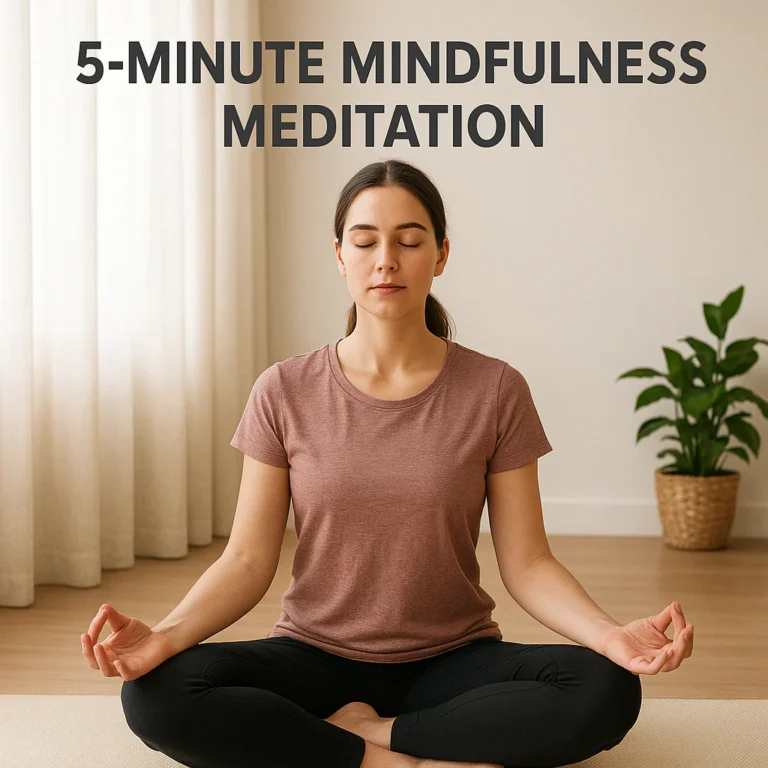
- Find a comfortable position, whether sitting, lying down, or even standing.
- Close your eyes if you feel comfortable.
- Bring your attention to your breath, noticing the sensation of each inhale and exhale.
- Don’t try to change your breath; simply observe it.
- When your mind wanders (and it will!), gently guide your attention back to your breath.
Think of your breath as a gentle wave, carrying you back to the shore of the present moment. 🌊
2) Mindful Observation: Seeing the World Anew
Have you ever really looked at a flower? I mean, really looked at it, noticing the intricate details of its petals, the subtle variations in color, the delicate dance of its stem in the breeze?
Mindful observation is about bringing this same level of attention to all of our experiences, from the mundane to the extraordinary.
How to practice mindful observation:
- Choose an object in your environment, such as a candle, a piece of fruit, or even your own hand.
- Observe the object with all of your senses. What do you see, hear, smell, taste, and feel?
- Notice the thoughts and feelings that arise as you observe.
- Approach the experience with curiosity and openness, without judgment.
The world is full of wonders when we slow down and truly see. ✨
3) Mindful Listening: The Art of Presence
In our fast-paced world, it’s easy to get caught up in our own thoughts and agendas, but true listening requires us to quiet our internal chatter and be fully present with the other person.
How to practice mindful listening:
- When someone is speaking, give them your full attention. Put away distractions, make eye contact, and focus on their words.
- Notice your own internal dialogue. Are you formulating your response, judging their words, or getting caught up in your own thoughts?
- Gently guide your attention back to the speaker, listening with an open mind and heart.
- Reflect back what you’ve heard to ensure understanding and show that you’re truly listening.
Mindful listening is a gift we give to others and ourselves. 🎁
4) Mindful Movement: Flowing with Your Body
Mindfulness isn’t just about sitting still; it’s about bringing awareness to all of our activities, including movement.
How to practice mindful movement:
- Choose an activity that involves movement, such as walking, yoga, dancing, or even washing the dishes.
- As you move, pay attention to the sensations in your body. What do you feel in your muscles, joints, and skin?
- Notice the rhythm of your breath and how it changes as you move.
- Approach the activity with a sense of curiosity and playfulness.
Movement is medicine for both body and mind. 🤸♀️
5) Mindful Reflection: Cultivating Inner Peace
Taking time for reflection allows us to process our experiences, gain insights, and cultivate a deeper understanding of ourselves.
How to practice mindful reflection:
- Find a quiet space where you can reflect without distractions.
- Bring to mind a recent experience, whether positive or challenging.
- Observe the experience with curiosity and openness, without judgment.
- What did you learn from the experience? How did it make you feel? What insights did you gain?
- Journaling can be a powerful tool for mindful reflection.
Reflection is a mirror that helps us see ourselves more clearly. 🪞
Mindful Wakeup: An Easy Mindfulness Habit to Start Your Day
How we begin our day often sets the tone for the hours that follow. Do you find yourself hitting the snooze button, scrolling through social media, or rushing out the door with a frazzled mind? Instead of letting the day control you, why not start with intention and presence?
Try this: Before you even get out of bed, take a few moments for yourself. Close your eyes, take a few deep breaths, and simply notice the sensations in your body. What do you feel? What do you hear? What do you smell? As you become present in your body, set an intention for the day. It could be something as simple as “Today, I will approach challenges with patience and understanding,” or “Today, I will savor the small moments of joy.”
Remember: You are not your thoughts. You are the observer of your thoughts. This simple shift in perspective can be incredibly empowering.
For more on the benefits of mindfulness, check out our category page on the Benefits of Mindfulness.
Mindful Eating: Savor Every Bite with Awareness
When was the last time you truly tasted your food? We often eat on autopilot, shoveling food into our mouths while distracted by our phones, TVs, or conversations. Mindful eating invites us to slow down, engage our senses, and rediscover the pleasure of nourishing our bodies.
Here’s how:
- Eliminate distractions: Put away your phone, turn off the TV, and create a calm and inviting eating space.
- Engage your senses: Before you even take a bite, pause to appreciate the colors, textures, and aromas of your food.
- Savor each bite: Chew slowly and mindfully, noticing the flavors and textures as they dance on your tongue.
- Pay attention to your body: Notice how your body feels as you eat. Are you satisfied? Still hungry? Learning to tune into your body’s cues can help you make healthier choices.
Mindful eating is a practice in gratitude and self-care. It’s about appreciating the nourishment that food provides and cultivating a healthier relationship with our bodies.
Mindful Pause: A Simple Practice to Rewire Your Brain
Life can feel like a never-ending to-do list, leaving us feeling stressed, overwhelmed, and disconnected from ourselves and the present moment. But what if we told you that you have a superpower that can help you regain control and find moments of peace throughout your day? It’s called the Mindful Pause.
Here’s how it works:
- Choose your cues: Identify moments in your day when you tend to feel stressed or overwhelmed. It could be before checking your email, answering the phone, or walking through a doorway.
- Pause and breathe: When you encounter your cue, pause for a few moments and take a few deep breaths. Notice the sensation of your breath as it enters and leaves your body.
- Observe your thoughts and feelings: Without judgment, simply acknowledge what’s present for you in this moment.
- Proceed with awareness: As you continue with your day, try to maintain a sense of presence and awareness.
The Mindful Pause is like hitting the reset button on your nervous system. It allows you to step out of autopilot and respond to situations with more clarity and intention.
Mindful Workout: Activate Your Mind and Body
Who says exercise has to be a chore? Mindful movement is about connecting with your body, finding joy in movement, and transforming your workouts into opportunities for self-care.
Here’s how to infuse your workouts with mindfulness:
- Set an intention: Before you begin, take a few moments to connect with your breath and set an intention for your workout. What do you hope to cultivate? Strength? Flexibility? Stress relief?
- Tune into your body: As you move, pay attention to the sensations in your muscles, joints, and breath. Notice how your body feels as you move through different poses or exercises.
- Approach it with curiosity: Instead of focusing on achieving a certain outcome, approach your workout with a sense of curiosity and playfulness.
Mindful movement is a celebration of what your body can do. It’s about finding joy in the journey, not just the destination.
Mindful Driving: Navigating Calmly Through Traffic
Let’s be honest, driving can be a recipe for stress, especially during rush hour. But what if we told you that you could transform your daily commute into an opportunity to cultivate mindfulness?
Here’s how:
- Before you start the engine: Take a few deep breaths and set an intention for your journey. It could be something as simple as “May I arrive at my destination safely and calmly.”
- Engage your senses: Notice the feel of the steering wheel in your hands, the sounds of the engine and the traffic around you, and the sights of your surroundings.
- Practice patience: When you encounter traffic jams or frustrating drivers (it happens!), take a deep breath and remind yourself that everyone is just trying to get where they need to go.
- Arrive with presence: When you reach your destination, take a moment to appreciate the journey and transition into your next activity with a sense of calm and focus.
Mindful driving is about transforming a potentially stressful activity into an opportunity to practice mindfulness and cultivate inner peace.
Small Shifts: How Tiny Changes Lead to Better Living
You don’t have to overhaul your entire life to experience the benefits of mindfulness. In fact, it’s often the small, consistent shifts that make the biggest difference.
Here are a few ideas to get you started:
- Mindful Shower: Instead of rushing through your morning shower, transform it into a mindful experience. Notice the feeling of the warm water on your skin, the scent of your shampoo, and the sound of the water cascading around you.
- Mindful Walking: Whether you’re walking to work, running errands, or simply taking a stroll around the block, bring awareness to your steps, your breath, and your surroundings.
- Mindful Technology Use: Take a break from your phone and computer throughout the day. When you do use technology, notice how it makes you feel and set boundaries to create a healthier relationship with your devices.
Remember: Mindfulness is a journey, not a destination. There’s no right or wrong way to practice. The most important thing is to find what works for you and to approach it with curiosity, kindness, and a willingness to experiment.
To explore even more mindfulness techniques, dive into our Meditation Practices category. And if you’re eager to delve deeper into the fascinating world of mindfulness, don’t miss our article on 20 Intriguing Topics of Mindfulness You Must Explore! 🤯🧘️ 2025.
The Benefits of Mindfulness: Why It Matters
So, we’ve explored the principles and practices, but you might be wondering, “What’s in it for me?” Well, buckle up, because the benefits of mindfulness are pretty remarkable!
Scientific research has shown that mindfulness can:
- Reduce stress and anxiety: Mindfulness helps regulate the body’s stress response, leading to decreased levels of cortisol, the stress hormone.
- Improve focus and concentration: By training the mind to stay present, mindfulness enhances attention span and reduces mind wandering.
- Boost emotional regulation: Mindfulness cultivates self-awareness and emotional intelligence, enabling us to respond to challenging emotions with more skill and compassion.
- Enhance self-compassion: Through mindfulness, we learn to treat ourselves with the same kindness and understanding we would offer a good friend.
- Improve sleep quality: Mindfulness practices, such as body scan meditation, can quiet the mind and prepare the body for restful sleep.
- Strengthen relationships: Mindfulness enhances our ability to listen attentively, communicate effectively, and cultivate deeper connections with others.
And the best part? These benefits are accessible to everyone! Whether you’re a seasoned meditator or a curious beginner, mindfulness has something to offer.
Common Misconceptions About Mindfulness
Despite its growing popularity, mindfulness is often misunderstood. Let’s debunk some common myths:
- Myth: Mindfulness is about emptying your mind.
Fact: Mindfulness isn’t about stopping your thoughts; it’s about observing them without judgment. - Myth: Mindfulness is a religious practice.
Fact: While mindfulness has roots in spiritual traditions, it’s a secular practice that can be beneficial for people of all beliefs and backgrounds. - Myth: Mindfulness is about being happy all the time.
Fact: Mindfulness is about being present with all of your experiences, both pleasant and unpleasant. It’s about embracing life’s fullness, not chasing after a constant state of bliss. - Myth: Mindfulness is difficult and time-consuming.
Fact: Mindfulness can be as simple as taking a few deep breaths or paying attention to your senses. Even a few minutes of daily practice can make a difference.
How to Incorporate Mindfulness into Your Daily Routine
Ready to make mindfulness a part of your life? Here are some practical tips:
- Start small: Don’t feel pressured to meditate for hours on end. Begin with just a few minutes each day and gradually increase your practice as you feel comfortable.
- Create a routine: Set aside a specific time and place for your mindfulness practice. This will help you establish a habit and make it more likely that you’ll stick with it.
- Be patient with yourself: Your mind will wander, and that’s okay! Simply notice when it does and gently guide your attention back to the present moment.
- Experiment with different practices: There are countless ways to practice mindfulness. Explore different techniques and find what resonates with you.
- Find a mindfulness buddy: Having a friend or family member to share your practice with can provide support and accountability.
- Don’t be afraid to seek guidance: There are many resources available to support your mindfulness journey, including books, apps, online courses, and local meditation groups.
Conclusion

And there you have it! We’ve journeyed through the five core principles of mindfulness, explored practical applications, and uncovered the myriad benefits that mindfulness can bring to your life. 🌟 Whether you’re looking to reduce stress, enhance focus, or simply cultivate a deeper sense of presence, mindfulness offers a treasure trove of tools to help you thrive.
To recap:
- Mindful Breathing grounds you in the present.
- Mindful Observation opens your eyes to the beauty around you.
- Mindful Listening fosters deeper connections.
- Mindful Movement celebrates your body.
- Mindful Reflection cultivates understanding and growth.
Positives: Mindfulness practices are accessible, adaptable, and can be integrated into any lifestyle. They promote emotional well-being, improve focus, and enhance overall quality of life.
Negatives: It may take time to develop a consistent practice, and some may find it challenging to quiet their minds initially. However, patience and persistence are key!
We confidently recommend incorporating mindfulness into your daily routine, as the benefits are profound and far-reaching. Remember, it’s not about perfection; it’s about progress. So, take a deep breath, and let’s get started on this journey together! 🌈
Recommended Links
-
Mindfulness Books:
- “The Miracle of Mindfulness” by Thich Nhat Hanh: Shop on Amazon
- “Wherever You Go, There You Are” by Jon Kabat-Zinn: Shop on Amazon
- “The Mindful Way Through Depression” by Mark Williams: Shop on Amazon
-
Mindfulness Products:
- Headspace App: Download on Headspace Official
- Calm App: Download on Calm Official
- Insight Timer: Download on Insight Timer Official
FAQ

How can I incorporate mindfulness into my daily routine to reduce stress and increase productivity?
To effectively incorporate mindfulness into your daily routine, consider these steps:
- Start with a Morning Routine: Begin your day with a few minutes of mindful breathing or meditation. This sets a positive tone for the day ahead.
- Mindful Transitions: Use transitions between tasks as opportunities to pause and breathe. For instance, before starting a new project, take a moment to center yourself.
- Mindful Breaks: Schedule short breaks throughout your day to practice mindfulness. Step outside, take a few deep breaths, or engage in a quick mindful observation exercise.
- End-of-Day Reflection: Spend a few minutes reflecting on your day. What went well? What challenges did you face? This practice fosters self-awareness and helps you learn from your experiences.
What are the key benefits of regular mindfulness practice for my mental and physical well-being?
Regular mindfulness practice offers numerous benefits, including:
- Reduced Stress: Mindfulness helps lower cortisol levels, leading to decreased stress and anxiety.
- Improved Focus: By training the mind to stay present, mindfulness enhances concentration and attention span.
- Better Emotional Regulation: Mindfulness fosters self-awareness, enabling you to respond to emotions more skillfully.
- Enhanced Physical Health: Studies suggest mindfulness can improve sleep quality, lower blood pressure, and even boost the immune system.
- Greater Resilience: Mindfulness cultivates a sense of inner strength, helping you navigate life’s challenges with grace.
Can mindfulness be practiced anywhere, or do I need a dedicated quiet space to get started?
Mindfulness can absolutely be practiced anywhere! While having a dedicated quiet space can enhance your practice, it’s not a requirement. Here are some tips for practicing mindfulness in various settings:
- At Work: Take mindful breaks at your desk, practice mindful breathing, or engage in mindful listening during meetings.
- On the Go: Practice mindfulness while walking, waiting in line, or even during your commute. Focus on your breath or observe your surroundings.
- At Home: Incorporate mindfulness into daily activities, such as cooking, cleaning, or spending time with loved ones.
What role does meditation play in mindfulness practice, and are there different types of meditation I can try?
Meditation is a key component of mindfulness practice, serving as a tool to cultivate awareness and presence. There are various types of meditation you can explore, including:
- Mindfulness Meditation: Focuses on observing thoughts and sensations without judgment, often using the breath as an anchor.
- Loving-Kindness Meditation (Metta): Cultivates feelings of compassion and love towards oneself and others.
- Body Scan Meditation: Involves systematically focusing on different parts of the body to promote relaxation and awareness.
- Guided Meditation: Led by an instructor or through an app, this type of meditation provides direction and support.
Experimenting with different meditation styles can help you find what resonates best with you and enhance your mindfulness journey.
Reference Links
- Mindfulness-Based Stress Reduction (MBSR)
- Mayo Clinic on Mindfulness Exercises
- Mindful.org on Getting Started with Mindfulness
- Harvard Health on the Benefits of Mindfulness
- American Psychological Association on Mindfulness
By embracing mindfulness, you’re not just enhancing your own life; you’re contributing to a more compassionate and aware world. So, let’s take a deep breath together and step into this journey of mindfulness! 🌍✨