Support our educational content for free when you purchase through links on our site. Learn more

🌿 15+ Real Examples of Mindfulness to Transform Your Day (2026)


Mindfulness isn’t a mystical state reserved for monks; it’s simply the act of paying full attention to whatever you are doing right now, whether that’s washing dishes, driving to work, or listening to a friend. When you ask what are examples of mindfulness, the answer is everywhere: it’s the taste of your morning coffee, the sensation of your feet on the pavement, and the conscious choice to pause before reacting to stress.
Most of us spend nearly 47% of our waking hours mind-wandering, lost in regrets about the past or worries about the future, which Harvard researchers link directly to lower happiness levels. Imagine if you could reclaim even a fraction of that time to actually live your life instead of just watching it happen through a fogy window.
We’ve all been there: you sit down to eat lunch, but before you know it, the sandwich is gone, and you have no memory of tasting a single bite because your brain was busy drafting an email. That autopilot mode is the enemy of presence, but the good news is that breaking it doesn’t require a silent retreat in the Himalayas.
In this guide, we’ll explore over 15 concrete, actionable examples of mindfulness that you can integrate into your chaotic daily routine immediately. From the 5-4-3-2-1 grounding technique to mindful driving, these practices are designed to anchor you in the present moment without adding more “to-do” items to your list.
Key Takeaways
- Mindfulness is a state of presence, not just a seated meditation; it can be practiced during any daily activity like eating, walking, or working.
- Consistency beats duration; practicing for just 3 to 5 minutes daily is more effective than an hour-long session once a week.
- The goal is observation, not elimination; you don’t need to stop thinking, just learn to notice your thoughts without getting swept away by them.
- Science-backed benefits include reduced anxiety, improved sleep quality, and enhanced emotional resilience.
- Start small by picking one specific activity from this list to practice today, such as the 5-4-3-2-1 Grounding Technique or Mindful Breathing.
Table of Contents
- ⚡️ Quick Tips and Facts
- 📜 The Roots of Presence: A Brief History of Mindfulness
- 🧠 What is Mindfulness, Really? Beyond the Buzzwords
- 🌟 Mindfulness Isn’t Just Sitting Still: It’s a State of Presence
- 🧘 ♀️ 15+ Mindfulness Exercises and Activities for Daily Life
- 1. The 5-4-3-2-1 Grounding Technique
- 2. Mindful Breathing: The Anchor in the Storm
- 3. Eat Mindfully: Transforming Meals into Meditations
- 4. Walking Meditation: Moving with Intention
- 5. The Body Scan: Reconnecting with Your Physical Self
- 6. Mindful Listening: Hearing Without Judging
- 7. Single-Tasking: The Antidote to Multitasking Mayhem
- 8. Gratitude Journaling: Rewiring the Brain for Joy
- 9. Mindful Driving: Turning Commutes into Calm
- 10. The RAIN Method for Difficult Emotions
- 1. Mindful Movement: Yoga and Tai Chi
- 12. Counting Breath: A Simple Focus Tool
- 13. Mindful Observation: The Art of Seeing
- 14. Digital Detox: Mindfulness in a Connected World
- 15. Mindful Parenting: Staying Present with Little Humans
- 🧩 Mindfulness for ADHD: How to Stay Focused When Your Brain Won’t Cooperate
- 🚀 How to Practice Mindfulness on Your Own: A Solo Guide
- 📈 The Science-Backed Benefits of Mindfulness Practices
- Taming Stress and Anxiety
- Achieving Emotional Balance and Resilience
- Improving Sleep Quality and Duration
- Enhancing Decision-Making and Clarity
- 🤔 Mindfulness FAQs: Your Burning Questions Answered
- How often should I practice mindfulness?
- What are 5 essential mindfulness practices for beginners?
- Can mindfulness help with depression?
- Is mindfulness the same as meditation?
- 🛌 Calm Your Mind, Change Your Life: Integrating Mindfulness into Your Routine
- 📚 Recommended Links and Tools
- 📖 Reference Links and Sources
- 🏁 Conclusion
⚡️ Quick Tips and Facts
Before we dive into the deep end of the mindfulness pool, let’s grab a few life preservers. You might think you need a silent retreat in the Himalayas or a $20 meditation cushion to start, but the truth is far more accessible (and often free).
Here is the Mindful Ideas™ cheat sheet to get you started immediately:
| Fact | Why It Matters |
|---|---|
| 47% of waking hours are spent mind-wandering. | A Harvard study found that our minds wander nearly half the time, often leading to unhappiness. Mindfulness brings you back to the “now.” Source: Harvard Study |
| Mindfulness is not just meditation. | You can be mindful while washing dishes, driving, or arguing with your partner. It’s a state of presence, not just a seated activity. |
| It takes less than 10 minutes. | You don’t need an hour. Even 3 to 5 minutes of focused breathing can reset your nervous system. |
| It’s a skill, not a talent. | You aren’t born with it; you build it. Like a muscle, the more you use it, the stronger it gets. |
| No “emptying” the mind required. | A common myth is that you must stop thinking. The goal is to observe thoughts without getting swept away by them. |
Pro Tip: If you’re looking for a real-life scenario to visualize this, check out our deep dive on 🌟 What is a Real Life Example of Mindfulness? 7 Instant Practices (2026). It breaks down exactly how these concepts play out in a chaotic Tuesday morning.
📜 The Roots of Presence: A Brief History of Mindfulness

You might think mindfulness is the latest wellness trend popping up on your Instagram feed, but its roots run deeper than the ocean. We’re talking 2,50 years deep.
From Ancient Wisdom to Modern Science
The concept originated in Buddhism, specifically within the Satipathana Sutta (The Discourse on the Foundations of Mindfulness). The Buddha taught that suffering arises from attachment and aversion, and that non-judgmental awareness is the path to liberation.
Fast forward to the 1970s, and a molecular biologist named Jon Kabat-Zinn decided to strip the religious packaging off these ancient practices. He founded the Stress Reduction Clinic at the University of Massachusetts Medical School. His goal? To create a secular, evidence-based program called Mindfulness-Based Stress Reduction (MBSR).
“Mindfulness stands in stark contrast with much of our common daily experience, as the default mode of attention for many individuals is, in fact, non-attention.” — Bishop et al., 204
Kabat-Zinn’s work bridged the gap between Eastern philosophy and Western medicine. Today, MBSR is a gold standard in clinical settings, helping everyone from cancer patients to corporate executives manage stress.
The Neuroscience Revolution
Why did this ancient practice explode in popularity recently? fMRI machines. Scientists could finally see what was happening in the brain.
- Gray Matter Density: Studies show that regular mindfulness practice increases gray matter in the hipocampus (learning and memory) and decreases it in the amygdala (fear and stress).
- Default Mode Network (DMN): Mindfulness quiets the DMN, the brain network responsible for mind-wandering and self-referential thoughts (the voice that says, “I’m not good enough”).
For a deeper look at how these changes affect your mental health, explore our guide on the Benefits of Mindfulness.
🧠 What is Mindfulness, Really? Beyond the Buzzwords
Let’s cut through the noise. If you search “mindfulness,” you’ll get a million definitions involving lotus flowers, incense, and floating clouds. While those are nice, they aren’t the definition.
Mindfulness is the practice of acknowledging what you’re feeling without judging the emotions or sensations as you’re feeling them.
It’s a two-part process:
- Self-Regulation of Attention: Keeping your focus on the present moment (breath, sound, sensation).
- Orientation to the Present: Approaching that moment with curiosity, openness, and acceptance.
The “Autopilot” Trap
Most of us live on autopilot. We brush our teeth while thinking about our email. We eat lunch while scrolling TikTok. We drive home and don’t remember the trip.
“Many of us spend each day on autopilot, absorbed in regrets about the past or worries about the future.” — Calm Blog
Mindfulness is the brake pedal. It’s the conscious decision to say, “Wait. I am eating this apple. I can taste the sweetness. I can feel the texture.” It’s not about doing more; it’s about being more.
Mindfulness vs. Meditation: What’s the Difference?
This is the question we get asked most often.
- Meditation is the practice or the exercise (like going to the gym).
- Mindfulness is the quality of awareness you cultivate (like your muscle strength).
You can meditate without being mindful (if you’re just zoning out), and you can be mindful without meditating (while washing dishes). However, meditation is the most reliable way to train the mindfulness muscle.
🌟 Mindfulness Isn’t Just Sitting Still: It’s a State of Presence
Here is a revelation that might change your life: You do not need to sit cross-legged on a cushion to be mindful.
In fact, if you think mindfulness is only meditation, you’re missing 90% of the opportunity. Mindfulness is a state of presence that can be applied to any activity. It transforms mundane tasks into moments of connection.
The “Any Activity” Philosophy
Imagine you are walking to your car.
- Autopilot: You are thinking about the meeting you have in 10 minutes, your feet hit the pavement, you don’t notice the sky, you get in the car, and you realize you’ve been driving for 20 minutes with no memory of the trip.
- Mindful: You feel the cool air on your skin. You notice the rhythm of your steps. You hear the sound of birds or traffic. You see the colors of the buildings. You are there.
This shift doesn’t require extra time. It requires a shift in attention.
Why This Matters
When you bring presence to daily activities, you stop living in the “future” (worry) or the “past” (regret). You anchor yourself in the now. And guess what? The “now” is usually fine. It’s the story we tell ourselves about the now that causes the stress.
🧘 ♀️ 15+ Mindfulness Exercises and Activities for Daily Life
Ready to put theory into practice? We’ve compiled a comprehensive list of mindfulness exercises ranging from 30-second resets to 20-minute deep dives. These aren’t just “tips”; they are actionable techniques you can use right now.
1. The 5-4-3-2-1 Grounding Technique
Perfect for moments of high anxiety or panic. This technique forces your brain to switch from “fight or flight” to “observe and process.”
How to do it:
- Acknowledge 5 things you see around you. (e.g., a lamp, a speck on the wall, a blue pen).
- Acknowledge 4 things you can touch. (e.g., the fabric of your chair, your jeans, the cool table).
- Acknowledge 3 things you hear. (e.g., traffic, a fan, your own breath).
- Acknowledge 2 things you can smell. (e.g., coffee, fresh air).
- Acknowledge 1 thing you can taste. (e.g., the aftertaste of mint gum).
Why it works: It engages all five senses, pulling you out of your head and into your environment.
2. Mindful Breathing: The Anchor in the Storm
Your breath is the only thing you can control that is both automatic and voluntary. It’s the ultimate anchor.
The Technique:
- Sit comfortably. Close your eyes or soften your gaze.
- Focus on the sensation of air entering your nostrils. Is it cool? Warm?
- Follow the breath down to your lungs and belly.
- When your mind wanders (and it will), gently say “thinking” and return to the breath.
- Do not try to change your breathing. Just observe it.
3. Eat Mindfully: Transforming Meals into Meditations
We often eat while distracted, leading to overeating and zero enjoyment. Let’s fix that.
Step-by-Step:
- Look: Observe the colors and textures of your food.
- Smell: Take a deep inhale. What aromas do you detect?
- Taste: Take a small bite. Chew slowly. Notice the change in texture and flavor.
- Swallow: Feel the food moving down your throat.
- Pause: Before the next bite, take a breath.
Try this: Try eating one meal a week without any screens. You’ll be shocked at how much better the food tastes.
4. Walking Meditation: Moving with Intention
You don’t have to sit still to meditate. Walking meditation is ancient and powerful.
How to Practice:
- Find a quiet path (10-20 paces long).
- Walk slowly. Focus on the sensation of your fet lifting, moving, and landing.
- Feel the ground beneath you.
- If you get to the end of the path, turn around slowly and continue.
- If your mind wanders, bring it back to the soles of your feet.
5. The Body Scan: Reconnecting with Your Physical Self
This is a classic MBSR technique used to release physical tension.
The Process:
- Lie down on your back.
- Bring your attention to your toes. Notice any sensations (tingling, warmth, cold).
- Slowly move your attention up through your feet, ankles, calves, knees, and thighs.
- Continue up to your hips, stomach, chest, back, shoulders, arms, hands, neck, and face.
- If you find tension, imagine breathing into that area and softening it.
6. Mindful Listening: Hearing Without Judging
We often listen to reply, not to understand. Mindful listening changes that.
The Exercise:
- In your next conversation, focus entirely on the speaker.
- Notice the tone of their voice, the pauses, the speed.
- When you feel the urge to interrupt or formulate a response, stop.
- Just listen. Let their words land without your internal commentary.
7. Single-Tasking: The Antidote to Multitasking Mayhem
Multitasking is a myth. Your brain is just switching tasks rapidly, which drains energy and increases errors.
The Fix:
- Pick one task.
- Do nothing else. No phone, no email, no TV.
- If you are writing an email, just write the email.
- If you are folding laundry, just fold the laundry.
8. Gratitude Journaling: Rewiring the Brain for Joy
Gratitude isn’t just a nice feeling; it’s a cognitive shift.
The Practice:
- Every morning or night, write down 3 specific things you are grateful for.
- Avoid generic answers like “family.” Be specific: “The way my partner made me laugh this morning.”
- Explain why you are grateful for them.
9. Mindful Driving: Turning Commutes into Calm
The commute is often the most stressful part of the day. Turn it into a practice.
How to do it:
- Notice your grip on the steering wheel. Is it tight? Losen it.
- Feel the vibration of the car.
- Listen to the engine or the radio without judging the music.
- When you feel road rage rising, take three deep breaths before reacting.
10. The RAIN Method for Difficult Emotions
Created by Tara Brach, this is a powerful tool for handling difficult emotions.
- Recognize: “I am feeling angry right now.”
- Allow: “It’s okay to feel this. I don’t need to push it away.”
- Investigate: “Where do I feel this in my body? What triggered it?”
- Nurture: “What do I need right now? Comfort? Space?”
1. Mindful Movement: Yoga and Tai Chi
These ancient practices combine physical movement with breath awareness.
- Yoga: Focus on the alignment of your body and the synchronization of breath with movement.
- Tai Chi: Often called “meditation in motion,” it involves slow, flowing movements that require intense focus.
12. Counting Breath: A Simple Focus Tool
If your mind is too busy to just “watch” the breath, give it a job.
The Method:
- Inhale, count “one.”
- Exhale, count “two.”
- Continue up to “ten.”
- If you lose count (you will), start back at “one.”
- This keeps the analytical brain busy enough to stop the chatter.
13. Mindful Observation: The Art of Seeing
Pick an object (a leaf, a candle, a stone).
The Exercise:
- Stare at it for 2 minutes.
- Notice every detail: the veins in the leaf, the flicker of the flame, the texture of the stone.
- Imagine you are seeing it for the first time.
- Notice how your perception changes when you look with fresh eyes.
14. Digital Detox: Mindfulness in a Connected World
We are constantly bombarded with notifications. A digital detox is a form of mindfulness.
The Strategy:
- Set “no-phone zones” (e.g., the dinner table, the bedroom).
- Turn off non-essential notifications.
- When you pick up your phone, ask: “Why am I doing this?” If it’s out of habit, put it down.
15. Mindful Parenting: Staying Present with Little Humans
Parenting is exhausting and often automatic. Mindfulness helps you connect.
The Practice:
- When your child is talking to you, stop what you are doing.
- Get down to their eye level.
- Listen to their story without rushing to fix it.
- Notice your own frustration and breathe through it before responding.
🧩 Mindfulness for ADHD: How to Stay Focused When Your Brain Won’t Cooperate
If you have ADHD, the idea of “sitting still and watching your breath” can feel like asking a toddler to paint a masterpiece. It’s not that you can’t do it; it’s that the standard advice doesn’t fit your brain.
The ADHD Challenge
ADHD brains often struggle with executive function and dopamine regulation. Traditional mindfulness can feel boring, leading to immediate mind-wandering.
Tailored Strategies
- Movement is Key: Don’t sit. Try walking meditation, yoga, or even mindful cleaning. Your body needs to move to focus your mind.
- Short Bursts: Forget 20 minutes. Try 30 seconds. Set a timer. “I will just focus on my breath for 30 seconds.”
- Use Props: Hold a stress ball, fidget with a textured object, or listen to a guided meditation with a voice you like.
- Labeling: When your mind wanders, don’t judge it. Just label it: “Planning,” “Worrying,” “Remembering.” This creates a tiny gap between you and the thought.
Expert Insight: “For ADHD brains, mindfulness isn’t about stopping thoughts; it’s about noticing when you’ve drifted and gently steering back. It’s a rep, not a marathon.” — Mindful Ideas™ Coaching Team
🚀 How to Practice Mindfulness on Your Own: A Solo Guide
You don’t need a guru, a retreat, or a group. You can build a powerful practice entirely on your own. Here is your roadmap.
Step 1: Start Small
Don’t aim for an hour a day. Start with 5 minutes. Consistency beats duration every time.
Step 2: Create a Trigger
Link your practice to an existing habit.
- “After I pour my coffee, I will breathe for 1 minute.”
- “Before I get into the car, I will do a body scan.”
- “When I brush my teeth, I will focus on the sensation.”
Step 3: Use Guided Resources
When you’re starting, silence can be loud. Use apps or audio guides.
- Headspace: Great for beginners with fun animations.
- Calm: Excellent for sleep and storytelling.
- Insight Timer: A massive library of free meditations.
Step 4: Be Kind to Yourself
You will forget. You will get frustrated. You will think, “I’m bad at this.” This is part of the practice. The moment you realize you’ve been judging yourself is the moment you are being mindful.
Step 5: Track Your Progress
Keep a simple journal. Note how you feel before and after. Over time, you’ll see patterns and improvements in your stress levels and focus.
📈 The Science-Backed Benefits of Mindfulness Practices
Why bother? Because the science is undeniable. Mindfulness isn’t just “nice to have”; it’s a biological necessity for modern life.
Taming Stress and Anxiety
Chronic stress keeps your body in “fight or flight” mode, flooding your system with cortisol. Mindfulness activates the parasympathetic nervous system (rest and digest).
- Stat: A meta-analysis of 209 trials found that Mindfulness-Based Interventions (MBIs) significantly reduced anxiety and depression symptoms, with effect sizes comparable to antidepressants for some conditions. Source: PMC5679245
Achieving Emotional Balance and Resilience
Mindfulness helps you create a “gap” between a stimulus and your response. Instead of reacting impulsively to a rude comment, you can pause, observe the anger, and choose a wiser response.
Improving Sleep Quality and Duration
Racing thoughts are the enemy of sleep. Mindfulness practices, especially body scans and breathing exercises, calm the mind and prepare the body for rest.
- Fact: Studies show that mindfulness-based therapy can improve sleep quality in people with insomnia as effectively as sleep hygiene education.
Enhancing Decision-Making and Clarity
When you are not clouded by emotional reactivity or mind-wandering, your prefrontal cortex (the decision-making part of the brain) functions better. You make clearer, more rational choices.
🤔 Mindfulness FAQs: Your Burning Questions Answered

We’ve heard it all. Here are the answers to the most common questions we get at Mindful Ideas™.
How often should I practice mindfulness?
Frequency matters more than duration. It’s better to practice 5 minutes every day than 30 minutes once a week. Think of it like brushing your teeth; you wouldn’t skip a day!
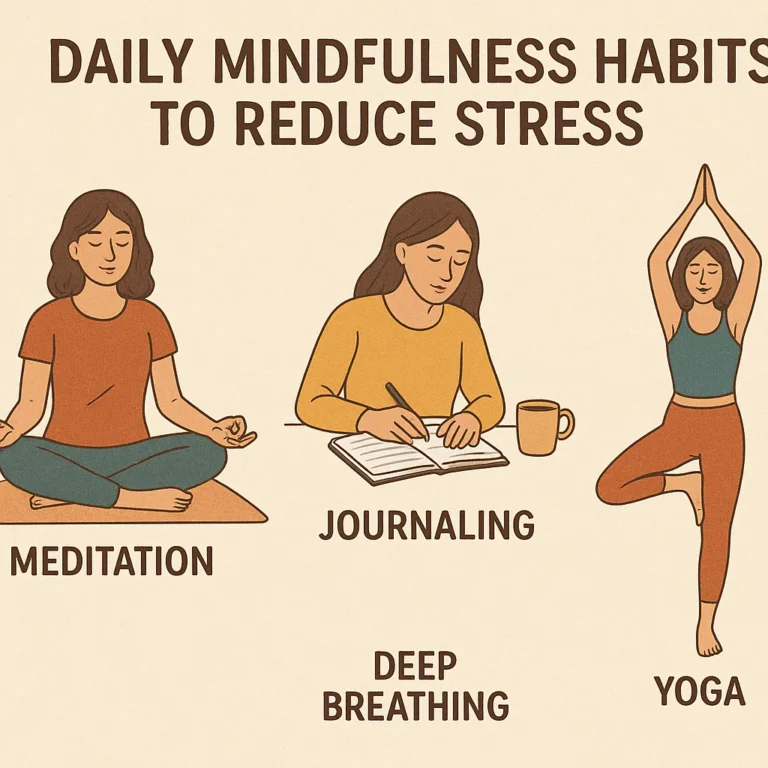
Read more about “15 Daily Mindfulness Habits to Reduce Stress (2026) 🧘 ♀️”
What are 5 essential mindfulness practices for beginners?
- Mindful Breathing: The foundation.
- Body Scan: Great for relaxation.
- 5-4-3-2-1 Grounding: Perfect for anxiety.
- Mindful Eating: Turns meals into practice.
- Walking Meditation: Ideal for those who can’t sit still.
Read more about “🧠 10 Mindfulness Exercises for Mental Health (2026)”
Can mindfulness help with depression?
Yes. Mindfulness-Based Cognitive Therapy (MBCT) is specifically designed to prevent relapse in people with recurrent depression. It helps you recognize negative thought patterns before they spiral.
Read more about “🌙 12 Best Mindfulness Apps for Sleep Improvement (2026)”
Is mindfulness the same as meditation?
No. Meditation is the practice; mindfulness is the quality of awareness. You can meditate without being mindful, and you can be mindful without meditating.
Read more about “🧠 12 Proven Ways to Practice Mindfulness in Daily Life (2026)”
🛌 Calm Your Mind, Change Your Life: Integrating Mindfulness into Your Routine
So, you have the tools. You know the science. But how do you make it stick?
The “Habit Stacking” Method
Don’t try to carve out a new time slot. Stack your mindfulness practice onto an existing habit.
- Morning: 2 minutes of breathing while your coffee brews.
- Commute: 5 minutes of mindful driving or listening.
- Lunch: 10 minutes of mindful eating.
- Evening: A 10-minute body scan before bed.
Creating a Sanctuary
You don’t need a whole room. Just a corner. A cushion, a candle, or a specific chair can signal to your brain: “It’s time to be present.”
The Power of Consistency
The magic doesn’t happen in one session. It happens in the accumulation. One day, you’ll realize you didn’t snap at your partner. You didn’t doom-scroll for an hour. You felt the sun on your face. That’s the change.
“Mindfulness is thus both a skill and a practice; the practice of mindfulness begets the skill of staying mindful.” — Bishop et al., 204
📚 Recommended Links and Tools
Ready to take the next step? Here are our top picks for tools and resources to support your journey.
🧘 Apps for Guided Practice
- Headspace: Perfect for beginners with structured courses.
👉 Shop Headspace on: Amazon | Headspace Official - Calm: Great for sleep stories and nature sounds.
👉 Shop Calm on: Amazon | Calm Official - Insight Timer: Massive library of free meditations.
👉 Shop Insight Timer on: Amazon | Insight Timer Official
📖 Books to Deepen Your Understanding
- “Wherever You Go, There You Are” by Jon Kabat-Zinn: The classic introduction to mindfulness.
Check Price on: Amazon | Barnes & Noble - “The Miracle of Mindfulness” by Thich Nhat Hanh: A gentle, poetic guide.
Check Price on: Amazon | Bookshop.org - “Radical Acceptance” by Tara Brach: For working with difficult emotions.
Check Price on: Amazon | Barnes & Noble
🛍️ Gear for Your Practice
📖 Reference Links and Sources
To ensure you have the facts straight, here are the authoritative sources we referenced in this article:
- Mindfulness Exercises and Tips: Mind.org.uk – A comprehensive guide from the UK’s leading mental health charity.
- The Science of Mindfulness: PMC5679245 – “Examples of Mindfulness Practices and Interventions” from the National Center for Biotechnology Information.
- Mindfulness and the Wandering Mind: Harvard Study – “Wandering minds: The default network and stimulus-independent thought.”
- Calm Blog: Mindfulness Exercises – Practical tips and definitions from the Calm team.
- Jon Kabat-Zinn’s MBSR: Center for Mindfulness – The official site for the Stress Reduction Clinic.
🏁 Conclusion

So, where does this leave us? We started with a simple question: “What are examples of mindfulness?”
We’ve journeyed from the ancient roots of Buddhism to the modern neuroscience labs, explored 15+ practical exercises, and debunked the myth that you need to be a monk to be mindful.
The answer is simple: Mindfulness is everywhere. It’s in the way you drink your coffee, the way you listen to a friend, the way you feel your feet on the ground. It’s not about adding another task to your to-do list; it’s about changing the quality of your attention to the tasks you’re already doing.
You don’t need to be perfect. You don’t need to clear your mind. You just need to show up.
Final Thought: Remember the question we asked at the beginning? “Can you really be mindful while doing the dishes?” The answer is a resounding yes. In fact, that might be the most powerful place to start.
Start small. Be kind to yourself. And watch as your life transforms, one mindful moment at a time.
Ready to begin? Pick one exercise from this list and try it today. Your future self will thank you.