Support our educational content for free when you purchase through links on our site. Learn more

15 Adult Mindfulness Exercises for Better Sleep 🌙

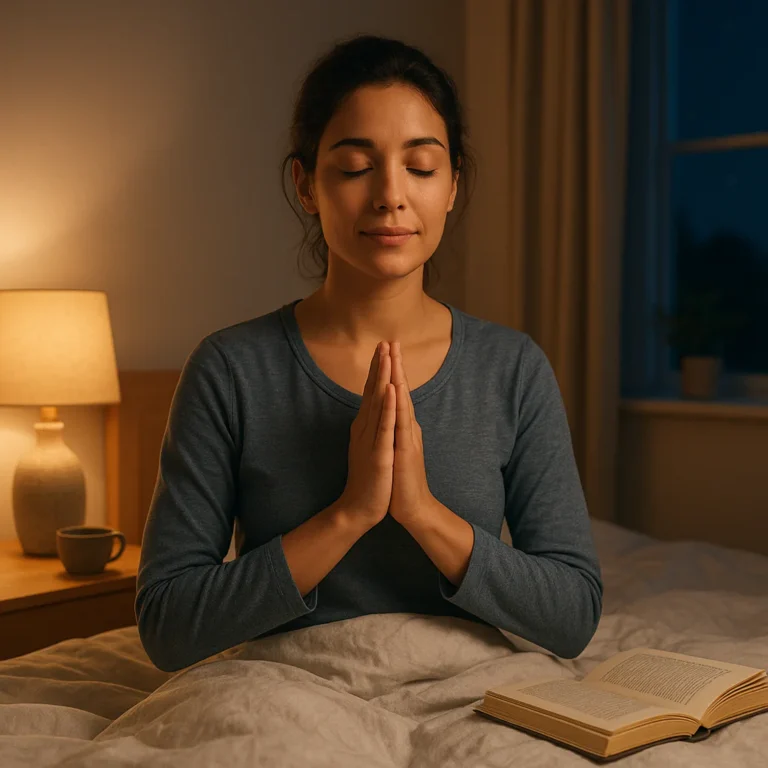
Adult mindfulness exercises for improving sleep work best when they help you soften the struggle—not force your mind to go blank. Start with a few comfortable breaths, a gentle body scan, or another simple practice, and let rest be the aim rather than a performance target.
One Mindful Ideas™ coach used to bring tomorrow’s to-do list to bed like an overpacked suitcase. Writing down the next day’s priorities before winding down didn’t guarantee sleep, but it did give those thoughts somewhere to wait besides the pillow.
Research suggests mindfulness meditation may improve sleep quality for some adults, though it isn’t a cure for every cause of sleeplessness. If sleep problems persist or affect your daytime life, ask a health professional about evidence-based care such as cognitive behavioral therapy for insomnia (CBT-I).
Key Takeaways
- Choose one short practice—such as mindful breathing, a body scan, or five-senses grounding—and adapt it to what feels comfortable.
- Mindfulness is about noticing and returning, not emptying your mind. Wandering thoughts are part of the practice.
- Build a calm, realistic wind-down routine and notice how habits like caffeine, screen use, and inconsistent schedules affect your sleep.
- Treat mindfulness as support, not a guaranteed cure. Persistent insomnia may need professional assessment; CBT-I is a recommended treatment for chronic insomnia.
Table of Contents
- ⚡️ Quick Tips and Facts
- 🌙 What Adult Mindfulness Exercises for Better Sleep Can—and Can’t—Do
- 🧠 The Roots of Sleeplessness: Why the Mind Stays Awake
- Stress, worry, and racing thoughts
- Sleep habits, schedules, and the body clock
- When sleep problems may need professional care
- 🔬 How Mindfulness Supports Healthy Sleep Patterns
- What research says about mindfulness and insomnia
- Mindfulness, relaxation, and cognitive behavioral therapy for insomnia
- 🛏️ Mindfully Preparing for Bed
- Create a calming, sleep-friendly bedroom
- Build a realistic wind-down routine
- Breathing, caffeine, screens, and other sleep-hygiene basics
- 🧭 Choose a Sleep Exercise That Matches Tonight’s Mind
- A quick guide to choosing a practice
- How long to practice and when to begin
- 🧘 15 Adult Mindfulness Exercises for Improving Sleep
- 1. Mindful breathing for a busy mind
- 2. Extended-exhale breathing to settle down
- 3. Body scan meditation for bedtime
- 4. Progressive muscle relaxation with mindful attention
- 5. Guided imagery for a calmer night
- 6. Mindful counting for racing thoughts
- 7. A five-senses grounding exercise
- 8. Mindful listening to quiet nighttime sounds
- 9. Loving-kindness meditation for bedtime
- 10. A worry-list and letting-go practice
- 11. Mindful journaling to clear your head
- 12. Gentle bedtime stretching with awareness
- 13. A mindful body-and-breath anchor
- 14. The “notice and return” thought practice
- 15. A middle-of-the-night reset
- 🌜 Mindfulness for Different Sleep Challenges
- Trouble falling asleep
- Waking up during the night
- Waking too early
- Shift work, travel, and changing schedules
- Anxiety, pain, and other concerns that affect sleep
- 📅 A Simple Seven-Day Mindfulness-for-Sleep Plan
- 🎧 Guided Sleep Meditations, Audio, Scripts, and Worksheets
- How to choose a sleep meditation or mindfulness app
- When to try a teacher-guided mindfulness session
- ⚠️ Common Mistakes and Safety Tips
- 📈 How to Track Progress Without Turning Sleep Into a Test
- 🔎 Conclusion
- 🔗 Recommended Links
- ❓ FAQ
- 📚 Reference Links
⚡️ Quick Tips and Facts
Mindfulness can help you relate differently to sleeplessness. It isn’t a switch that guarantees sleep. The goal is to notice what’s happening, soften the struggle, and give your body conditions that support rest.
| Quick fact | What it means for tonight |
|---|---|
| Mindfulness focuses attention on present-moment experience without judgment. | Notice the breath, body, or sounds rather than trying to force thoughts away. |
| Regular practice can help build attention and awareness. | Try a short daytime practice as well as a bedtime exercise. |
| Sleep difficulties can have many causes. | Mindfulness may help with stress-related wakefulness, but persistent symptoms deserve professional attention. |
| Cognitive behavioral therapy for insomnia (CBT-I) is a recommended treatment for chronic insomnia. | Mindfulness can complement good sleep care, but it isn’t a substitute for CBT-I when insomnia persists. |
The National Center for Complementary and Integrative Health describes mindfulness meditation as paying attention to present experiences, such as breathing, with an open attitude. For more short practices to try during the day, see our quick mindfulness activities for adults and browse our Meditation Practices collection.
A quick start: Get comfortable, feel the support beneath you, and notice three easy breaths. When your mind wanders—and it will—gently return to one sensation. You haven’t failed; noticing the wandering is the practice.
🌙 What Adult Mindfulness Exercises for Better Sleep Can—and Can’t—Do
Mindfulness exercises for sleep can help you notice anxious thoughts, relax bodily tension, and reduce the pressure to fall asleep on command. They may support better sleep quality, especially when stress or rumination is part of the picture. They are not guaranteed cures for insomnia, sleep apnea, pain, medication effects, or an irregular work schedule.
A review published in Annals of the New York Academy of Sciences found that mindfulness meditation may improve sleep quality in adults with sleep disturbance, while also noting that more research is needed to clarify effects and long-term outcomes (Rusch et al., 2019). A clinical trial in older adults found mindfulness awareness practices improved sleep quality and some daytime difficulties compared with sleep-hygiene education (Black et al., 2015). That’s promising, not a promise that one bedtime recording will knock you out.
What mindfulness is—and isn’t
| Mindfulness can be… | Mindfulness is not… |
|---|---|
| A way to notice thoughts and sensations without immediately reacting | A command to empty your mind |
| A skill you can practice for a few minutes at a time | A guaranteed insomnia cure |
| A helpful complement to sleep habits and clinical care | A replacement for diagnosing or treating a sleep disorder |
| A means of reducing the struggle around wakefulness | A test you pass by falling asleep quickly |
We often hear a version of this at Mindful Ideas™: “I tried meditating, but I kept thinking about tomorrow.” Our response? That’s not a broken meditation. That’s a mind doing mind things. The useful moment is when you notice, “I’m planning again,” and return to the body or breath.
For more on the wider effects of practice, visit our Benefits of Mindfulness and Mental Health resources.
When mindfulness is a good fit
It may be especially worth trying when:
- Your body is tired but your mind is rehearsing conversations or tomorrow’s tasks.
- You notice tension in your jaw, shoulders, belly, or hands at bedtime.
- Worry about not sleeping is making bedtime feel like a performance review.
- You want a gentle, low-cost practice to complement evidence-based care.
If sleep problems are frequent, severe, or affecting your daytime functioning, don’t make mindfulness carry the whole load. The American Academy of Sleep Medicine’s insomnia guideline recommends multicomponent CBT-I for adults with chronic insomnia.
🧠 The Roots of Sleeplessness: Why the Mind Stays Awake
A restless night can have more than one ingredient: stress, pain, a shifting schedule, caffeine, a noisy room, or a medical condition. Mindfulness helps us observe the experience; it doesn’t identify every underlying cause.
Stress, worry, and racing thoughts
At bedtime, ordinary thoughts can sound unusually loud. The unfinished email becomes a courtroom drama. A small concern gets promoted to chief executive of your brain.
Stress and worry may keep attention on future problems, while attempts to suppress thoughts can sometimes make them rebound. UMass Memorial Health’s overview explains that mindfulness can help people notice thoughts and feelings without becoming caught in them, and offers simple practices such as breathing and body scans (UMass Memorial Health).
Try this distinction:
- Thought: “I have to fall asleep right now.”
- Mindful observation: “I’m having the thought that I have to fall asleep right now.”
- Gentle return: Feel the weight of your body or the next breath.
The thought may still be there. The aim is to change your relationship with it, not win an argument at 1:17 a.m.
Sleep habits, schedules, and the body clock
Our sleep-wake rhythm is influenced by timing, light, daily routines, and individual biology. A late shift, travel across time zones, inconsistent wake times, or evening stimulation can all complicate sleep. The CDC’s sleep guidance recommends adults get at least seven hours of sleep regularly, while emphasizing that sleep needs vary.
A few helpful basics:
- Keep your wake-up time reasonably consistent, including on weekends.
- Get daylight exposure during the day when possible.
- Give yourself a calmer transition into bed instead of moving from high stimulation straight to lights-out.
- Notice how caffeine, nicotine, alcohol, meals, and exercise timing affect your sleep rather than assuming one rule fits everyone.
Mindfulness can help you notice patterns without turning your sleep into a spreadsheet with a tiny whistle. For persistent difficulty, a clinician can help distinguish habit-related issues from insomnia or another sleep condition.
When sleep problems may need professional care
Consider speaking with a health professional if you:
- Have trouble sleeping regularly for months or it is significantly affecting your mood, work, safety, or concentration.
- Snore loudly, gasp, or experience pauses in breathing during sleep.
- Have uncomfortable leg sensations or repeated movements that disrupt sleep.
- Experience severe daytime sleepiness, frequent nightmares, or sleep problems alongside pain, anxiety, depression, or medication changes.
- Feel unsafe or overwhelmed by mental-health symptoms.
The NHLBI’s insomnia information outlines causes, symptoms, and treatment options. Don’t stop or change prescribed medication without discussing it with the prescriber. Mindfulness is a supportive skill, not a substitute for medical assessment.
🔬 How Mindfulness Supports Healthy Sleep Patterns
Mindfulness does not sedate you. Instead, it can help you notice the cycle of tension, worry, and sleep effort that sometimes keeps wakefulness going. You practice returning attention to what is present rather than repeatedly checking, “Am I asleep yet?”
What research says about mindfulness and insomnia
Research suggests mindfulness-based practices can improve subjective sleep quality for some adults. Results vary by study, population, and program, so it’s wise to avoid claims that meditation works equally well for everyone.
A systematic review and meta-analysis found mindfulness meditation programs may improve sleep quality compared with nonspecific active controls, though the authors called for more rigorous research (Rusch et al., 2019). The NCCIH overview also notes that meditation research has limitations and that some people report unwanted experiences.
The useful takeaway: mindfulness is a reasonable skill to try, particularly for stress and rumination, but chronic insomnia has treatments with stronger clinical guidance.
Mindfulness, relaxation, and cognitive behavioral therapy for insomnia
These approaches overlap, but they are not interchangeable.
| Approach | Main emphasis | Useful role |
|---|---|---|
| Mindfulness meditation | Noticing present experience with less judgment | Helps with attention, awareness, and the struggle around thoughts |
| Relaxation practices | Lowering physical arousal through breathing or muscle release | Can ease tension and support a calming bedtime routine |
| CBT-I | Addressing thoughts and behaviors that maintain chronic insomnia | First-line clinical treatment for chronic insomnia in many guidelines |
| Sleep hygiene | Supporting healthy sleep conditions and routines | Helpful foundation, but often not enough by itself for chronic insomnia |
The American College of Physicians recommends CBT-I as initial treatment for adults with chronic insomnia (ACP guideline). Mindfulness can complement CBT-I or help with general stress; a qualified clinician can help decide what fits.
🛏️ Mindfully Preparing for Bed
Think of a bedtime routine as a gentle landing, not a complicated ritual you must perform perfectly. The aim is to reduce stimulation and make room for rest.
Create a calming, sleep-friendly bedroom
A bedroom doesn’t need to look like a luxury hotel brochure. It does help if the space is dark, quiet, comfortable, and associated with sleep.
- Reduce bright light and distracting noise as much as practical.
- Keep the room at a comfortable temperature for you.
- Put your phone out of easy reach if checking it tends to restart the mental carousel.
- Make a small note of recurring disturbances—light, noise, pets, or temperature—before buying anything.
The CDC’s sleep recommendations include keeping a regular schedule and making the sleep environment quiet, relaxing, and cool. If you use a fan or sound machine, treat it as an optional comfort tool, not a medical treatment.
Build a realistic wind-down routine
Try a sequence that fits your actual evening:
- Choose a transition cue. Dim lights, wash up, or make a warm caffeine-free drink.
- Put tomorrow somewhere outside your head. Write down key tasks and the first step for each.
- Give your attention one easy anchor. Try a body scan, mindful breathing, or gentle stretching.
- Let go of the sleep deadline. You can invite rest; you cannot order it to arrive.
- Repeat the same simple routine when possible. A familiar cue can make winding down easier.
One of our coaches used to carry tomorrow’s to-do list into bed like a very determined briefcase. Writing three next actions before evening practice helped create a small boundary: “This is recorded; I don’t need to rehearse it now.” It didn’t guarantee sleep. It did make the pillow less like a planning meeting.
Breathing, caffeine, screens, and other sleep-hygiene basics
| Factor | Practical experiment | Mindful angle |
|---|---|---|
| Caffeine | Notice whether earlier cut-off times improve your sleep; sensitivity varies. | Observe patterns over several days rather than blaming one cup. |
| Alcohol | Pay attention to whether it fragments sleep or leads to early waking. | Record effects neutrally; alcohol may make you feel drowsy but can disrupt sleep later. |
| Screens and light | Reduce stimulating use close to bedtime if it keeps you alert. | Notice whether scrolling leaves your mind calmer—or full of fresh tabs. |
| Late tasks | Write down tomorrow’s priorities before bed. | Acknowledge the task, then return to present sensations. |
| Breath | Try comfortable, unforced breathing. | Don’t strain or hold your breath to achieve a particular result. |
The NHLBI’s healthy sleep habits offer additional guidance. Sleep hygiene can support sleep, but for chronic insomnia, it is not a replacement for CBT-I.
🧭 Choose a Sleep Exercise That Matches Tonight’s Mind
You don’t need to try all 15 practices tonight. Pick one that feels safe and simple. If it irritates you or makes you more alert, switch to another.
A quick guide to choosing a practice
| If you notice… | Consider trying… | Why it may fit |
|---|---|---|
| Fast, repetitive thoughts | Mindful counting or “notice and return” | Gives attention a simple, repeatable task |
| Tension in your body | Body scan or progressive muscle relaxation | Helps you notice and release muscular effort |
| Anxiety about tomorrow | Worry-list practice or journaling earlier in the evening | Moves planning out of bed and onto paper |
| A sense of unreality or overwhelm | Five-senses grounding | Anchors attention in concrete surroundings |
| Restlessness | Gentle mindful stretching | Offers movement without turning bedtime into a workout |
| Difficulty staying asleep | A short breath or body anchor | Can help you respond calmly without checking the clock |
Some people find focused breathing uncomfortable. If that’s you, choose a neutral external anchor, such as a soft sound or the feel of the blanket.
How long to practice and when to begin
There is no magic number of minutes. Start with one to five minutes, then continue only if it feels useful. UMass Memorial Health describes short breathing and body-scan practices and recommends building mindfulness through regular practice (UMass Memorial Health).
For many people, practicing during the day makes nighttime exercises more familiar. At bedtime, shorter is often kinder: this is not the moment to earn a meditation merit badge.
🧘 15 Adult Mindfulness Exercises for Improving Sleep
Each exercise below is an invitation, not a sleep command. If you notice distress, dizziness, or increased agitation, stop and try a neutral grounding practice—or seek professional guidance if the reaction is significant.
1. Mindful breathing for a busy mind
- Setle into a comfortable position.
- Notice the breath where it feels clearest: nostrils, chest, belly, or ribs.
- Feel one inhale and one exhale without making them bigger.
- When a thought appears, name it softly—“planning,” “remembering,” or “worrying.”
- Return to the next breath.
UMass Memorial Health suggests attending to the chest or belly and repeating a few slow breaths (their sleep mindfulness guide). If breath focus feels uncomfortable, try listening to a quiet sound instead.
2. Extended-exhale breathing to settle down
A slightly longer, comfortable exhale may feel calming for some people. Keep it gentle: no straining, breath-holding, or forcing a count.
- Breathe in naturally.
- Let the exhale last a little longer, if comfortable.
- Repeat for a few cycles.
- Return to ordinary breathing if you feel light-headed or tense.
Comfort matters more than the ratio. You do not need to achieve a specific breathing pattern for the exercise to count.
3. Body scan meditation for bedtime
- Feel the places where your body meets the bed.
- Bring attention to your toes, then feet, ankles, and calves.
- Move attention gradually upward, noticing sensations without grading them.
- When you find tension, imagine making room around it; don’t demand that it disappear.
- If you lose your place, return to a body part you can feel.
A body scan may help redirect attention from worry toward bodily sensations. But if focusing inward feels unsettling, keep your eyes open and choose an external anchor. The U.S. Department of Veterans Affairs’ mindfulness resources include body-awareness practices and adaptations.
4. Progressive muscle relaxation with mindful attention
Progressive muscle relaxation involves tensing and releasing muscle groups. Use a light touch; skip any area that hurts, and avoid tensing if you have an injury or medical concern.
- Begin with your hands or feet.
- Gently tense for a few seconds—not to the point of strain.
- Release and notice the contrast.
- Move to another comfortable muscle group.
- Finish by feeling the body supported.
You can also skip the tensing and simply notice areas that may soften. For formal relaxation guidance, see the NCCIH overview of relaxation techniques.
5. Guided imagery for a calmer night
Picture a familiar, peaceful setting—perhaps a quiet garden or a lakeside path. Add details slowly: the color of the sky, the sound of leaves, the feel of cool air. If the image turns into a busy story, come back to one sensory detail.
A long guided recording can be soothing for some people, but it can also keep others listening for the next instruction. The featured video, “Use Your Powerful Mind: Healing Deep Sleep Hypnosis” by The Mindful Movement, is a 2-hour-plus guided sleep hypnosis recording. It has been viewed more than 11 million times, but views are not evidence of clinical effectiveness. Try the opening only if you find hypnosis recordings comfortable, keep the volume low, and use a timer if you don’t want playback all night.
6. Mindful counting for racing thoughts
- Choose a gentle pattern: count each exhale from one to ten.
- When you reach ten, begin again.
- If you forget the number, start at one without scolding yourself.
- If counting becomes another performance task, drop it and feel the body instead.
The point is not to reach a perfect score. A lost count is a cue to return, not a reason to restart the evening.
7. A five-senses grounding exercise
Quietly notice:
- Five things you can see, if your eyes are open.
- Four sensations of touch, such as blanket, mattress, or clothing.
- Three sounds.
- Two scents, if noticeable.
- One taste or a single comfortable breath.
You can shorten this to one sensation from each sense. Grounding can be useful when thoughts feel abstract or spiraling; keep it gentle rather than searching intensely for sensations.
8. Mindful listening to quiet nighttime sounds
Let sounds arrive without labeling them as good or bad. Notice one sound near you, then one farther away. If you prefer an audio track, choose a calm, low-volume recording from a reputable source and set a sleep timer.
Listening to music or audio can be comforting, but there is no need to rely on claims about special frequencies or guaranteed “deep sleep.” The NCCIH meditation overview cautions that evidence varies across meditation approaches. Choose what feels pleasant and safe, not what promises a miracle.
9. Loving-kindness meditation for bedtime
Silently offer a few simple phrases to yourself:
- “May I be safe.”
- “May I be at ease.”
- “May I rest as well as I can tonight.”
If it feels natural, extend the wishes to someone you care about. If the words feel forced, use a neutral phrase like, “This is a difficult moment; I can meet it gently.”
10. A worry-list and letting-go practice
Do this before getting into bed, ideally with a notebook nearby:
- Write the worry in one plain sentence.
- Mark whether it needs action, information, or simply acknowledgment.
- If action is needed, write the next small step and when you’ll take it.
- Close the notebook and name one thing you can feel in the room.
- If the worry returns, remind yourself, “It’s recorded; I’ll return to it at the planned time.”
This does not make a serious problem disappear. It can reduce the urge to rehearse it repeatedly in bed.
11. Mindful journaling to clear your head
Try three short prompts:
- What is occupying my attention?
- What can wait until tomorrow?
- What small thing felt okay today?
Keep it brief. If writing turns into a detailed investigation of every regret since 2009, close the notebook and return to something grounding. A structured approach to persistent insomnia may require CBT-I rather than journaling alone; learn more from the American College of Physicians.
12. Gentle bedtime stretching with awareness
Choose comfortable movements, such as shoulder rolls, a gentle seated forward fold, or an easy calf stretch. Move slowly and notice how the muscles respond.
- Stay within a pain-free range.
- Avoid vigorous activity if it leaves you energized.
- Skip stretches that worsen pain, dizziness, or other symptoms.
The goal is comfortable awareness, not flexibility training in pajamas.
13. A mindful body-and-breath anchor
Use two anchors together: feel the mattress beneath you and notice the natural breath. When thoughts pull attention away, return to whichever anchor feels steadier.
This can be easier than focusing on breathing alone, especially if breath attention feels too intense. The VA’s mindful-awareness guide offers practical ways to adapt mindfulness to individual needs.
14. The “notice and return” thought practice
- Notice that your mind has wandered.
- Name what it is doing: planning, remembering, imagining, or judging.
- Let the thought be there without following it into a full story.
- Return attention to a neutral sensation.
- Repeat as often as needed.
This is the central skill behind many mindfulness practices. Shelby Harris, a clinical sleep psychologist quoted in Mindful, describes regular practice as strengthening the ability to recognize insomnia-related thoughts and let them pass (Mindful’s sleep guide). You don’t need to make the thought vanish.
15. A middle-of-the-night reset
If you wake up:
- Notice the urge to check the time; consider leaving the clock alone.
- Feel your body and take a few comfortable breaths.
- Try a brief body scan or listen to a quiet sound.
- If you remain alert and frustrated, leave the bed and do something calm in dim light.
- Return when you feel sleepy.
Mindful cites the common stimulus-control advice to get out of bed when you are awake for a prolonged period, often described as around 20 minutes. Avoid watching the clock to enforce an exact deadline. For recurring insomnia, a CBT-I professional can tailor stimulus-control strategies.
🌜 Mindfulness for Different Sleep Challenges
Trouble falling asleep
Try one short practice, then give up the project of monitoring whether it is “working.” A body scan, comfortable breathing, or gentle imagery may help you settle. If you’re still alert, the issue may not be a lack of mindfulness; consider the broader causes and your sleep schedule.
Waking up during the night
Keep the response boring and kind: notice the wakefulness, avoid bright light and clock-checking, and try one simple anchor. If you feel wide awake or frustrated, leave bed for a quiet activity in dim light and return when sleepy. This approach is consistent with stimulus-control elements used in CBT-I; see the ASM guideline.
Waking too early
Early waking can relate to mood, stress, schedule, light, health, or age. A mindfulness exercise may ease the distress of being awake, but it cannot identify the cause. Track the pattern and discuss persistent early waking with a health professional, especially if it accompanies low mood or significant daytime impairment.
Shift work, travel, and changing schedules
For shift work or travel, mindfulness can create a brief wind-down even when bedtime changes. Pair it with practical schedule and light-management advice from a clinician or credible sleep resource. The NHLBI provides general sleep-habit guidance; complex shift-work sleep problems may need individualized support.
Anxiety, pain, and other concerns that affect sleep
Mindfulness may help you notice anxiety or discomfort without escalating the struggle, but it is not a substitute for care. If breath or body attention intensifies panic, trauma memories, or pain, switch to an external anchor, keep your eyes open, or stop. Seek help from a qualified clinician for persistent or severe symptoms.
📅 A Simple Seven-Day Mindfulness-for-Sleep Plan
Keep the plan flexible. Miss a day? Resume when convenient; this is practice, not a streak contest.
| Day | Practice | Suggested focus |
|---|---|---|
| 1 | Three mindful breaths during the day | Learn a comfortable anchor |
| 2 | One-minute “notice and return” practice | Spot wandering without judgment |
| 3 | Short body scan before bed | Notice sensations and support |
| 4 | Write tomorrow’s top three tasks | Reduce mental rehearsal |
| 5 | Gentle exhale-focused breathing | Keep the breath unforced |
| 6 | Five-senses grounding | Connect with the room around you |
| 7 | Repeat your most comfortable practice | Build a realistic routine |
After a week, ask: Which practice felt supportive, neutral, or irritating? Keep the helpful ones and adapt or drop the rest. If you have ongoing insomnia, consider asking a clinician about CBT-I rather than extending the plan indefinitely.
🎧 Guided Sleep Meditations, Audio, Scripts, and Worksheets
Guided audio can help if a teacher’s voice gives your attention somewhere steady to rest. It can be distracting if you start waiting for the next instruction, checking your phone, or worrying that the recording will stop.
The featured Mindful Movement sleep hypnosis video is one possible option. Its long duration may suit someone who likes continuous narration, but a popular recording is not a clinically proven insomnia treatment. Try a short segment first, set a timer, and stop if it makes you more alert or uncomfortable.
How to choose a sleep meditation or mindfulness app
Look for:
- A calm voice and exercises that let you choose eyes-open or eyes-closed practice.
- Clear privacy settings and a way to use audio without continued screen browsing.
- Short recordings, sleep timers, or offline access if those features matter to you.
- No claims that a track will cure insomnia or replace medical treatment.
Apps are optional tools, not sedatives. A simple breath or body practice works without a subscription, phone, or perfectly curated rainforest soundtrack.
When to try a teacher-guided mindfulness session
A teacher or therapist can help you adapt practices if you have trauma, panic, chronic pain, or difficulty meditating alone. For persistent insomnia, seek a clinician trained in CBT-I; mindfulness classes may be useful alongside, but should not be mistaken for CBT-I.
⚠️ Common Mistakes and Safety Tips
- ❌ Trying to empty your mind. Thoughts are normal; practice noticing and returning.
- ❌ Treating meditation as a test of whether you’ll sleep. This can add pressure. Choose a practice for steadiness, not proof.
- ❌ Forcing deep breaths or long holds. Keep breathing comfortable; stop if dizzy or distressed.
- ❌ Assuming every sleep problem is stress. Medical conditions, medication effects, pain, and sleep disorders may need assessment.
- ❌ Using mindfulness instead of treatment for chronic insomnia. Ask a clinician about CBT-I.
- ✅ Adapting the anchor. Choose sound, touch, or visual grounding if body or breath focus is uncomfortable.
- ✅ Practicing during the day. Familiarity can make bedtime practice easier.
- ✅ Seeking help when symptoms persist. Good self-care includes professional support when needed.
Meditation is generally considered low risk, but some people experience difficult effects; the NCCIH meditation overview discusses the limits of research and safety considerations.
📈 How to Track Progress Without Turning Sleep Into a Test
If you want to notice patterns, track broad observations rather than measuring every minute.
| Track | Example |
|---|---|
| Bedtime routine | “Did a short body scan” |
| Morning energy | Low, medium, or good |
| Possible disruptors | Late coffee, travel, pain, or unusual stress |
| Practice experience | Helpful, neutral, or uncomfortable |
Look for patterns over time, not a single “good” or “bad” night. Avoid frequent clock-checking and don’t treat your sleep log as a grade. If tracking increases anxiety, stop. A clinician may recommend a more structured sleep diary as part of assessment or CBT-I.
📚 Sources referenced in the article
- National Center for Complementary and Integrative Health: Relaxation Techniques
- National Center for Complementary and Integrative Health: Meditation in Depth
- American Academy of Sleep Medicine: Behavioral and Psychological Treatments for Chronic Insomnia
- American College of Physicians: Management of Chronic Insomnia Disorder in Adults
- National Heart, Lung, and Blood Institute: Insomnia
- Centers for Disease Control and Prevention: About Sleep
- Rusch et al.: Mindfulness Meditation and Sleep Quality
- Black et al.: Mindfulness Meditation and Sleep Quality in Older Adults
- UMass Memorial Health: How Mindfulness Can Improve Your Sleep
- Mindful: The Ultimate Guide to Mindfulness for Sleep
- Mindfulness Exercises: 10 Mindfulness Exercises for Sleep