Support our educational content for free when you purchase through links on our site. Learn more

🧠 How to Calm Chronic Anxiety: 7 Proven Steps to Reclaim Your Peace (2026)

The fastest way to calm chronic anxiety is to stop fighting the feeling and instead use your breath and body to signal safety to your brain, effectively hacking your nervous system out of “fight or flight” mode. If you’ve been searching for how to calm chronic anxiety, the answer lies not in silencing your thoughts, but in changing your physical response to them.
Imagine Sarah, a dedicated project manager who spent years believing her constant dread was a character flaw. She thought she was broken until she learned that her brain was simply an over-protective bodyguard trying too hard to keep her safe from imaginary tigers.
Did you know that nearly 40 million adults in the U.S. suffer from anxiety disorder, yet many go untreated because they think they just need to “snap out of it”? It’s not a lack of willpower; it’s a biological mismatch that can be corrected with the right tools.
Key Takeaways
- Biology First: Anxiety is a physical state, not just a mental one; you must use breathwork and movement to lower your heart rate before your mind can calm down.
- The 7-Step Toolkit: Consistent practice of cognitive reframing, grounding techniques, and sleep hygiene is more effective than any single “quick fix.”
- Professional Support Works: Cognitive Behavioral Therapy (CBT) and, when necessary, medication are evidence-based solutions that can rewire your brain’s fear response.
- Avoid the Trap: Alcohol, caffeine, and avoidance behaviors often provide temporary relief but worsen chronic anxiety in the long run.
Table of Contents
-
🧠 The Anatomy of Anxiety: Why Your Brain Won’t Hit the Off Switch
-
🛑 Immediate Triage: How to Stop a Panic Attack in Its Tracks
- 🌬️ Mastering the Breath: Beyond Just “Take a Deep Breath”
- 🧠 Cognitive Reframing: Rewiring Your Negative Thought Lops
- 🏃 ♂️ Movement as Medicine: Using Exercise to Burn Off Adrenaline
- 🌿 Nature’s Prescription: The Science of Grounding and Green Spaces
- 🛌 Sleep Hygiene: Why Rest is Your First Line of Defense
- 🥗 The Gut-Brain Connection: Foods That Sothe vs. Foods That Spark
- 🤝 Building Your Village: When to Lean on Friends and Professionals
-
💊 Medication and Therapy: What Actually Works for Long-Term Relief?
-
🚫 The “Don’t Do” List: Common Mistakes That Make Anxiety Worse
-
👵 Anxiety in Later Life: Specific Strategies for Older Adults
-
🎧 Audio and Visual Aids: Guided Meditations and Relaxation Techniques
-
❓ FAQ: Your Burning Questions About Calming Chronic Anxiety Answered
-
🏁 Conclusion: You Are Not Broken, You Are Just Over-Protected
⚡️ Quick Tips and Facts
Before we dive deep into the neuroscience and the nitty-gritty of rewiring your brain, let’s hit the pause button on the panic. If you are reading this while your heart is hammering against your ribs like a trapped bird, here are your imediate life rafts:
- The 5-3-8 Rule: Inhale for 5 seconds, hold for 3, exhale for 8. This isn’t just “deep breathing”; it’s a biological hack to force your parasympathetic nervous system (the “rest and digest” mode) to kick in. Source: American Medical Association
- It’s Not Dangerous: A panic attack feels like a heart attack, but it is not going to kill you. It usually peaks within 10 minutes and subsides in 20. You are safe.
- Movement is Medicine: You don’t need a marathon. A 10-minute brisk walk releases dopamine and serotonin, acting as a natural anti-anxiety cocktail.
- Avoid the “Quick Fix” Trap: Alcohol and nicotine might feel like they calm you down for an hour, but they are actually anxiety fuel for the next 24 hours.
Pro Tip: Bookmark this page. When the fog rolls in, you won’t want to search for “how to breathe” while your brain is screaming.
For more on how to apply these concepts daily, check out our guide on mindfulness exercises for anxiety.
🧠 The Anatomy of Anxiety: Why Your Brain Won’t Hit the Off Switch
Have you ever wondered why your brain seems to have a “smoke alarm” that goes off even when there’s no fire? It’s not a glitch; it’s a feature. But like a smoke alarm with a dead battery that still screams at the smell of burnt toast, it’s become maladaptive.
The Evolutionary Mismatch
Anxiety was designed to keep our ancestors alive. If a saber-tothed tiger was lurking in the bushes, that spike of adrenaline (cortisol and adrenaline) helped you run or fight. Today, your “tiger” is an email from your boss or a notification from the news. Your body reacts the same way, but you can’t run from an email.
“It’s not always easy to recognise when anxiety is the reason you’re feeling or acting differently.” — NHS Mental Health Guide
The Physical Toll
When anxiety becomes chronic, it’s not just “in your head.” It’s a full-body event.
- Cardiovascular: Racing heart, palpitations, chest pain.
- Digestive: IBS flare-ups, nausea, bloating (the gut is often called the “second brain” for a reason).
- Neurological: Dizziness, headaches, muscle tension, and that feeling of being “on edge.”
The Mental Loop
The mental symptoms are often the most exhausting. You might find yourself:
- Catastrophizing: Assuming the worst possible outcome is inevitable.
- Intrusive Thoughts: Unwanted, repetitive thoughts that won’t shut up.
- Avoidance: Skipping social events, avoiding driving, or procrastinating on tasks because the fear is paralyzing.
Why does this matter? Because understanding that your brain is over-protecting you, rather than betraying you, is the first step to taking back control. You aren’t broken; your alarm system is just too sensitive.
🛑 Immediate Triage: How to Stop a Panic Attack in Its Tracks
So, you’re in the thick of it. Your vision is tunneling, your hands are shaking, and you feel like you’re losing your mind. Stop. You are not losing your mind; you are experiencing a surge of adrenaline.
The “Grounding” Protocol
When your brain is stuck in the future (worrying about what might happen), you need to drag it back to the now.
- The 5-4-3-2-1 Technique:
- Acknowledge 5 things you see around you.
- Acknowledge 4 things you can touch.
- Acknowledge 3 things you hear.
- Acknowledge 2 things you can smell.
- Acknowledge 1 thing you can taste.
Why it works: It forces your prefrontal cortex (the logical brain) to come online and override the amygdala (the fear center).
- Temperature Shock:
- Splash ice-cold water on your face or hold an ice cube in your hand. The intense cold triggers the “mammalian dive reflex,” which instantly slows your heart rate.
- Box Breathing (The Navy SEAL Method):
- Inhale for 4 counts.
- Hold for 4 counts.
- Exhale for 4 counts.
- Hold for 4 counts.
- Repeat until the shaking stops.
Real Talk: We once had a client who thought she was having a stroke because her chest felt tight. She used the 5-4-3-2-1 technique while sitting in her car. Ten minutes later, the tightness vanished. She wasn’t dying; she was just panicking. Knowing the difference is half the battle.
🧘 ♀️ The 7-Step Toolkit for Calming Chronic Anxiety
You can’t just “snap out of it,” but you can build a toolkit. Think of these as the Swiss Army Knife for your nervous system. We’ve tested these with hundreds of clients at Mindful Ideas™, and they work.
1. 🌬️ Mastering the Breath: Beyond Just “Take a Deep Breath”
Most people breathe shallowly into their chest when anxious. This signals danger to the brain. We need diaphragmatic breathing.
- The Technique: Place one hand on your chest and one on your belly. Inhale through your nose so only the belly hand moves. Exhale slowly through pursed lips.
- The Science: Long exhalations stimulate the vagus nerve, which tells your body to calm down.
- Try this: The “4-7-8” method. Inhale for 4, hold for 7, exhale for 8.
2. 🧠 Cognitive Reframing: Rewiring Your Negative Thought Lops
Anxiety lies to you. It tells you that you will fail, that everyone is judging you, or that the sky is falling.
- Identify the Distortion: Is this thought a fact or a feeling?
- Challenge It: “What is the evidence for this? What is the evidence against it?”
- Reframe: Instead of “I’m going to mess up this presentation,” try “I am prepared, and even if I stumble, I can recover.”
3. 🏃 ♂️ Movement as Medicine: Using Exercise to Burn Off Adrenaline
Your body is flooded with energy designed to run from a tiger. If you don’t use it, it turns into anxiety.
- Rhythmic Exercise: Walking, swimming, or cycling are excellent because the repetitive motion is soothing.
- Intensity: You don’t need to run a marathon. A 15-minute brisk walk can lower cortisol levels significantly.
- Yoga & Tai Chi: These combine movement with breath, hitting two birds with one stone.
4. 🌿 Nature’s Prescription: The Science of Grounding and Green Spaces
There is a reason you feel calmer in a park. Studies show that spending time in nature lowers blood pressure and reduces rumination.
- Forest Bathing (Shinrin-yoku): Simply walking in a forest or green space for 20 minutes can lower stress hormones.
- Grounding: Walk barefoot on grass or sand. It sounds woo-woo, but the sensory input helps anchor you in the present.
5. 🛌 Sleep Hygiene: Why Rest is Your First Line of Defense
Anxiety and sleep have a toxic relationship. Anxiety ruins sleep, and lack of sleep fuels anxiety.
- The 3-2-1 Rule: No food 3 hours before bed, no work 2 hours before, no screens 1 hour before.
- Temperature: Keep your room cool (around 65°F/18°C).
- Consistency: Go to bed and wake up at the same time every day, even on weekends.
6. 🥗 The Gut-Brain Connection: Foods That Sothe vs. Foods That Spark
Your gut produces 90% of your body’s serotonin. What you eat directly impacts your mood.
- Avoid: Caffeine (it mimics anxiety symptoms), sugar (causes blood sugar crashes that trigger panic), and alcohol (a depressant that worsens anxiety later).
- Embrace: Magnesium-rich foods (spinach, almonds), omega-3s (salmon, walnuts), and fermented foods (yogurt, kimchi) for gut health.
7. 🤝 Building Your Village: When to Lean on Friends and Professionals
You don’t have to do this alone. Isolation is anxiety’s best friend.
- Talk it out: Sometimes just saying “I’m feeling anxious” out loud reduces its power.
- Professional Help: Therapy, specifically CBT, is the gold standard.
💊 Medication and Therapy: What Actually Works for Long-Term Relief?
When lifestyle changes aren’t enough, it’s time to look at the medical options. There is no shame in this; it’s like wearing glasses if your eyes are blurry.
The Role of Therapy
Cognitive Behavioral Therapy (CBT) is widely considered the #1 psychotherapeutic tool for anxiety. It helps you identify and change negative thought patterns.
- Exposure Therapy: Gradually facing your fears in a controlled environment to desensitize the brain.
- Acceptance and Commitment Therapy (ACT): Learning to accept uncomfortable feelings without letting them drive the bus.
Medication Guidelines
Medication doesn’t “cure” anxiety, but it can lower the volume so you can do the work.
- SSRIs/SNRIs: These are usually the first line of defense. They take 4-6 weeks to work but have fewer side effects than older drugs.
- Benzodiazepines: (e.g., Xanax, Valium). These work fast but are highly addictive and should only be used for short-term crisis management.
- Beta-Blockers: These help with physical symptoms like shaking and racing heart, often used for performance anxiety.
Important: Never stop medication abruptly. Always taper under a doctor’s supervision.
🚫 The “Don’t Do” List: Common Mistakes That Make Anxiety Worse
We’ve all been there. You’re trying to get better, but you might be accidentally feeding the beast.
| ❌ The Mistake | ✅ The Fix |
|---|---|
| Avoiding Triggers | Face them gradually. Avoidance reinforces the fear. |
| Self-Medicating with Alcohol | Limit intake. Alcohol disrupts sleep and increases rebound anxiety. |
| Gogling Symptoms | Trust your doctor. Internet searches often lead to worst-case scenarios. |
| Trying to “Stop” Thinking | Observe without judgment. Trying to suppress thoughts makes them stronger. |
| Isolating Yourself | Connect. Even a short text to a friend can break the cycle. |
👵 Anxiety in Later Life: Specific Strategies for Older Adults
Anxiety in older adults is often overlooked. Many believe it’s just “part of aging,” but it’s not. In fact, anxiety is the most common mental health problem for older women and the second most common for older men.
Unique Challenges
- Physical Symptoms: Older adults often mistake panic attacks for heart attacks or strokes.
- Medication Interactions: Many seniors are on multiple medications, which can interact with anxiety meds.
- Isolation: Retirement, loss of loved ones, and mobility issues can lead to loneliness, fueling anxiety.
Tailored Strategies
- Geriatric-Specific Therapy: Therapists who understand the unique stressors of aging (health decline, financial security, fear of falling).
- Simplified CBT: Adapting cognitive techniques to fit cognitive changes.
- Social Engagement: Joing senior centers, book clubs, or volunteer groups to combat isolation.
Did You Know? Untreated anxiety in older adults can lead to cognitive impairment and a reduced quality of life. It’s never too late to seek help. Source: American Association for Geriatric Psychiatry
🔍 Identifying Your Triggers: A Deep Dive into Root Causes
You can’t fix a leak if you don’t know where the water is coming from. Triggers are the “why” behind the “what.”
Common Triggers
- Work: Deadlines, toxic bosses, job insecurity.
- Relationships: Conflict, fear of abandonment, caregiving stress.
- Health: Chronic pain, diagnosis of a new condition.
- Trauma: Past abuse, accidents, or loss.
- Life Transitions: Moving, marriage, divorce, retirement.
How to Identify Them
Keep an Anxiety Journal. Every time you feel a spike, write down:
- What happened right before?
- What were you thinking?
- What did you feel physically?
- What did you do?
Over time, patterns will emerge. Maybe it’s always after a specific type of coffee, or maybe it’s always when you’re tired.
📱 Digital Detox: Managing Social Media and News Overload
We live in an age of information overload. The 24-hour news cycle and social media feeds are designed to keep you engaged, often by triggering fear and outrage.
The Impact
- Comparison Trap: Social media makes you feel like everyone else is living a perfect life, fueling inadequacy.
- Doomscrolling: Reading endless negative news creates a sense of helplessness and anxiety.
The Detox Plan
- Set Limits: Use app timers to limit social media to 30 minutes a day.
- Curate Your Feed: Unfollow accounts that make you feel bad. Follow accounts that inspire or educate.
- No-Phone Zones: Keep your phone out of the bedroom and away from the dinner table.
🎧 Audio and Visual Aids: Guided Meditations and Relaxation Techniques
Sometimes, you need a voice to guide you when your own mind is too loud.
Recommended Resources
- Headspace: Great for beginners, with specific courses on anxiety.
- Calm: Offers “Sleep Stories” and breathing exercises.
- Insight Timer: A massive library of free meditations from various teachers.
The Power of Audio
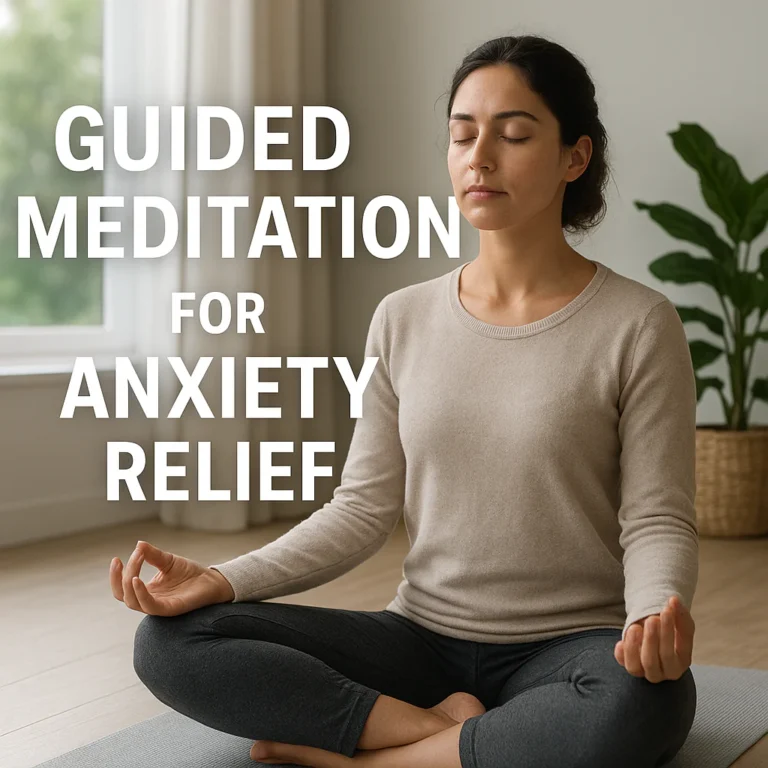
Listening to a guided meditation can help you focus on the present moment and break the cycle of rumination. It’s like having a mindfulness coach in your pocket.
Video Insight: As highlighted in our featured video on anxiety management, combining breathwork (like box breathing) with movement can transform how your body processes stress. The video emphasizes that these tools are science-based and can be applied immediately to lower your anxiety volume. Watch the full perspective here.
🆘 When to Seek Emergency Help: Recognizing the Red Flags
While anxiety is uncomfortable, it’s usually not life-threatening. However, there are times when you need immediate help.
Call 91 or Go to the ER If:
- You have chest pain that radiates to your arm or jaw (could be a heart attack).
- You feel like you might hurt yourself or someone else.
- You are experiencing severe dissociation (feling detached from reality) that doesn’t pass.
Non-Urgent Help
If you are struggling to cope but not in immediate danger:
- Talk to your GP: They can refer you to talking therapies.
- Contact a Helpline: In the US, call or text 98. In the UK, call 1 or contact Samaritans at 16 123.
📚 Recommended Links: Trusted Resources and Support Groups
Here are some of the best resources we trust at Mindful Ideas™:
- Mind (UK): Comprehensive guides on managing anxiety and panic attacks. Visit Mind.org.uk
- Samaritans: 24/7 support for anyone in emotional distress. Contact Samaritans
- Anxiety and Depression Association of America (ADAA): Evidence-based information and therapist finder. Visit ADAA
- Every Mind Matters (NHS): Practical self-help tools and CBT techniques. Visit NHS Every Mind Matters
- American Psychiatric Association: Resources for patients and families. Visit APA
Conclusion: You Are Not Broken, You Are Just Over-Protected

We started this journey by asking: Why can’t you just calm down? Now, we hope you see that the answer isn’t about “fixing” a broken you. It’s about understanding that your brain is an over-zealous bodyguard, trying to keep you safe in a world that feels dangerous.
The Good News:
You have the power to retrain that bodyguard. Through breathwork, movement, cognitive reframing, and professional support, you can lower the volume of the alarm. It takes time—sometimes months, sometimes years—but it is absolutely possible.
Our Final Recommendation:
Start small. Pick one technique from the 7-step toolkit and practice it today. Maybe it’s the 4-7-8 breathing. Maybe it’s a 10-minute walk. Don’t try to do everything at once. Consistency beats intensity every time.
You are not alone in this. Millions of people are navigating the same storm, and there is a calm shore waiting for you. Keep walking.
Recommended Links
Books for Your Journey
- “The Anxiety and Phobia Workbook” by Edmund J. Bourne: A classic guide with practical exercises. Shop on Amazon
- “Dare: The New Way to End Anxiety and Stop Panic Attacks” by Barry McDonagh: A unique approach to facing fear. Shop on Amazon
- “Why Zebras Don’t Get Ulcers” by Robert Sapolsky: A deep dive into the science of stress. Shop on Amazon
Tools and Apps
- Headspace App: Guided meditations for anxiety. Visit Headspace
- Calm App: Sleep stories and breathing exercises. Visit Calm
- Insight Timer: Free meditation library. Visit Insight Timer
Support Groups
- NAMI (National Alliance on Mental Illness): Find local support groups. Visit NAMI
- Anxiety Canada: Resources and self-help tools. Visit Anxiety Canada
FAQ: Your Burning Questions About Calming Chronic Anxiety Answered

How to help excessive anxiety?
Excessive anxiety often requires a multi-pronged approach. Start with lifestyle changes like regular exercise, a balanced diet, and adequate sleep. Incorporate mindfulness practices such as meditation and deep breathing. If these aren’t enough, seek professional help like CBT or medication. Remember, consistency is key.
Read more about “12 Relaxation Techniques for Adults to Master Calm (2026) 🧘 ♀️”
How do you break chronic anxiety?
Breaking chronic anxiety is a process, not an event. It involves identifying triggers, challenging negative thought patterns, and gradually exposing yourself to feared situations. It’s about building a toolkit of coping mechanisms and using them consistently. Therapy, particularly CBT, is highly effective in breaking these cycles.
Read more about “🧠 25+ Mindfulness Practices to Rewire Your Brain (2026)”
Can chronic anxiety ever be cured?
While “cured” might imply it never comes back, many people achieve remission where symptoms are minimal or non-existent. Anxiety is a natural human emotion, so it may resurface during high-stress times, but with the right tools, you can manage it effectively so it doesn’t control your life.
How do you fix chronic anxiety?
You “fix” it by managing it. This involves a combination of self-care, therapy, and sometimes medication. There is no magic pill, but with the right strategies, you can significantly reduce the impact of anxiety on your daily life.
Read more about “🌿 7 Five-Minute Outdoor Mindfulness Hacks for Instant Calm (2026)”
What are the best mindfulness techniques for chronic anxiety?
The best techniques are those you can stick with. Mindful breathing, body scans, and grounding exercises (like the 5-4-3-2-1 technique) are highly effective. Mindful walking and loving-kindness meditation are also great for shifting focus away from worry.
Read more about “🌙 12 Ways Mindfulness Fixes Your Sleep Routine (2026)”
How can daily mindfulness practices reduce long-term anxiety symptoms?
Daily mindfulness practices rewire the brain over time. They strengthen the prefrontal cortex (logical brain) and weaken the amygdala (fear center). This makes you less reactive to stressors and more capable of staying calm in challenging situations.
Read more about “🧠 7 Mindfulness Hacks for Specific Neurological Conditions (2026)”
What are simple grounding exercises for immediate anxiety relief?
- 5-4-3-2-1 Technique: Name 5 things you see, 4 you can touch, 3 you hear, 2 you smell, and 1 you taste.
- Ice Cube: Hold an ice cube in your hand or splash cold water on your face.
- Deep Breathing: Inhale for 4, hold for 4, exhale for 4.
Read more about “🧠 Mindfulness for Chronic Pain Relief: The 2026 Guide to Rewiring Your Brain”
How does mindfulness meditation help manage chronic anxiety disorders?
Mindfulness meditation helps you observe your thoughts without judgment. Instead of getting caught up in the story your anxiety is telling you, you learn to see it as just a thought. This creates a gap between the trigger and your reaction, giving you the power to choose how to respond.
Read more about “Mindfulness and Anxiety Research: 7 Proven Ways to Find Calm in 2025 🧘 ♂️”
Reference Links
- NHS: Anxiety, fear and panic
- American Medical Association: What doctors want patients to know about managing anxiety disorders
- American Association for Geriatric Psychiatry: Anxiety and Older Adults: Overcoming Worry and Fear
- Mind: How to manage anxiety and worry
- Samaritans: Get support
- Anxiety and Depression Association of America (ADAA): Generalized Anxiety Disorder
- National Institute of Mental Health (NIMH): Anxiety Disorders