Support our educational content for free when you purchase through links on our site. Learn more

Mindfulness for Adults: 12 Ways to Find Your Focus 🧘

Mindfulness and mindfulness meditation for adults can start with a few attentive minutes, not a perfectly quiet mind or a complicated routine. Notice what’s happening, choose a simple anchor—like your breath, footsteps, or a sound—and gently return to it when attention wanders.
One of our coaches began practicing while waiting for the kettle to boil. At first, each pause became a reminder of unfinished emails; eventually, it also became a chance to notice tight shoulders, feel both feet on the floor, and take one unhuried breath. That small moment didn’t solve the inbox—but it made the next moment easier to meet.
Mindfulness isn’t about forcing calm or stopping thoughts. It’s a practical skill for noticing your experience and responding with a little more intention, through meditation or everyday activities. Here, we’ll explore 12 ways to practice, explain what research can and can’t tell us, and share how to adapt mindfulness to real adult lives.
Key Takeaways
- Start small: A few minutes of meditation can help you learn to notice when attention wanders and gently return.
- Choose anchor that suits you: Breath, sounds, body sensations, walking, or an everyday task can all support mindfulness.
- You don’t have to feel calm: Restlessness and distraction are normal; noticing them is part of the practice.
- Make it fit your life: Use a familiar daily cue, and adapt the practice to your time, comfort, and needs.
- Keep expectations realistic: Research suggests mindfulness may help some adults with stress and emotional well-being, but results vary.
- Use mindfulness as support, not a substitute: Seek qualified professional care for ongoing health or mental health concerns.
Table of Contents
- ⚡️ Quick Tips and Facts
- 🧠 What Mindfulness Means for Adults
- Mindfulness vs. mindfulness meditation
- Common myths and misconceptions
- 📜 The Origins and History of Mindfulness Meditation
- 🌿 Benefits of Mindfulness for Adults
- Stress relief and emotional well-being
- Attention, memory, and focus
- Sleep, pain, and physical health
- What research can—and can’t—tell us
- 🧘 Types of Mindfulness Meditation
- Breath awareness meditation
- Body scan meditation
- Mindful movement, yoga, and walking
- Loving-kindness and compassion meditation
- Open monitoring and thought awareness
- Guided meditation and mindfulness apps
- 🚀 How to Start a Mindfulness Meditation Practice
- A simple 5-minute beginner meditation
- Posture, breathing, and choosing a quiet space
- How often and how long to meditate
- A realistic 30-day mindfulness plan
- ✨ 12 Everyday Ways to Practice Mindfulness
- 1. Mindful breathing
- 2. Mindful eating
- 3. Mindful walking
- 4. Mindful listening
- 5. Mindful communication
- 6. Mindful transitions between tasks
- 7. Mindful work breaks
- 8. Mindful chores
- 9. Mindful technology use
- 10. Mindful driving and commuting
- 11. Mindful stretching
- 12. A mindful bedtime routine
- 🧩 Mindfulness for Different Adult Needs
- Mindfulness for busy professionals
- Mindfulness for older adults
- Mindfulness for caregivers
- Mindfulness for adults with ADHD
- Mindfulness for anxiety, depression, and stress
- Mindfulness for chronic pain and illness
- 🛠️ Common Challenges and How to Work Through Them
- “I can’t stop thinking”
- Restlessness, boredom, or falling asleep
- Finding time and building consistency
- When meditation feels uncomfortable
- 🛡️ Mindfulness Meditation: Safety and When to Seek Support
- 📊 Mindfulness Programs, Courses, and Apps
- Mindfulness-Based Stress Reduction (MBSR)
- Mindfulness-Based Cognitive Therapy (MBCT)
- Choosing a teacher, course, or meditation app
- 💡 Quick Tips and Facts for a More Sustainable Practice
- ❓ Frequently Asked Questions About Mindfulness and Meditation
- How do adults practice mindfulness?
- How long should adults meditate each day?
- Can mindfulness help with stress and anxiety?
- What is the best type of meditation for beginners?
- Can you practice mindfulness without meditating?
- Is mindfulness meditation safe for everyone?
- How soon can you notice benefits from meditation?
- ✅ Conclusion
- 🔗 Recommended Links
- 📚 Reference Links
Mindfulness is not an attempt to empty your mind. It’s the practice of noticing what’s happening now—thoughts, feelings, body sensations, and surroundings—with more attention and less automatic judgment. Meditation is one way to train that skill; you can also practice during ordinary moments, from eating lunch to waiting for a page to load.
⚡️ Quick Tips and Facts
If you want a small, practical place to begin, try these quick mindfulness activities for adults. Our Mindful Ideas™ coaches often suggest starting with one familiar cue—a kettle boiling, a hand on a door handle, or the first sip of coffee—rather than asking a crowded calendar to make room for a brand-new lifestyle.
| Quick fact | What it means in practice |
|---|---|
| Mindfulness is a skill, not a personality trait | You don’t have to be naturally calm, spiritual, or “good at relaxing.” |
| Meditation can be brief | A few attentive minutes can be a more sustainable starting point than a long session you dread. |
| Wandering thoughts are expected | The useful moment is noticing your attention wandered and gently returning it. |
| There are many practice styles | Breath awareness, body scans, walking meditation, and mindful daily activities all count. |
| Benefits vary | Research suggests mindfulness programs may help some people with stress and emotional symptoms, but effects depend on the person and program. |
| Meditation is not a replacement for care | It can complement support from a qualified health professional; it should not replace prescribed treatment. |
Try this now: pause for one breath. Notice where you feel it most clearly—at your nostrils, chest, or abdomen. When your mind starts planning dinner or replaying an email, simply notice that, then return to the breath. That return is the practice. For more guided options, explore our Meditation Practices and Benefits of Mindfulness collections.
🧠 What Mindfulness Means for Adults
Mindfulness is paying attention to present-moment experience with openness and without immediately judging or reacting to it. That experience might be pleasant, unpleasant, or plain old Tuesday. You’re not trying to approve of everything or pretend difficulties aren’t real; you’re learning to notice what’s happening before habit takes the steering wheel.
The American Psychological Association describes mindfulness as awareness of internal and external experiences in the present moment. In everyday terms, it can mean noticing that your shoulders are tight before a meeting, hearing a loved one’s full sentence instead of preparing your reply, or recognizing “I’m frustrated” before sending the text you’ll later regret.
Our coaches like to explain mindfulness as turning on the room lights. The furniture—your thoughts, emotions, and circumstances—was already there. Awareness helps you see it more clearly, which may give you more choice about what to do next.
Mindfulness vs. mindfulness meditation
These terms are related, but they aren’t identical.
| Term | Meaning | Example |
|---|---|---|
| Mindfulness | A quality of attention you can bring to an experience | Noticing the flavor and texture of lunch |
| Mindfulness meditation | A structured practice that trains attention and awareness | Sitting for five minutes and returning attention to the breath |
| Mindful activity | Applying deliberate attention during an everyday task | Feeling your feet and noticing your surroundings on a walk |
Formal meditation gives you a practice space. Everyday mindfulness lets you use the skill in real life, where the notifications, traffic, and washing-up bowls live. Neither approach has to be all-or-nothing.
Common myths and misconceptions
-
Myth: “I have to stop thinking.”
Reality: Thoughts continue to appear. The aim is to recognize them and choose whether to follow them. -
Myth: “Mindfulness means being calm.”
Reality: Calm may happen, but so might boredom, agitation, sadness, or restlessness. Awareness is the goal; a particular mood isn’t guaranteed. -
Myth: “I need a special cushion or spiritual background.”
Reality: A stable chair, an accessible posture, and a few minutes are enough to begin. -
Myth: “If I’m distracted, I’ve failed.”
Reality: Noticing distraction is a repetition of the skill—not a scorecard deduction. -
Myth: “Mindfulness fixes serious mental health or medical problems.”
Reality: Mindfulness may support well-being, but it is not a universal treatment. For mental health concerns, see our Mental Health resources and talk with a qualified clinician.
📜 The Origins and History of Mindfulness Meditation

Mindfulness has roots in Buddhist contemplative traditions, where practices of attention and insight developed within broader ethical and philosophical teachings. Modern mindfulness programs often adapt selected practices for secular settings, including healthcare, education, and workplaces. Those adaptations may be useful, but they are not the whole history of mindfulness.
In the late 1970s, Jon Kabat-Zinn developed Mindfulness-Based Stress Reduction (MBSR) at the University of Massachusetts Medical School. The program brought structured meditation and mindful movement into a clinical context. Learn more from the Center for Mindfulness at UMass Chan Medical School and Kabat-Zinn’s book, Wherever You Go, There You Are.
Modern programs differ in format and purpose. Some focus on stress management, some combine mindfulness with cognitive therapy, and others apply mindful awareness to eating or caregiving. It’s more accurate to think of mindfulness as a family of practices than one single technique.
🌿 Benefits of Mindfulness for Adults
People often come to meditation hoping for a quieter mind. A more useful expectation is that practice may help you notice your experience sooner and respond with greater intention. That may support well-being, but effects vary across individuals, conditions, program lengths, and study designs.
The National Center for Complementary and Integrative Health (NCCIH) reviews evidence on meditation and mindfulness, including potential benefits and limitations. It’s a good reminder to treat bold wellness promises with the same care you’d give a suspiciously enthusiastic email.
Stress relief and emotional well-being
Mindfulness practice can help some people notice stress signals—shallow breathing, muscle tension, racing thoughts—before they become overwhelming. Pausing to label an experience (“I’m noticing worry”) may create a little space between a feeling and an action. A little space can be surprisingly useful.
A systematic review and meta-analysis of mindfulness interventions for adults with type 2 diabetes included 31 randomized trials and 2,337 participants. The authors reported possible short-term reductions in stress, depression symptoms, and anxiety compared with usual care or waitlist, but rated the evidence for these outcomes very low certainty. Their conclusion was that “the evidence is promising for depression and stress,” while cautioning that uncertainty prevented firm clinical recommendations. See the review on PubMed Central.
That distinction matters. “Promising” isn’t the same as “proven for everyone.” Some improvements could also reflect support, attention, or expectations in a program—not meditation alone.
Attention, memory, and focus
In meditation, you may repeatedly notice attention wander and redirect it to anchor, such as the breath or sounds. That exercise resembles gently returning to a task after a distraction. It does not mean meditation guarantees better memory, productivity, or performance, but it can offer deliberate practice in observing where attention goes.
A simple focus experiment: read one paragraph without switching tabs. When you catch yourself drifting, mark the moment mentally and return to the sentence. No scolding. Your mind is not a browser with a reliable “close all pop-ups” button.
Sleep, pain, and physical health
Mindful awareness may support relaxation or help people relate differently to discomfort, but it should not be presented as a cure for insomnia, chronic pain, or medical conditions. The type of intervention, health context, and outcome measured all matter.
In the type 2 diabetes review, researchers found a small possible reduction in HbA1c at the end of treatment, but rated that evidence low certainty; results for blood pressure were also uncertain and did not clearly persist at follow-up. Effects on weight and quality of life were unclear. Mindfulness can support coping with ongoing lifestyle changes, but it does not replace diabetes care, medication, medical advice, or monitoring.
For persistent sleep problems, pain, or other symptoms, speak with a healthcare professional. Meditation is a potential companion—not the whole care plan.
What research can—and can’t—tell us
Research findings depend on what was studied and how the studies were designed. A program may combine meditation, group support, education, and home practice, making it difficult to isolate which element contributed to any change.
| Evidence question | What to keep in mind |
|---|---|
| Were participants compared with usual care or an active program? | A waitlist comparison may not separate meditation effects from attention, expectation, or social support. |
| How certain were the results? | Low- or very-low-certainty findings should be treated as tentative. |
| Did benefits continue at follow-up? | Short-term changes don’t automatically mean lasting effects. |
| Were adverse effects assessed? | “Not reported” does not mean “none occurred.” |
| Does the evidence apply to everyone? | Results from one population or health condition may not generalize to all adults. |
The type 2 diabetes review noted limitations including variation among trials, risk of bias, and limited evidence at follow-up. That does not make mindfulness useless; it means we should recommend it as a reasonable practice to explore, not promise a guaranteed outcome.
🧘 Types of Mindfulness Meditation
There is no single “correct” meditation. The best starting practice is one you can do safely and return to without turning it into another performance review.
| Practice | Main anchor | Often suits people who… | Possible drawback |
|---|---|---|---|
| Breath awareness | Natural breathing | Want a simple, portable practice | Breath focus can feel uncomfortable for some |
| Body scan | Sensations across the body | Prefer guided, structured attention | Stillness may feel difficult |
| Mindful walking | Steps and surroundings | Find sitting challenging | Requires a safe, suitable place |
| Loving-kindness | Phrases of goodwill | Want to cultivate warmth or compassion | Phrases may initially feel unnatural |
| Open monitoring | Thoughts, emotions, sounds | Want to observe experience broadly | Can feel unstructured at first |
| Guided meditation | A teacher’s voice | Appreciate instructions and reminders | Voice, pace, or style may not suit everyone |
Breath awareness meditation
Sit or lie in a comfortable position and notice the breath as it is. You might feel air at your nostrils, the rise and fall of your chest, or your abdomen moving. Don’t force slow, deep breaths unless a qualified professional has advised a specific breathing technique.
A natural instruction is: “Breathing in, I know I’m breathing in. Breathing out, I know I’m breathing out.” When attention wanders, return to one breath at a time. If focusing on breathing feels distressing, switch to sounds, touch, or open eyes and orient to the room.
Body scan meditation
A body scan moves attention through regions of the body, noticing sensations without needing to change them. You might begin at the feet and gradually move upward, or work from the head down.
- Choose a seated or lying position that feels supported.
- Notice contact points—feet on the floor, back against a chair, or hands resting.
- Move attention slowly through one area at a time.
- Notice sensations such as warmth, pressure, tingling, tightness, or no clear sensation.
- If you find tension, you can soften around it if that feels comfortable. You don’t have to force it to disappear.
- Finish by noticing the body as a whole and the sounds around you.
A body scan is an observation practice, not a diagnostic tool. You don’t need to interpret every sensation or hunt for hidden meaning.
Mindful movement, yoga, and walking
Mindful movement brings attention to physical sensations as you move. You might notice your feet rolling from heel toe, muscles shifting during a gentle stretch, or balance changing from one step to the next.
- Walk at a comfortable pace, in a safe area.
- Notice the sensation of each step and the surroundings.
- When attention wanders, return to walking.
- Adapt the practice to your mobility, balance, pain, and energy.
- Don’t use meditation instructions to push through pain or ignore medical guidance.
Chair-based movement or a slow walk down a familiar hallway can count. You don’t need a forest path and a dramatic soundtrack.
Loving-kindness and compassion meditation
This practice uses phrases to cultivate goodwill toward yourself and others. A simple version might be:
- May I be safe.
- May I be well.
- May I meet this moment with care.
Then, if comfortable, extend similar wishes to someone you care about, a neutral person, or a wider community. You’re not required to feel a rush of affection. The practice is gently offering the intention, not forcing an emotion.
Open monitoring and thought awareness
Instead of choosing one anchor, notice whatever arises: sounds, thoughts, feelings, and bodily sensations. Try to observe each as an event in awareness—“planning,” “worry,” “warmth,” “noise”—rather than treating every thought as an instruction.
This style can feel less structured than breath meditation. Beginners may find it easier to start with a few minutes of breath or sound awareness, then widen attention once they feel grounded.
Guided meditation and mindfulness apps
Guided recordings can provide a helpful voice and a clear sequence. Options include UCLA Health’s guided meditations, Smiling Mind, Headspace, and Calm. Check whether an app’s format, privacy practices, accessibility, and reminders work for you; a polished interface is not the same thing as a clinical treatment.
The featured video’s “Daily Calm” session offers a ten-minute guided practice built around posture, natural breathing, and a body scan. Its cue to let the breath flow without forcing it is a useful beginner-friendly instruction. It also says meditation can help calm the mind when stress rises. Treat that as an accessible teaching metaphor, not a guarantee that meditation switches off the amygdala or prevents every impulsive reaction. Watch or revisit it here.
🚀 How to Start a Mindfulness Meditation Practice
Start small enough that you can repeat the practice on an ordinary day—not only on the rare day when your inbox behaves.
A simple 5-minute beginner meditation
- Choose a time and place. Pick a predictable moment, such as after brushing your teeth or before lunch.
- Set a gentle timer. Five minutes is plenty to start; choose a soft sound if alarms startle you.
- Find a supported position. Sit in a chair, stand, or lie down if that suits your body.
- Notice contact and sound. Feel your feet or seat and hear the room around you.
- Rest attention one anchor. The natural breath is common, but sounds or the feeling of hands touching can work too.
- Notice when attention wanders. You may find it has wandered dozens of times. That’s normal.
- Return without criticism. Gently bring attention back to the chosen anchor.
- Close with awareness. Notice how you feel, then move into the next activity without grading the session.
Our coaches often recommend finishing while the practice still feels doable. The point is consistency, not proving you can endure an epic meditation marathon.
Posture, breathing, and choosing a quiet space
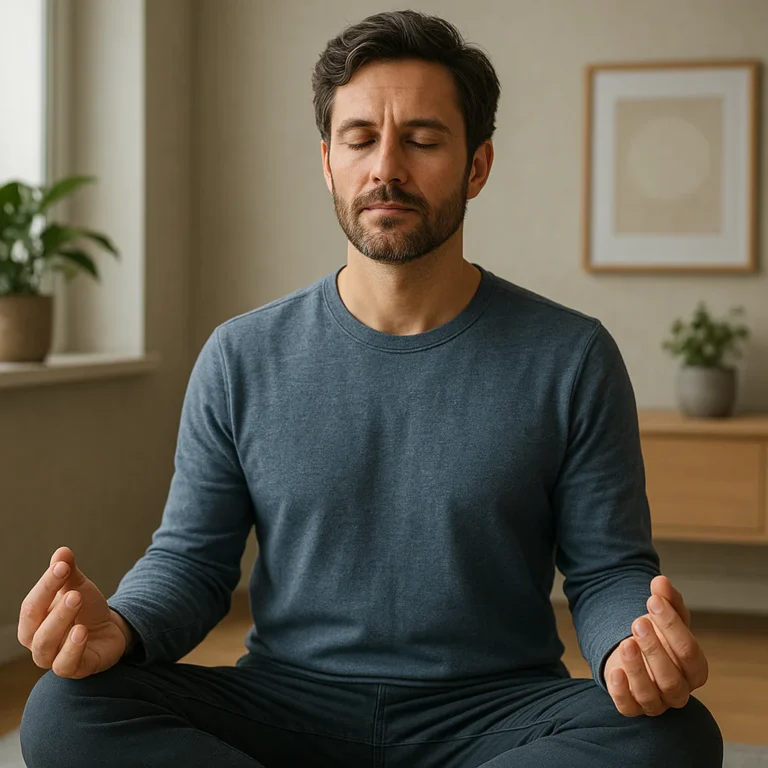
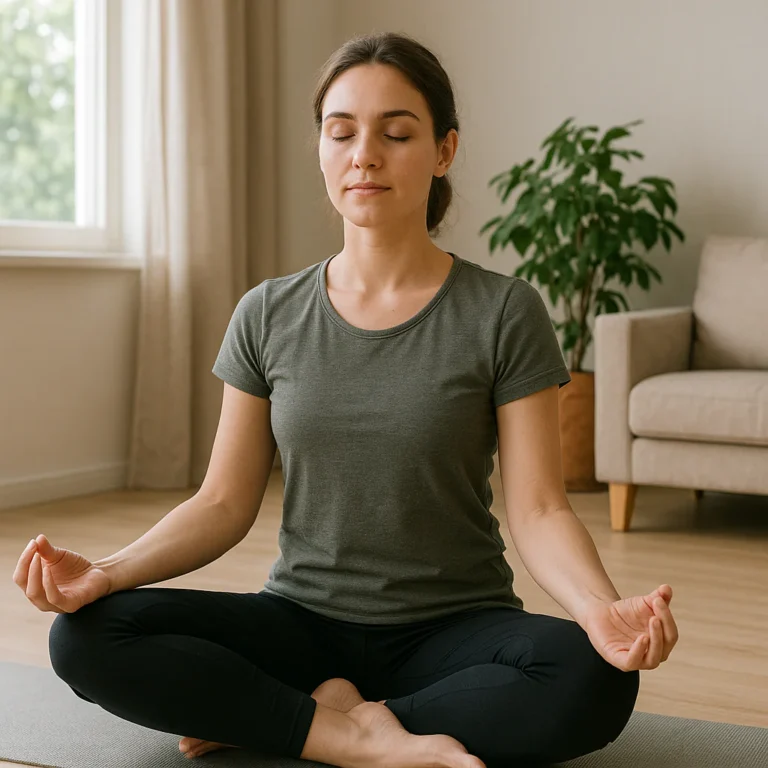
A meditation posture should support alertness and comfort. Sitting upright in a chair is perfectly valid. You can rest your hands on your thighs, let your shoulders soften, and keep your eyes closed or gently open.
| Choice | Helpful cue |
|---|---|
| Chair | Feet supported if possible; back upright but not rigid |
| Cushion or floor | Use support under hips or knees if it makes sitting comfortable |
| Lying down | Fine for body scans; try it earlier in the day if you tend to fall asleep |
| Eyes | Closed, lowered, or softly focused—choose what feels safe |
| Breathing | Let it move naturally; don’t force a particular rhythm |
| Setting | Quiet can help, but a perfectly silent room is not required |
If your body needs movement, change position mindfully. Discomfort is not a test you have to pass.
How often and how long to meditate
There is no universal daily dose that works for every adult. A practical starting point is a few minutes, several days a week, then adjust based on comfort and routine. Some structured programs ask for substantially more home practice: the MBSR format is commonly an eight-week program, and trials in the type 2 diabetes review included differing schedules, sometimes as much as 30 or 45 minutes of daily practice. Those study schedules are examples, not a requirement for everyone.
Try this rule of thumb:
- Start with a time commitment that feels easy to repeat.
- Keep the same cue or time for one to two weeks.
- If it feels manageable, add a minute or another day.
- If you repeatedly skip it, shrink the commitment rather than blaming yourself.
A realistic 30-day mindfulness plan
This plan is a flexible practice scaffold, not a clinical protocol. Shorten, repeat, or skip days as needed.
| Days | Practice | Aim |
|---|---|---|
| 1–7 | 3–5 minutes of breath, sound, or touch awareness | Learn the basic return-to-anchor skill |
| 8–14 | Add a short body scan or mindful walk | Explore a second anchor |
| 15–21 | Choose one daily activity for mindful attention | Bring practice into ordinary life |
| 22–30 | Keep the practice you liked; note what gets in the way | Build a routine that fits real life |
At the end of the month, ask: What was easiest to repeat? What felt uncomfortable? Did the practice help me notice anything sooner? The goal isn’t a perfect streak; it’s finding a method you can honestly live with.
✨ 12 Everyday Ways to Practice Mindfulness
Formal meditation is useful, but ordinary life offers plenty of practice opportunities. Pick just one or two ideas; there is no prize for turning every activity into a mindfulness assignment.
1. Mindful breathing
Take one comfortable breath and notice its beginning, middle, and end. This can be done before opening email, entering a meeting, or answering a difficult question. Keep the breath natural—no need to inflate yourself like a yoga balloon.
2. Mindful eating
Before your first bite, notice the food’s color, smell, and texture. Eat at a comfortable pace and check in with taste and fullness. Mindful eating is not a weight-loss promise or a substitute for nutrition care; it’s a way to pay attention to the experience of eating.
3. Mindful walking
Feel the contact of your feet with the ground. Notice the pace, nearby sounds, and surroundings. If you need to cross a street or watch for hazards, give those tasks your full attention. Safety beats meditation points.
4. Mindful listening
Give someone your attention for one conversation. Notice their words, tone, and pauses; when your mind plans a reply, gently return to listening. You can still ask questions and disagree. Mindful listening isn’t silent agreement.
5. Mindful communication
Pause before replying to a tense message. Notice what you’re feeling and what response would be useful, respectful, and clear. If you’re too activated to respond thoughtfully, taking a short break may be wiser than composing a three-paragraph masterpiece at 1 a.m.
6. Mindful transitions between tasks
Before moving from one task to another, pause for one breath. Name the transition: “I’m finishing this call and starting lunch.” It’s a small way to stop the workday from becoming one long, blurry tab.
7. Mindful work breaks
Look away from your screen, feel your feet, and notice a few sounds in the room. Stand or stretch if that works for your body. A brief reset won’t solve every workplace problem, but it can help you notice when your attention or energy needs care.
8. Mindful chores
While washing dishes or folding laundry, notice sensations—warm water, fabric, movement, sound. If your mind starts building an imaginary argument from 2018, no problem. Return to the task when you notice.
9. Mindful technology use
Before opening an app, ask: What am I here to do? Afterward, notice whether you finished that task or got pulled into another one. You can also turn off nonessential notifications or keep your phone out of reach during meals.
10. Mindful driving and commuting
For driving, keep attention on the road, signs, and traffic. Don’t close your eyes, follow a breath recording, or do a hands-on exercise behind the wheel. If commuting as a passenger, you can notice sounds, posture, and the movement of the vehicle.
11. Mindful stretching
Move slowly within a comfortable range and notice sensations. Avoid forcing a stretch or treating pain as proof you’re making progress. If you have an injury or a condition affecting movement, ask a qualified health professional about safe modifications.
12. A mindful bedtime routine
Try a brief body scan or notice the feel of the pillow and mattress. If breath-focused practice makes you more alert, switch to sounds or body contact. Meditation is not a sleep switch; if sleep trouble is persistent, seek appropriate care.
🧩 Mindfulness for Different Adult Needs
Mindfulness practices should fit the person, not the other way around. Preferences, health needs, accessibility, culture, and past experiences all influence what feels supportive.
Mindfulness for busy professionals
Pair a short practice with an existing cue: after shutting your laptop, before a meeting, or while waiting for a file to load. A single mindful pause can be more realistic than promising yourself a 45-minute session every weekday and then resenting it by Wednesday.
Consider:
- Turning off one or two nonessential notifications.
- Taking a screen-free lunch break when possible.
- Using a brief audio practice between work blocks.
- Keeping a walking or stretching option for days when sitting feels difficult.
Mindfulness for older adults
Choose a stable posture and a practice that accommodates balance, hearing, vision, and mobility. A chair-based body scan, mindful hand movement, or guided audio at a comfortable volume may work well. If getting down to the floor or standing is difficult, don’t make that a requirement.
Mindfulness for caregivers
Caregivers may have limited time and high emotional demands. A brief pause while washing hands, waiting for an appointment, or settling into the car can be more practical than a lengthy routine. This is not a suggestion to meditate instead of asking for respite or support.
The FOCUS caregiver study article describes a planned trial of Focusing On mindfulness for Caregivers Under Stress. Its program used six weekly individual sessions, brief app-based practices, and home exercises. Crucially, this paper is a study protocol, not evidence that the program had already reduced caregiver burden. The authors propose that mindfulness might support awareness, emotion regulation, and stepping back from distressing thoughts; the trial was designed to test those possibilities.
Mindfulness for adults with ADHD
A short, guided practice with a clear anchor can be easier to return to than open-ended silence. Try walking meditation, sound awareness, or a one-minute pause. Movement is allowed; fidgeting doesn’t mean you’re doing it wrong.
Mindfulness is not a treatment substitute for ADHD. If attention, impulsivity, or executive-function challenges are affecting daily life, discuss evidence-based support with a qualified clinician.
Mindfulness for anxiety, depression, and stress
Some adults find mindfulness helpful, while others find focusing inward increases distress. Begin gently, keep eyes open if useful, and use external anchors such as sounds or visible objects. If symptoms are persistent, severe, or getting worse, contact a healthcare professional rather than relying on meditation alone.
For more support-oriented material, visit our Mental Health section. If you feel at immediate risk of harming yourself or someone else, contact local emergency services or a crisis service in your area.
Mindfulness for chronic pain and illness
A practice may help you observe sensations and emotional reactions without adding unnecessary self-criticism. It should never be used to dismiss pain, delay medical assessment, or pressure you to continue a movement that feels unsafe. Choose an accessible posture and work with your health team when symptoms or treatment affect practice.
🛠️ Common Challenges and How to Work Through Them
“I can’t stop thinking”
You don’t need to stop thoughts to meditate. Try silently labeling what’s happening—“remembering,” “planning,” “worrying”—then return to your anchor. If the breath isn’t comfortable, choose a sound, your feet on the floor, or the sensation of your hands touching.
A coach’s favorite reframe: the practice isn’t staying focused; it’s noticing and returning. The return is the repetition.
Restlessness, boredom, or falling asleep
Restlessness may mean you’d prefer movement, a shorter session, or a different time of day. Boredom is also something you can notice without needing to make it exciting. If you’re sleepy, sit upright, open your eyes, try a walking practice, or meditate when you’re more alert.
Finding time and building consistency
A reliable cue can beat a grand plan. Link practice to something you already do: after making tea, before opening your laptop, or when you sit on the train. If you miss a day, resume at the next opportunity; there’s no lost streak to recover.
Make it easy:
- Keep a short practice saved on your phone.
- Choose a quiet-enough spot, not a perfect one.
- Set a minimum version of one minute.
- Track how often you practiced, not whether every session felt peaceful.
When meditation feels uncomfortable
Stop or change the practice if it intensifies distress. Open your eyes, shift attention to the room, stand, or do a grounding activity such as naming things you can see and hear. You can also choose not to continue.
Research reports and clinical experience indicate meditation is not comfortable for everyone. The NCCIH discusses safety and notes that adverse effects are not always consistently studied. If difficult reactions persist, seek guidance from a qualified health professional or experienced instructor.
🛡️ Mindfulness Meditation: Safety and When to Seek Support
Mindfulness is generally approached as a low-risk activity, but “natural” doesn’t mean “automatically right for everyone.” Some people experience increased anxiety, difficult memories, or emotional discomfort during meditation. Evidence on adverse effects remains incomplete; lack of reporting in a study is not proof that no effects occurred.
Consider adapting or pausing practice if you notice:
- Strong distress that continues during or after sessions.
- Feeling overwhelmed, disconnected, or unsafe while focusing inward.
- A worsening of symptoms that interferes with sleep or daily life.
- Pain or dizziness during a posture, breathing exercise, or movement.
Try a shorter session, eyes-open practice, external sound awareness, or movement instead. Speak with a clinician if you have mental health symptoms or a medical condition that could affect your practice. Meditation can complement professional care, but don’t stop medication or treatment because of a mindfulness program.
📊 Mindfulness Programs, Courses, and Apps
Structured programs add instruction, practice schedules, and often a group or teacher. They may suit people who want support and a clear progression. Self-guided apps are more flexible, but typically offer less individual feedback. Neither format guarantees a particular result.
| Option | Typical features | Considerations |
|---|---|---|
| Self-guided practice | Flexible, low-structure, easy to adapt | May be harder to sustain without prompts |
| Meditation app | Audio guidance, reminders, themed courses | Check accessibility, privacy, and whether the teaching style suits you |
| In-person course | Group learning, scheduled sessions, instructor feedback | Requires time and may not be accessible to everyone |
| Clinician-led program | May be adapted to a health need or treatment plan | Ask about the provider’s qualifications and fit |
Mindfulness-Based Stress Reduction (MBSR)
MBSR is a structured program commonly delivered over eight weeks, combining mindfulness practices, mindful movement, and learning about stress and coping. Program details vary, so check the format, instructor training, accessibility, and home-practice expectations before enrolling. The UMass Chan Center for Mindfulness provides information about its mindfulness education and programs.
MBSR may be a good fit if you value a sequence, regular sessions, and group support. It may be a poor fit if the time commitment is unrealistic or if the teaching format doesn’t suit your needs. Ask about options for adapting movement and meditation.
Mindfulness-Based Cognitive Therapy (MBCT)
MBCT combines mindfulness practice with elements of cognitive behavioral therapy. It is commonly used in structured settings for particular mental health needs, including relapse prevention for recurrent depression. It is not simply “meditation with a different label”: the program includes learning about thought patterns and how to respond to them.
If you’re considering MBCT for a health concern, discuss it with a qualified mental health professional and ask whether the program is appropriate for your situation.
Choosing a teacher, course, or meditation app
A good teacher or program should explain what practices involve, welcome questions, respect boundaries, and offer ways to adapt. Be cautious of claims that meditation can cure illness, replace care, or produce guaranteed results.
Before choosing, ask:
- Are instructors trained in the program they teach?
- Can you adapt posture, movement, and practice length?
- Are expectations for home practice clear?
- Does the program make realistic claims?
- Does an app explain its privacy and data practices?
- Is there a way to pause, opt out, or get support if a practice feels distressing?
Apps such as Headspace, Calm, and Smiling Mind offer guided content. Try a brief sample first. A calm voice you enjoy is useful; a voice that irritates you like a smoke alarm is not.
💡 Quick Tips and Facts for a More Sustainable Practice
- Begin with one to five minutes. You can extend your practice later if you want.
- Choose anchor that feels okay. Breath, sound, touch, and movement are all options.
- Practice without scoring yourself. A session doesn’t have to feel peaceful to count.
- Use an existing routine as a reminder. Attach practice to tea, a commute, or a work transition.
- Keep adaptations available. Eyes open, chair-based, shorter, or walking practices may fit better.
- Look for balanced claims. Responsible programs explain benefits, limits, and safety considerations.
- Ask for support when needed. Meditation can complement professional care, not replace it.
For an evidence-based overview of research and safety, see the NCCIH meditation and mindfulness review.
❓ Frequently Asked Questions About Mindfulness and Meditation
What are simple mindfulness exercises adults can practice every day?
Try one mindful breath, a brief body scan, a mindful walk, or attentive listening during one conversation. Choose a single activity and practice noticing when attention wanders, then returning to what you’re doing.
Which exercise is easiest to start with?
A one-minute sensory check-in is a gentle option: feel your feet on the floor, notice one sound, and observe one natural breath. If focusing on breathing feels uncomfortable, skip the breath anchor and use sound or touch instead.
How does mindfulness meditation help reduce stress in adults?
Mindfulness may help some people notice stress reactions earlier and respond with more awareness rather than acting automatically. Research on particular adult populations has found possible benefits for stress and emotional symptoms, but evidence varies in certainty and results aren’t guaranteed. Meditation should not be presented as a substitute for treatment or practical support.
Does meditation always make you feel calm?
No. You may feel calm, restless, bored, sad, or distracted. The practice is about noticing your experience and choosing how to respond—not forcing a particular mood.
How can adults build a consistent mindfulness meditation routine?
Use a short practice and attach it to a regular cue, such as after breakfast or before opening your computer. Keep a one-minute version for busy days and resume without guilt if you miss a session. A sustainable routine is more useful than an ambitious one you abandon.
Should I meditate every day?
Daily practice works for some people, but it is not a universal requirement. Start with a schedule you can maintain comfortably and adjust based on your needs, time, and response.
What mindfulness activities can adults try to improve focus and well-being?
Try breath awareness, mindful walking, sound awareness, mindful eating, or a short body scan. For focus, practice noticing distraction and returning to one chosen task. These exercises can support awareness, but they aren’t guaranteed to improve concentration or treat a health condition.
Can movement count as mindfulness?
Yes. Walking, gentle stretching, or chair-based movement can all be mindful when you notice sensations and movement with attention. Choose safe, comfortable movements and follow any medical guidance relevant to your health.
Is mindfulness meditation safe for everyone?
Not always. Some people experience discomfort or increased distress, and research on adverse effects is incomplete. Shorten or stop a practice if it feels destabilizing, switch to an external anchor, and seek professional guidance if symptoms persist or worsen.
What should I do if focusing on my breath feels uncomfortable?
Open your eyes, notice your surroundings, feel your feet on the floor, or listen to nearby sounds. The breath is one possible anchor—not a requirement.
Can you practice mindfulness without meditating?
Yes. Mindfulness can be practiced during daily activities, such as walking, eating, listening, or doing chores. Formal meditation is a structured way to practice; it’s not the only way to bring attention to the present.
How soon can you notice benefits from meditation?
There is no reliable timeline that applies to everyone. Some people notice a small shift in awareness during a session; others need time to find a suitable practice, and some notice little benefit. A single peaceful session is not proof of lasting change, and one restless session is not proof the practice has failed.