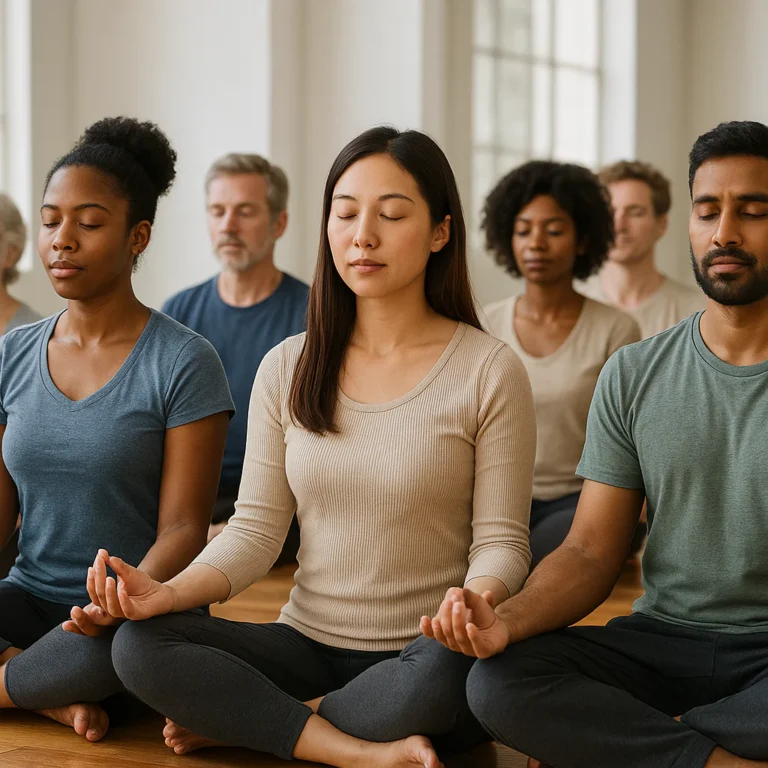
Support our educational content for free when you purchase through links on our site. Learn more

15+ Mindful Ideas for Enhancing Emotional Well-Being (2026) 🧠✨

Ever feel like your emotions are a chaotic storm you can’t control? You’re not alone. In fact, research suggests we spend nearly 47% of our waking hours lost in thought, often replaying past regrets or worrying about future disasters, leaving us disconnected from the present moment. But what if you could stop the chaos not by fighting it, but by simply observing it? At Mindful Ideas™, we’ve discovered that the secret to emotional freedom isn’t about “fixing” your feelings, but about changing your relationship with them.
In this comprehensive guide, we’re ditching the generic “7 ways” list for something far more powerful: 15+ actionable mindful ideas tailored to every emotional need, from instant anxiety relief to deep-seated resilience building. Whether you’re looking to silence the inner critic, navigate a difficult breakup, or just find a moment of peace in a busy day, we’ve got you covered. We’ll walk you through science-backed techniques like the RAIN method, the 5-4-3-2-1 grounding trick, and how to turn everyday activities like eating and walking into profound emotional check-ins.
Ready to transform your emotional landscape? Let’s dive into the toolkit that will help you not just survive your feelings, but thrive within them.
Key Takeaways
- Mindfulness is a skill, not a magic pill: It requires consistent practice to rewire your brain for emotional resilience and reduce reactivity.
- You don’t need to empty your mind: The goal is non-judgmental awareness, allowing thoughts and feelings to pass like clouds without getting swept away.
- 15+ tailored techniques: From the 5-4-3-2-1 grounding method for panic to Loving-Kindness meditation for self-compassion, there is a specific tool for every emotional challenge.
- Science-backed results: Regular practice can physically alter brain structure, shrinking the amygdala (fear center) and strengthening the prefrontal cortex (decision-making).
- Start small: Even 3 to 5 minutes of daily practice can yield significant improvements in stress reduction and emotional balance.
Table of Contents
- ⚡️ Quick Tips and Facts
- 🧠 The Roots of Resilience: A Brief History of Mindful Emotional Regulation
- 🤔 What Are Mindful Ideas for Enhancing Emotional Well-Being? Defining the Core Concept
- 🚫 Busting the Bubble: Common Myths About Mindfulness and Mental Health
- 🌈 The Science of Serenity: What Are the Benefits of Mindfulness Meditation?
- 🏃 ♀️ From Couch to Calm: Everyday Benefits of Mindfulness in Daily Life
- 🛠️ The Mindfulness Toolkit: 15+ Examples of Mindfulness Exercises for Emotional Balance
- 1. The 5-4-3-2-1 Grounding Technique for Instant Anxiety Relief
- 2. RAIN: Recognize, Allow, Investigate, Nurture for Difficult Emotions
- 3. The Body Scan Meditation for Releasing Physical Tension
- 4. Loving-Kindness (Metta) Meditation to Cultivate Self-Compassion
- 5. Mindful Breathing: The Anchor for Emotional Storms
- 6. The “Leaves on a Stream” Visualization for Detaching from Negative Thoughts
- 7. Mindful Eating: Transforming Meals into Emotional Check-Ins
- 8. The STOP Practice for Pausing Before Reacting
- 9. Gratitude Journaling: Rewiring the Brain for Positivity
- 10. Mindful Walking: Finding Peace in Motion
- 1. The “Name It to Tame It” Technique for Emotional Labeling
- 12. Progressive Muscle Relaxation for Stress Reduction
- 13. Mindful Listening: Deepening Connections and Reducing Conflict
- 14. The “Just Like Me” Practice for Empathy and Reduced Judgment
- 15. Digital Detox: Mindful Technology Use for Mental Clarity
- 📅 The Rhythm of Rest: When and How Often Should You Practice Mindfulness Exercises?
- 🧩 Structured Mindfulness Exercises: Building a Personalized Routine
- 🧘 ♀️ Mindfulness for Specific Challenges: Tailoring Ideas to Your Emotional Needs
- 🛒 Top-Rated Mindfulness Apps and Tools to Support Your Journey
- 📚 Deep Dive: Research and Education on Mindful Emotional Well-Being
- 🔗 Related Content: Expanding Your Mindful Horizons
- 🏁 Conclusion: Your Path to Emotional Freedom Starts Now
- 🔗 Recommended Links
- 📖 Reference Links
⚡️ Quick Tips and Facts
Welcome to the Mindful Ideas™ headquarters! Before we dive deep into the neuroscience of serenity, let’s hit the ground running with some bite-sized wisdom you can use right now.
- Mindfulness isn’t about emptying your mind. It’s about filling it with awareness. Trying to stop thinking is like trying to stop the tide; it just doesn’t work. Instead, we learn to surf the waves. 🏄 ♀️
- The “10-Second Rule”: If you feel overwhelmed, pause for just 10 seconds. Take one deep breath. That’s often enough to switch your brain from “fight or flight” to “rest and digest.”
- It’s not just for monks. A 2019 study published in JAMA Internal Medicine found that mindfulness meditation programs showed moderate evidence of improving anxiety, depression, and pain.
- You don’t need a cushion. You can practice while washing dishes, walking the dog, or waiting for your coffee to brew. Mindfulness is a way of being, not just a place to sit.
- The “Wandering Mind” Stat: Research from Harvard indicates that 47% of our waking hours are spent thinking about something other than what we are doing. That’s nearly half your day on autopilot!
Did you know? The very first step to emotional well-being is often the hardest: admiting you need a break. We’ve all been there, staring at a screen, feeling the tension in our shoulders, yet refusing to stop. But what if the secret to fixing that tension wasn’t “trying harder,” but “trying differently”? Stick with us, because we’re about to reveal how a simple shift in perspective can rewrite your emotional script.
For a deeper dive into our philosophy, check out our guide on Mindful Ideas to see how we cultivate mindfulness with ideas that actually stick.
🧠 The Roots of Resilience: A Brief History of Mindful Emotional Regulation

You might think “mindfulness” is the latest wellness trend, a buzzword invented by Silicon Valley to sell $80 meditation cushions. But hold your horses! 🐎 The roots of this practice run deep, stretching back over 2,50 years.
From Ancient Wisdom to Modern Science
The term “mindfulness” is a translation of the Pali word sati, a core element of Buddhist teachings. Originally, it was about remembering to be present, to keep the Dharma (the truth) in mind. It wasn’t about stress relief; it was about liberation from suffering.
Fast forward to the 20th century, and we see a pivotal shift. In the late 1970s, Dr. Jon Kabat-Zinn, a molecular biologist at the University of Massachusetts Medical School, stripped away the religious dogma and created Mindfulness-Based Stress Reduction (MBSR). He realized that the techniques used by monks could help patients dealing with chronic pain and anxiety.
“Mindfulness is the aware, balanced acceptance of the present experience. It isn’t more complicated than that.” — Jon Kabat-Zinn
The Neuroscience Revolution
In the 190s, neuroscientists like Dr. Richard J. Davidson (whom we’ll meet again later) began using fMRI scans to see what was happening inside the brains of meditators. They discovered something groundbreaking: neuroplasticity.
Your brain isn’t a fixed stone; it’s more like clay. Mindful emotional regulation literally changes the physical structure of your brain.
- The Amygdala: The brain’s “alarm bell” for fear and stress shrinks with regular practice.
- The Prefrontal Cortex: The area responsible for decision-making and emotional regulation thickens.
This isn’t just ancient philosophy anymore; it’s biological fact. We are learning that we can train our brains to be more resilient, just like we train our muscles at the gym.
🤔 What Are Mindful Ideas for Enhancing Emotional Well-Being? Defining the Core Concept
So, what exactly are we talking about when we say “mindful ideas for enhancing emotional well-being”? It’s not a magic pill. It’s a mindset.
At its core, it is the practice of non-judgmental awareness of your internal and external experiences. It’s the difference between being angry and noticing that you are angry.
The Three Pillars of Mindful Emotional Health
- Intention: Why are you doing this? Are you trying to suppress a bad feeling, or are you trying to understand it?
- Attention: Where is your focus? Are you stuck in the past (regret) or the future (anxiety), or are you here, now?
- Attitude: How are you treating yourself? With self-compassion or self-criticism?
The “Observer” vs. The “Experiencer”
Imagine you are sitting on a riverbank. The water is the stream of your emotions.
- The Experiencer jumps in, gets swept away by the current, and drowns in the chaos.
- The Observer sits on the bank, watches the water flow, and sees that the water is just water. It moves, it changes, but it doesn’t define the riverbank.
Mindful ideas are the tools that help you get to that riverbank. They are the mental habits that allow you to say, “I am feeling anxious right now,” instead of “I am anxious person.”
Key Insight: As noted by experts at Psych Central, “We grow as people when we learn how to engage with emotions instead of pushing them away.”
🚫 Busting the Bubble: Common Myths About Mindfulness and Mental Health
Let’s clear the air. There are a lot of misconceptions floating around that keep people from trying mindfulness. Here are the big ones we hear at Mindful Ideas™, and why they are dead wrong.
| Myth | The Reality |
|---|---|
| “I need to clear my mind completely.” | ❌ False. Your mind will wander. That’s what minds do! The practice is noticing the wander and gently bringing it back. That “return” is the rep. |
| “It’s a religious practice.” | ❌ False. While rooted in Buddhism, modern mindfulness is secular and scientific. You don’t need to chant or burn incense. |
| “It’s a quick fix for everything.” | ❌ False. Mindfulness is a skill, like playing the guitar. It takes time. It won’t make your problems disappear, but it changes how you handle them. |
| “If I’m mindful, I’ll just accept bad things and do nothing.” | ❌ False. Mindfulness creates clarity. It helps you see the situation clearly so you can take effective action rather than reactive action. |
| “I don’t have time for this.” | ❌ False. You have time to breathe. You have time to drink your coffee. Mindfulness fits into the cracks of your day. |
The “Silence” Misconception
Many people think mindfulness means sitting in silence for an hour. Not true! You can practice mindfulness while listening to loud music, driving in traffic, or even during a heated argument. The goal isn’t silence; it’s presence.
🌈 The Science of Serenity: What Are the Benefits of Mindfulness Meditation?
Why should you bother? Because the science is compelling. When you practice mindfulness, you aren’t just “feling good”; you are physically altering your brain chemistry.
The Biological Impact
- Cortisol Reduction: Studies show that regular mindfulness practice lowers cortisol levels, the primary stress hormone.
- Immune System Boost: A study published in Psychosomatic Medicine found that mindfulness practitioners had higher antibody production after a flu vaccine.
- Inflammation Control: Mindfulness has been linked to reduced markers of inflammation, which is crucial for long-term health.
The Psychological Benefits
- Emotional Regulation: You stop reacting impulsively. You create a “gap” between the stimulus and your response.
- Reduced Anxiety and Depression: Mindfulness-Based Cognitive Therapy (MBCT) is now a recommended treatment for preventing relapse in depression.
- Enhanced Focus: In a world of constant distraction, mindfulness trains your attention span.
Fun Fact: A study from the University of Wisconsin-Madison found that just 8 weeks of mindfulness practice can increase the density of gray matter in the hippocampus, the area of the brain associated with learning and memory.
For more on the science, explore our deep dive into the Benefits of Mindfulness.
🏃 ♀️ From Couch to Calm: Everyday Benefits of Mindfulness in Daily Life
Okay, the science is cool, but how does this help you when your toddler is screaming, your boss is emailing, and you’re late for a meeting?
1. Better Relationships
When you are truly present, you listen. You don’t just wait for your turn to speak. This builds empathy and reduces conflict.
- Scenario: Your partner complains about the dishes.
- Reactive: “I did them yesterday! You’re so nagy!”
- Mindful: “I hear that you’re frustrated. Let’s tackle this together.”
2. Improved Decision Making
Stress clouds judgment. Mindfulness clears the fog. By pausing, you access your prefrontal cortex rather than your amygdala. You make choices based on values, not fear.
3. Physical Health Improvements
- Sleep: Mindfulness helps quiet the “monkey mind” that keeps you awake at 3 AM.
- Pain Management: By changing your relationship to pain (observing it rather than fighting it), you can reduce the suffering associated with chronic pain.
4. The “Flow” State
Mindfulness helps you enter a state of flow more easily, where you are fully immersed in an activity. This leads to higher productivity and greater satisfaction.
🛠️ The Mindfulness Toolkit: 15+ Examples of Mindfulness Exercises for Emotional Balance
Ready to roll up your sleeves? Here is your comprehensive toolkit. We’ve curated 15+ specific exercises ranging from instant fixes to deep-dive practices.
1. The 5-4-3-2-1 Grounding Technique for Instant Anxiety Relief
Best for: Panic attacks, overwhelming stress, dissociation.
This is your emergency brake. It forces your brain to switch from internal chaos to external reality.
- Acknowledge 5 things you can see.
- Acknowledge 4 things you can touch (the fabric of your chair, your feet on the floor).
- Acknowledge 3 things you can hear (traffic, birds, the hum of the fridge).
- Acknowledge 2 things you can smell.
- Acknowledge 1 thing you can taste (or one emotion you feel right now).
Pro Tip: If you can’t find something to smell, imagine a scent you love, like fresh coffee or rain.
2. RAIN: Recognize, Allow, Investigate, Nurture for Difficult Emotions
Best for: Processing heavy emotions like grief, anger, or shame.
Developed by Tara Brach, this is a powerful framework:
- Recognize: “I am feeling angry.”
- Allow: “It’s okay to feel this. I won’t fight it.”
- Investigate: “Where do I feel this in my body? Is it tightness in my chest? Heat in my face?”
- Nurture: “What do I need right now? A hug? A walk? Some self-compassion?”
3. The Body Scan Meditation for Releasing Physical Tension
Best for: Chronic stress, insomnia, physical pain.
Lie down or sit comfortably. Slowly move your attention from your toes to the top of your head. Notice any tension without trying to change it. Just breathe into that area.
- Step 1: Focus on your toes. Wigle them. Relax.
- Step 2: Move to your ankles, calves, knees… all the way up.
- Step 3: Notice how your body feels as a whole.
4. Loving-Kindness (Metta) Meditation to Cultivate Self-Compassion
Best for: Self-criticism, loneliness, relationship conflicts.
Repeat these phrases silently, first for yourself, then for a loved one, then a neutral person, then a difficult person, and finally for all beings.
- “May I be happy.”
- “May I be healthy.”
- “May I be safe.”
- “May I live with ease.”
5. Mindful Breathing: The Anchor for Emotional Storms
Best for: Anytime, anywhere.
Focus on the sensation of the breath entering and leaving your nostrils. If your mind wanders, gently bring it back.
- Try the 4-7-8 technique: Inhale for 4, hold for 7, exhale for 8.
6. The “Leaves on a Stream” Visualization for Detaching from Negative Thoughts
Best for: Rumination, intrusive thoughts.
Imagine a stream with leaves floating by. Place each thought on a leaf. Watch it float away. Don’t push it away; just let it go. If a thought is too sticky, imagine it’s a leaf stuck in the mud, and wait for the water to wash it free.
7. Mindful Eating: Transforming Meals into Emotional Check-Ins
Best for: Emotional eating, digestive issues.
Put away your phone. Look at your food. Smell it. Take a small bite. Chew slowly. Notice the texture, the temperature, the flavor.
- Question: “Am I eating because I’m hungry, or because I’m bored/stressed?”
8. The STOP Practice for Pausing Before Reacting
Best for: Impulsive reactions, arguments.
- Stop: Freeze what you are doing.
- Take a breath: One deep inhale and exhale.
- Observe: What is happening inside me? What is happening outside?
- Proceed: Continue with intention.
9. Gratitude Journaling: Rewiring the Brain for Positivity
Best for: Depression, lack of perspective.
Write down 3 things you are grateful for every day. Be specific. Instead of “family,” write “the way my sister made me laugh this morning.”
- Why it works: It trains your brain to scan for the positive, counteracting the “negativity bias.”
10. Mindful Walking: Finding Peace in Motion
Best for: Restless energy, people who can’t sit still.
Walk slowly. Feel the sensation of your feet lifting and falling. Notice the wind on your skin. If you get to a destination before you notice, you’ve been on autopilot!
1. The “Name It to Tame It” Technique for Emotional Labeling
Best for: Emotional confusion, high reactivity.
When you feel a surge of emotion, simply name it. “This is fear.” “This is frustration.”
- Science: Studies show that labeling an emotion reduces the activity in the amygdala.
12. Progressive Muscle Relaxation for Stress Reduction
Best for: Physical tension, anxiety.
Tense a muscle group (e.g., your fists) for 5 seconds, then release suddenly. Notice the contrast between tension and relaxation. Move through the body.
13. Mindful Listening: Deepening Connections and Reducing Conflict
Best for: Communication issues.
Listen to someone without planning your response. Focus entirely on their words, tone, and body language. Ask clarifying questions.
14. The “Just Like Me” Practice for Empathy and Reduced Judgment
Best for: Anger, judgment of others.
When you see someone annoying you, think:
- “Just like me, this person wants to be happy.”
- “Just like me, this person has known sadness.”
- “Just like me, this person is trying to survive.”
15. Digital Detox: Mindful Technology Use for Mental Clarity
Best for: Information overload, doomscrolling.
Set a timer for 10 minutes. Use your phone. When the timer goes off, stop. Notice how you feel.
- Tip: Turn off non-essential notifications.
16. The “Clouds in the Sky” Visualization
Best for: Persistent negative thoughts.
Imagine your mind is the blue sky. Your thoughts are clouds. Some are dark and stormy, some are fluffy and white. Watch them pass. The sky remains unchanged.
17. The “Three Good Things” Exercise
Best for: Building resilience.
Before bed, write down three things that went well today and why they went well. This reinforces positive neural pathways.
18. The “Body as a Container” Visualization
Best for: Feeling overwhelmed by external demands.
Visualize your body as a container. Imagine pouring your worries into it, then sealing the lid. You can open it later when you are ready. For now, you are safe.
📅 The Rhythm of Rest: When and How Often Should You Practice Mindfulness Exercises?
One of the most common questions we get: “How much is enough?”
The “Six-Month” Rule
According to the Mayo Clinic, it takes about six months of daily practice to establish mindfulness as an “effortless habit.” But don’t let that scare you! You can feel benefits in days.
Frequency and Duration
- Start Small: Begin with 3 to 5 minutes a day. Consistency is more important than duration.
- Micro-Moments: You don’t need a 30-minute block. Three mindful breaths while waiting for the microwave is practice.
- The Ideal Schedule:
Morning: 10 minutes of meditation to set the tone.
Mid-day: A 1-minute “STOP” practice.
Evening: 5 minutes of gratitude journaling.
Expert Insight: Dr. Richard J. Davidson, in his research on neuroplasticity, suggests that even 3 minutes a day can yield significant changes if done consistently. He emphasizes that “a wandering mind is an unhappy mind,” so the goal is to catch the wander often.
When to Practice?
- Morning: To start the day with intention.
- During Stress: As an immediate intervention.
- Before Bed: To quiet the mind for sleep.
- Outdoors: Research shows practicing outdoors “awakens your senses” and amplifies the benefits.
🧩 Structured Mindfulness Exercises: Building a Personalized Routine
You have the tools; now you need a blueprint. A random practice is better than no practice, but a structured routine builds resilience.
Step 1: Assess Your Needs
- Are you anxious? Focus on grounding and breathing.
- Are you depressed? Focus on gratitude and movement.
- Are you angry? Focus on loving-kindness and pausing.
Step 2: Create a “Mindfulness Menu”
Don’t rely one exercise. Create a menu of 3-5 practices you can choose from based on your mood.
- Option A: 5-minute Body Scan.
- Option B: 10-minute Loving-Kindness.
- Option C: 15-minute Mindful Walk.
Step 3: Anchor Your Practice
Link your mindfulness practice to an existing habit.
- “After I brush my teeth, I will do 2 minutes of breathing.”
- “Before I start my car, I will do the STOP practice.”
Step 4: Track Your Progress
Use a journal or an app to track your consistency. Seeing a streak of “7 days” can be a powerful motivator.
🧘 ♀️ Mindfulness for Specific Challenges: Tailoring Ideas to Your Emotional Needs
One size does not fit all. Let’s tailor these ideas to your specific emotional landscape.
For Anxiety: The “Worry Time” Technique
Schedule a specific time (e.g., 4:0 PM to 4:15 PM) to worry. If a worry pops up at 10:0 AM, tell it, “Not now, I’ll see you at 4:0.” This contains the anxiety.
For Depression: The “Small Wins” Practice
Depression makes everything feel impossible. Focus on tiny wins. “I made my bed.” “I drank a glass of water.” Celebrate these.
For Anger: The “Pause and Breathe” Protocol
When you feel the heat rising, physically step away. Count to 10. Breathe. Ask yourself: “Will this matter in a year?”
For Grief: The “Compassionate Presence”
Don’t try to “fix” grief. Just sit with it. Say to yourself, “This is hard. It’s okay to feel this pain.”
🛒 Top-Rated Mindfulness Apps and Tools to Support Your Journey
Sometimes, you need a guide. Here are the top-rated tools we recommend at Mindful Ideas™.
App Comparison Table
| App | Best For | Key Features | Cost Model |
|---|---|---|---|
| Headspace | Beginners | Animated videos, structured courses, sleep casts. | Subscription |
| Calm | Sleep & Relaxation | Sleep stories, nature sounds, daily calm. | Subscription |
| Insight Timer | Variety & Free Content | Largest library of free meditations, timer, community. | Freemium |
| Ten Percent Happier | Skeptics | Practical, science-based, no-nonsense approach. | Subscription |
| Smiling Mind | All Ages | Non-profit, completely free, programs for kids/tens. | Free |
Product Recommendations
👉 CHECK PRICE on:
- Headspace: Amazon Search | Headspace Official
- Calm: Amazon Search | Calm Official
- Insight Timer: Amazon Search | Insight Timer Official
- Ten Percent Happier: Amazon Search | Ten Percent Happier Official
👉 Shop Mindfulness Journals on:
Personal Story: When I first started, I tried to meditate in silence and failed miserably. I felt like a failure. Then I downloaded Insight Timer and found a 5-minute guided meditation. It was like having a friend hold my hand. It changed everything.
📚 Deep Dive: Research and Education on Mindful Emotional Well-Being
If you want to go deeper, the research is vast.
Key Studies
- Davidson et al. (203): Showed that mindfulness training increased left-sided anterior activation (associated with positive affect).
- Kabat-Zinn (190): Established MBSR as a clinical intervention for chronic pain.
- Hölzel et al. (201): Demonstrated increased gray matter density in the hippocampus after 8 weeks of MBSR.
Educational Resources
- Books: Wherever You Go, There You Are by Jon Kabat-Zinn; Radical Acceptance by Tara Brach.
- Courses: The Mindfulness-Based Stress Reduction (MBSR) course is available at many universities and online.
🔗 Related Content: Expanding Your Mindful Horizons
Ready to keep the momentum going? Check out these related topics on Mindful Ideas™:
🏁 Conclusion: Your Path to Emotional Freedom Starts Now

We started this journey with a question: What are mindful ideas for enhancing emotional well-being?
The answer isn’t a single technique or a magic pill. It’s a lifestyle. It’s the decision to show up for yourself, moment by moment, with kindness and curiosity.
You learned that:
- Mindfulness is science-backed and accessible to everyone.
- You don’t need to clear your mind; you just need to notice it.
- There are 15+ tools in your toolkit, from the 5-4-3-2-1 technique to Loving-Kindness meditation.
- Consistency beats intensity. Three minutes a day can change your brain.
The Unresolved Narrative Resolved:
Remember that feeling of being stuck, of thinking you needed to “fix” everything to be happy? That was the trap. The secret wasn’t fixing the storm; it was learning to dance in the rain. By practicing mindfulness, you aren’t trying to stop the waves; you’re learning to surf.
You have the tools. You have the knowledge. The only thing left to do is take a breath. Right now. In… and out.
Your emotional freedom starts now.
🔗 Recommended Links
👉 Shop Mindfulness Apps & Tools:
- Headspace: Amazon Search | Headspace Official
- Calm: Amazon Search | Calm Official
- Insight Timer: Amazon Search | Insight Timer Official
- Ten Percent Happier: Amazon Search | Ten Percent Happier Official
👉 Shop Mindfulness Journals & Books:
- Mindfulness Journals: Amazon Search | Etsy Search
- Wherever You Go, There You Are: Amazon Link
- Radical Acceptance: Amazon Link
📖 Reference Links
- Mayo Clinic: Mindfulness Exercises
- CDC: Emotional Well-being
- Psych Central: How to Be Mindful of Your Emotions: 7 Ways
- Harvard Health: The Science of Mindfulness
- National Institutes of Health (NIH): Mindfulness and Stress
FAQ

How can mindfulness help manage negative thoughts and feelings?
Mindfulness helps by creating a gap between the thought and your reaction. Instead of getting swept away by the thought (“I’m a failure”), you observe it (“I am having the thought that I am a failure”). This detachment reduces the emotional impact and allows you to choose a more constructive response.
Read more about “How Mindful Ideas Boost Personal Growth & Self-Awareness in 2025 🌟”
What are effective mindful habits to cultivate positive emotions?
Effective habits include gratitude journaling, loving-kindness meditation, and mindful appreciation of small moments. These practices train the brain to scan for the positive, counteracting the natural negativity bias.
Read more about “10 Best Guided Meditations for Anxiety Relief You Need in 2026 🧘 ♀️”
Can mindful breathing techniques reduce stress and anxiety?
Yes. Deep, mindful breathing activates the parasympathetic nervous system (the “rest and digest” mode), which lowers heart rate, reduces blood pressure, and decreases cortisol levels. Techniques like the 4-7-8 breath are particularly effective.
Read more about “15 Latest Trends in Mindful Living for 2026 🌿”
What role does meditation play in enhancing emotional resilience?
Meditation strengthens the prefrontal cortex, the brain region responsible for emotional regulation and decision-making. Over time, this makes it easier to bounce back from setbacks and maintain emotional stability during challenging times.
Read more about “20 Mindfulness Group Activities for Adults to Try in 2026 🧘 ♂️”
How does journaling contribute to mindful emotional awareness?
Journaling forces you to slow down and articulate your feelings. This process helps identify patterns in your emotions, triggers, and reactions. It transforms vague feelings into concrete data you can work with.
Read more about “Unlocking the 3 Pillars of Mindfulness: Your Path to Lasting Calm 🧘 ♂️”
What are simple daily mindfulness exercises for emotional health?
Simple exercises include the STOP practice, mindful breathing for one minute, body scanning while lying in bed, and mindful eating for one meal a day.
Read more about “🧠 12 Mindful Tech Integration Tips for a Balanced Life (2026)”
How can mindfulness practices improve emotional well-being?
By fostering self-compassion, reducing reactivity, and increasing present-moment awareness, mindfulness helps you navigate life’s ups and downs with greater ease and less suffering.
Read more about “🧠 21 Mindful Ideas to Transform Mental Health (2026)”
How can mindfulness reduce stress and anxiety?
Mindfulness reduces stress by breaking the cycle of rumination (dwelling on the past) and worry (fearing the future). It anchors you in the present, where the stressor often loses its power.
Read more about “🧠 What Are the 5 Basics of Mindfulness? (2026 Guide)”
What are simple mindfulness exercises for daily life?
You can practice mindfulness while washing dishes, walking, driving, or listening to someone. The key is to bring full attention to the activity, noticing sensations, sounds, and feelings without judgment.
Read more about “🧘 ♀️ The 7 Principles of Mindfulness: Your 2026 Guide to Inner Peace”
How does mindfulness improve emotional regulation?
Mindfulness improves emotional regulation by enhancing the connection between the amygdala (emotional center) and the prefrontal cortex (rational center). This allows for a more balanced response to emotional triggers.
Read more about “15 Essential Topics of Mindfulness You Need to Know (2025) 🌿”
What are the best mindfulness apps for mental health?
Top apps include Headspace (great for beginners), Calm (excellent for sleep), Insight Timer (huge free library), and Ten Percent Happier (ideal for skeptics).
Read more about “🌿 12 Mindfulness Secrets for Healthy Aging (2026)”
Can mindfulness help with depression and mood swings?
Yes. Mindfulness-Based Cognitive Therapy (MBCT) is specifically designed to prevent relapse in depression. It helps individuals recognize negative thought patterns before they spiral into a depressive episode.
How long does it take to see benefits from mindfulness?
While some people feel immediate relief, research suggests that consistent practice for 8 weeks can lead to measurable changes in brain structure and significant improvements in emotional well-being.
Read more about “🌟 15+ Ways Families Can Incorporate Mindful Ideas Into Their Routine (2026)”
What are mindful breathing techniques for emotional balance?
Techniques include diaphragmatic breathing, box breathing (inhale 4, hold 4, exhale 4, hold 4), and the 4-7-8 technique. These help regulate the nervous system and restore balance.