Support our educational content for free when you purchase through links on our site. Learn more

🌟 25 Creative Mindful Ideas for Kids (2026)

Ever watched your child’s mind race like a hamster on a sugar-fueled wheel, making bedtime or homework feel like a battle of wills? You are not alone. In a world of constant notifications and endless stimulation, the ability to pause and be present is a superpower our children desperately need. But let’s be honest: asking a six-year-old to “just sit and breathe” is usually a recipe for giggles, wiggles, and immediate rebellion.
That’s where we come in. At Mindful Ideas™, we’ve spent years testing, tweaking, and perfecting ways to turn mindfulness from a boring chore into an adventure. Forget the standard “sit still” advice. In this guide, we’re revealing 25 creative and engaging mindful ideas for children that actually work. From “Spidey-Senses” training to the magical “Mindful Jar,” these activities are designed to spark joy, build resilience, and help your little ones master their emotions without the tears.
Key Takeaways
- Play is the Pathway: Mindfulness for kids works best when disguised as games, stories, and movement, not rigid meditation.
- Consistency Beats Duration: A 3-minute daily practice is far more effective than an occasional 30-minute session.
- 25 Unique Activities: We cover everything from sensory grounding techniques to creative art projects tailored for every personality type.
- Science-Backed Results: Regular practice improves focus, emotional regulation, and sleep in children as young as three.
- Modeling Matters: The most powerful tool you have is your own calm presence; practice these techniques alongside your child.
Table of Contents
- ⚡️ Quick Tips and Facts
- 🧠 The Evolution of Mindful Kids: A Brief History of Child Mindfulness
- 🌟 Why Bother? The Cognitive, Emotional, and Social Benefits of Mindfulness for Children
- 🎨 25 Creative and Engaging Mindful Ideas for Children to Spark Joy and Focus
- 1. The Mindful Jar: Visualizing Calm in a Bottle
- 2. Spidey-Senses: Superhero Training for Awareness
- 3. The Heartbeat Exercise: Tuning into Your Inner Rhythm
- 4. Safari Adventure: A Mindful Walk in Nature
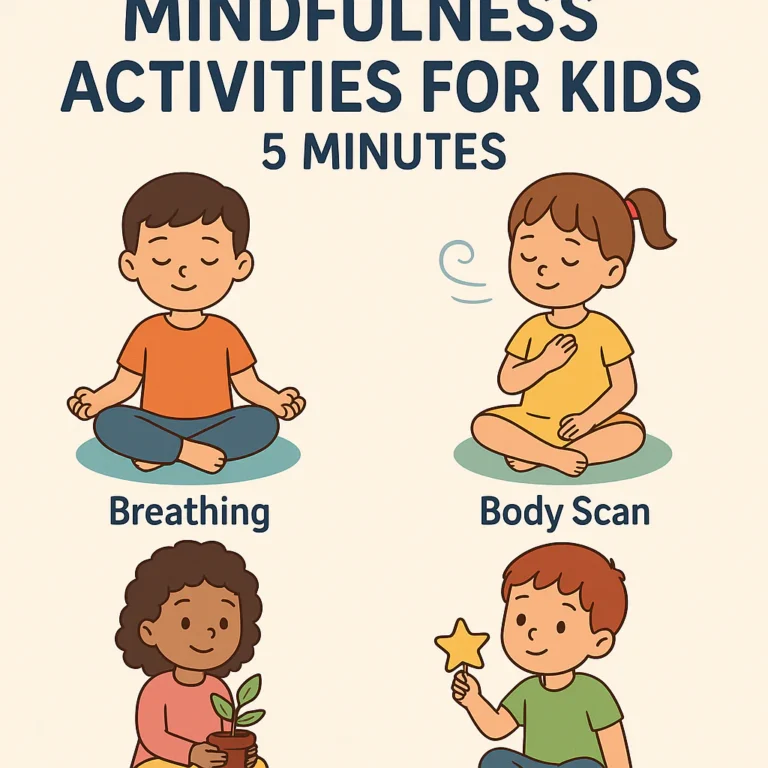
- 5. Mindful Breathing with Balons and Bubbles
- 6. The Body Scan: A Tickle Tour of the Body
- 7. Mindful Eating: The Raisin (or Chocolate Chip) Challenge
- 8. The Still Quiet Place: Creating a Mental Sanctuary
- 9. Mindful Listening: The Sound Hunt Game
- 10. Gratitude Stones: Collecting Good Vibes
- 1. The Emotion Weather Report
- 12. Yoga for Kids: Animal Poses and Flow
- 13. Mindful Coloring and Mandala Art
- 14. The “Stop, Breathe, and Choose” Traffic Light
- 15. Mindful Movement: Slow-Motion Freeze Dance
- 16. The Worry Box: Leting Go of Heavy Thoughts
- 17. Mindful Hugs: Connecting with Loved Ones
- 18. The 5-4-3-2-1 Grounding Technique
- 19. Mindful Storytelling: Interactive Reading
- 20. The Compassion Cloud: Sending Kindness
- 21. Mindful Cleaning: Turning Chores into Zen
- 2. The “Superpower” Pause
- 23. Mindful Walking: The Ant’s Journey
- 24. The Gratitude Jar: A Year of Good Things
- 25. Mindful Sleep: The Body Sleep Scan
- 📱 Top Apps, YouTube Channels, and Digital Tools for Young Minds
- Smiling Mind App: Free and Family-Friendly
- Headspace for Kids: Guided Meditations for Every Mood
- Calm Kids: Sleep Stories and Breathing Exercises
- YouTube Channels: Cosmic Kids Yoga and GoNoodle
- 🏫 Mindfulness in the Classroom: K-12 Strategies for Teachers and Parents
- 🧘 ♀️ Mindfulness for Sleep: Helping Kids When Their Minds Won’t Slow Down
- 📵 Avoiding Digital Distraction: Mindful Tech Habits for Families
- 🎯 How to Choose the Right Mindfulness Practice for Your Child’s Personality
- 🧩 Mindfulness Games and Activities for Kids with Anxiety and ADHD
- 🌍 The World’s Largest Positive Psychology Resource for Families
- ❓ Frequently Asked Questions About Mindfulness for Children
- 💬 What Our Readers Think
- 🔑 Key Insights: The Take-Home Message
- Conclusion
- Recommended Links
- Reference Links
⚡️ Quick Tips and Facts
Before we dive into the deep end of the mindfulness pool, let’s grab a few life preservers! Here are the non-negotiable truths about teaching mindfulness to kids, straight from our team’s experience at Mindful Ideas™:
- Short & Sweet Wins: Kids aren’t adults in tiny bodies. Their attention spans are measured in minutes, not hours. 3 to 5 minutes is often the sweet spot. If you try to force a 20-minute sit, you’ll lose them before the first exhale.
- Play is the Pathway: If it feels like a chore, it’s not mindfulness; it’s homework. The most effective techniques are disguised as games, superhero training, or silly dances.
- Consistency Over Duration: Doing a 1-minute breathing exercise every day is infinitely more powerful than a 30-minute session once a month. We call this “habit stacking.”
- The “Name-It-to-Tame-It” Rule: Research shows that simply labeling an emotion (e.g., “I feel frustrated”) can reduce amygdala activation by 30%.
- Modeling is Key: You can’t teach what you don’t practice. If you want your child to be calm, you must be the calm in the storm.
Did you know? A study by Flook et al. (2010) found that just 8 weeks of mindfulness practice in 3rd graders significantly improved their behavioral regulation and focus compared to a control group. That’s less than two months to change a brain!
For more on how these practices transform lives, check out our deep dive on Mindful Ideas.
🧠 The Evolution of Mindful Kids: A Brief History of Child Mindfulness

You might think mindfulness is a modern wellness trend, but the roots of teaching children to be present go back much further than the last decade. However, the way we approach it today is a fascinating evolution from ancient silence to modern science.
From Monasteries to Classrooms
Historically, mindfulness was the domain of monks and sages. It wasn’t exactly a standard part of the kindergarten curriculum. The shift began in the late 20th century when pioneers like Jon Kabat-Zinn brought Mindfulness-Based Stress Reduction (MBSR) into hospitals. But it wasn’t until the early 20s that educators realized the potential for kids.
Susan Kaiser Greenland, often called the “mother of mindfulness for kids,” revolutionized the field by adapting these ancient practices into “Mindful Games.” She realized that for children, stillness wasn’t the goal; awareness was.
The Science-Backed Boom
In the last 15 years, the narrative has shifted from “spiritual practice” to “neuroscience necessity.” Studies from institutions like Harvard and UCLA have shown that mindfulness thickens the prefrontal cortex (the brain’s CEO) and shrinks the amygdala (the brain’s alarm bell).
“In today’s rush, we all think too much—seek too much—want too much—and forget about the joy of just being.” – Eckhart Tolle
This quote resonates deeply with parents today. We are raising a generation of “digital natives” who are constantly bombarded by notifications. Mindfulness is the antidote to the digital dopamine loop.
Why It Matters Now More Than Ever
We are seeing a surge in childhood anxiety and ADHD diagnoses. While we can’t blame technology entirely, the lack of “boredom” and unstructured time has left many children without the tools to self-regulate. Mindfulness provides those tools. It’s not about making kids sit still; it’s about giving them the superpower of choice when their emotions run wild.
🌟 Why Bother? The Cognitive, Emotional, and Social Benefits of Mindfulness for Children
“Why should I spend time on this when they have homework, soccer practice, and piano lessons?” We hear this question often. The answer lies in the ROI (Return on Investment) of a calm brain.
🧠 Cognitive Benefits: The Brain Gym
Mindfulness isn’t just about feeling good; it’s about thinking better.
- Enhanced Focus: Regular practice improves sustained attention. Kids learn to notice when their mind wanders and gently bring it back—a skill that translates directly to math problems and reading comprehension.
- Executive Function: This includes planning, organizing, and impulse control. Mindfulness strengthens the neural pathways responsible for these high-level skills.
- Memory Boost: By reducing stress (which kills memory), mindfulness creates a clearer space for learning.
❤️ Emotional Benefits: The Inner Compass
- Emotional Regulation: Instead of exploding when frustrated, a mindful child learns to pause, breathe, and choose a response.
- Resilience: Mindfulness teaches that feelings are like weather; they pass. This builds emotional resilience, helping kids bounce back from setbacks.
- Self-Awareness: Kids learn to identify where they feel emotions in their bodies (e.g., “My tummy feels tight when I’m nervous”).
🤝 Social Benefits: The Empathy Engine
- Reduced Bulying: Studies show that mindful classrooms report fewer incidents of bullying and more acts of kindness.
- Improved Listening: When you are present, you actually hear what others are saying, not just waiting for your turn to speak.
- Conflict Resolution: Mindful kids are better at de-escalating arguments because they can recognize their own rising anger before it takes over.
| Benefit Category | Key Skill Developed | Real-World Application |
|---|---|---|
| Cognitive | Sustained Attention | Finishing homework without distraction |
| Emotional | Impulse Control | Not hitting when angry |
| Social | Active Listening | Understanding a friend’s perspective |
| Physical | Body Awareness | Recognizing hunger vs. boredom |
🎨 25 Creative and Engaging Mindful Ideas for Children to Spark Joy and Focus
Okay, here is the meat of the article! We’ve curated 25 unique, engaging, and scientifically backed mindful activities. We’ve gone way beyond the standard “sit and breathe.” These are designed to be fun, sensory-rich, and memorable.
Note: We’ve numbered the specific activities, but the general sections remain unumbered to keep the flow natural.
1. The Mindful Jar: Visualizing Calm in a Bottle
Age: 3+
The Concept: This is a visual metaphor for the mind. When we are upset, our thoughts are like glitter swirling in water. When we calm down, the glitter settles, and we can see clearly again.
How to Do It:
- Fill a clear Mason jar almost to the top with warm water.
- Add a generous spoonful of glitter glue or dry glitter.
- Add a drop of food coloring (optional).
- Shake it up! Ask your child to watch the chaos. “This is how your mind feels when you’re angry.”
- Place the jar on a table and ask them to watch the glitter settle. “This is what happens when we breathe deeply.”
Pro Tip: Make this a family ritual. When tempers flare, grab the jar.
2. Spidey-Senses: Superhero Training for Awareness
Age: 4–10
The Concept: Turn mindfulness into a superhero mission. “Activate your Spidey-senses!”
How to Do It:
- Ask your child to put on their “super-suit” (imaginary or real).
- Super Hearing: “Listen for the farthest sound you can hear.”
- Super Sight: “Look for something blue that you’ve never noticed before.”
- Super Touch: “Feel the texture of your shirt. Is it rough or smooth?”
- Super Smell: “Sniff the air. Can you smell the cookies baking?”
Why It Works: It forces the brain to switch from “autopilot” to active observation.
3. The Heartbeat Exercise: Tuning into Your Inner Rhythm
Age: 5+
The Concept: Connecting physical exertion with calm awareness.
How to Do It:
- Have your child jump up and down or do jumping jacks for 60 seconds.
- Immediately sit down, close their eyes, and place a hand over their heart.
- Ask: “Can you feel your heart beating? Is it fast or slow?”
- Guide them to breathe deeply until the heartbeat slows down.
Science: This teaches interoception (sensing internal body states), a crucial skill for emotional regulation.
4. Safari Adventure: A Mindful Walk in Nature
Age: 4+
The Concept: A standard walk is boring. A Safari is an expedition!
How to Do It:
- Give your child a “binoculars” (make them with hands or use real ones).
- Set a mission: “Find 3 bugs, 2 different leaves, and 1 bird.”
- Encourage them to move slowly so they don’t scare the wildlife.
- Discuss what they saw, heard, and smelled afterward.
Link: Explore more nature-based mindfulness in our Meditation Practices category.
5. Mindful Breathing with Balons and Bubbles
Age: 3–8
The Concept: Using breath to create visual magic.
How to Do It:
- Bubbles: Blow bubbles slowly. “Can you blow one giant bubble without it popping?” This requires a long, steady exhale.
- Ballons: Tie a balloon to a string. Have the child blow into it gently to make it float, or use a pinwheel.
Why It Works: It lengthens the exhale, which activates the vagus nerve and triggers the body’s relaxation response.
6. The Body Scan: A Tickle Tour of the Body
Age: 4+
The Concept: Instead of a boring scan, make it a “Tickle Tour.”
How to Do It:
- Have the child lie down.
- Imagine a “magic tickle monster” (or a warm sunbeam) moving from their toes to their head.
- “The monster tickles your toes… now your knees… now your tummy.”
- Ask them to notice where they feel the sensation.
Tip: Keep it light and giggly. Laughter is a great form of release!
7. Mindful Eating: The Raisin (or Chocolate Chip) Challenge
Age: 5+
The Concept: Eating is usually on autopilot. Let’s turn it into an adventure.
How to Do It:
- Give your child one raisin or chocolate chip.
- Look: “What does it look like? Is it shiny?”
- Touch: “Is it wrinkly? Smooth?”
- Smell: “Close your eyes. What does it smell like?”
- Taste: “Put it on your tongue. Don’t chew yet. What happens?”
- Chew: “Slowly chew. How does the flavor change?”
Result: Kids often discover flavors they never noticed before!
8. The Still Quiet Place: Creating a Mental Sanctuary
Age: 6+
The Concept: Visualizing a safe, calm place.
How to Do It:
- Ask your child to close their eyes.
- “Imagine a place where you feel totally safe and happy. Is it a beach? A treehouse? A cloud?”
- Guide them to add details: “What do you see? What do you hear? How does the air feel?”
- Tell them they can visit this place anytime they feel stressed.
Resource: Check out the Still Quiet Place video series for guided visualizations.
9. Mindful Listening: The Sound Hunt Game
Age: 4+
The Concept: Tuning into the auditory world.
How to Do It:
- Sit in silence for 1 minute.
- Ask: “How many different sounds can you hear?”
- Go further: “Can you hear a sound from outside the room? Can you hear your own breathing?”
- Draw a “sound map” of what they heard.
Why It Works: It shifts focus from internal chatter to external reality.
10. Gratitude Stones: Collecting Good Vibes
Age: 5+
The Concept: A tactile way to practice gratitude.
How to Do It:
- Go for a walk and collect smooth stones.
- Paint or draw a symbol on each stone representing something they are grateful for (e.g., a heart for family, a sun for a sunny day).
- Keep them in a special jar.
- When they feel down, pick a stone and remember the good thing.
1. The Emotion Weather Report
Age: 4+
The Concept: Using weather metaphors to describe feelings.
How to Do It:
- Ask: “What is your weather like today?”
- “Are you sunny? Stormy? Fogy? Windy?”
- Validate that all weather is okay. “Storms pass, and the sun comes out again.”
Benefit: It helps kids name their emotions without judgment.
12. Yoga for Kids: Animal Poses and Flow
Age: 3+
The Concept: Moving the body to calm the mind.
How to Do It:
- Cat/Cow: Stretch the spine.
- Downward Dog: Stretch the legs.
- Lion’s Breath: Stick out the tongue and roar! (Great for releasing anger).
- Tree Pose: Balance one foot.
Resource: Cosmic Kids Yoga on YouTube is a fantastic resource for guided sessions.
13. Mindful Coloring and Mandala Art
Age: 5+
The Concept: Repetitive motion calms the brain.
How to Do It:
- Provide coloring books with intricate patterns or mandalas.
- Encourage them to focus on the color and the movement of the crayon, not the final result.
- “Let’s color slowly, matching our breath to the strokes.”
Science: This increases alpha-wave activity, associated with relaxation and creativity.
14. The “Stop, Breathe, and Choose” Traffic Light
Age: 5+
The Concept: A decision-making tool for emotional regulation.
How to Do It:
- Red Light: Stop! Don’t react.
- Yellow Light: Breathe. Take 3 deep breaths.
- Green Light: Choose a good action.
Application: Use this when they are about to hit, yell, or run into the street.
15. Mindful Movement: Slow-Motion Freeze Dance
Age: 4+
The Concept: Combining music with control.
How to Do It:
- Play music and dance.
- When the music stops, freeze in a pose.
- Twist: Instead of just freezing, ask them to freeze in a “calm” pose (like a statue) and take a deep breath.
16. The Worry Box: Leting Go of Heavy Thoughts
Age: 6+
The Concept: Externalizing worries.
How to Do It:
- Decorate a box.
- Write or draw worries on slips of paper.
- Put them in the box and close the lid.
- “We don’t have to carry these right now. They are safe in the box.”
Tip: You can even burn or shred the papers later (safely) to symbolize letting go.
17. Mindful Hugs: Connecting with Loved Ones
Age: All
The Concept: Physical connection releases oxytocin.
How to Do It:
- Hug someone for 20 seconds.
- Focus on the warmth and the heartbeat of the other person.
- “Can you feel how much they love you?”
18. The 5-4-3-2-1 Grounding Technique
Age: 7+
The Concept: A quick tool for anxiety.
How to Do It:
- 5 things you can see.
- 4 things you can touch.
- 3 things you can hear.
- 2 things you can smell.
- 1 thing you can taste.
Why It Works: It instantly pulls the brain out of a panic spiral and into the present moment.
19. Mindful Storytelling: Interactive Reading
Age: 4+
The Concept: Reading with full presence.
How to Do It:
- Read a story, but pause often.
- Ask: “How do you think the character feels?”
- “What would you do in this situation?”
- “Close your eyes and imagine the scene.”
20. The Compassion Cloud: Sending Kindness
Age: 6+
The Concept: Practicing loving-kindness (Metta).
How to Do It:
- Imagine a cloud of warm, golden light above your head.
- Send this light to yourself: “May I be happy.”
- Send it to a friend: “May you be happy.”
- Send it to someone you don’t like: “May you be happy.”
Benefit: Builds empathy and reduces anger.
21. Mindful Cleaning: Turning Chores into Zen
Age: 5+
The Concept: Finding mindfulness in the mundane.
How to Do It:
- “Let’s clean the toys. Notice how the blocks feel. Listen to the sound of them clicking.”
- “Wash the dishes. Feel the warm water. Watch the bubbles.”
Why It Works: It transforms boring tasks into opportunities for presence.
2. The “Superpower” Pause
Age: 5+
The Concept: A quick reset button.
How to Do It:
- Before starting a new activity, take a “Superpower Pause.”
- Stand tall, take one deep breath, and say: “I am ready.”
- Use this before tests, meals, or transitions.
23. Mindful Walking: The Ant’s Journey
Age: 4+
The Concept: Walking as slowly as ant.
How to Do It:
- Walk across a room as slowly as possible.
- Focus on the sensation of the foot lifting, moving, and placing.
- “Lift… Move… Place.”
Tip: This is great for calming down hyperactive kids.
24. The Gratitude Jar: A Year of Good Things
Age: 5+
The Concept: A long-term gratitude practice.
How to Do It:
- Get a large jar.
- Every day, write one good thing on a slip of paper and add it.
- On New Year’s Eve, read them all together.
25. Mindful Sleep: The Body Sleep Scan
Age: 5+
The Concept: A bedtime routine to induce sleep.
How to Do It:
- Lie in bed.
- Imagine a warm light starting at the toes and slowly moving up.
- “Your toes are sleepy… your legs are sleepy… your tummy is sleepy…”
- Continue until the whole body is asleep.
📱 Top Apps, YouTube Channels, and Digital Tools for Young Minds
While we advocate for screen-free time, the right digital tools can be powerful allies. Here are our top picks, rated by our team for engagement, content quality, and ease of use.
Rating Table: Top Mindfulness Apps for Kids
| App Name | Age Range | Cost | Key Features | Rating (1-10) |
|---|---|---|---|---|
| Smiling Mind | 7+ | Free | Structured programs, body scans, sleep stories | 9.5 |
| Headspace for Kids | 5–12 | Subscription | Animated guides, focus games, sleep casts | 9.0 |
| Calm Kids | 4+ | Subscription | Sleep stories, breathing exercises, nature sounds | 8.5 |
| Cosmic Kids Yoga | 3–10 | Free/Subscription | Yoga stories, movement, fun characters | 9.8 |
| Moshi | 3–8 | Subscription | Bedtime stories, mindfulness, music | 8.0 |
Smiling Mind App: Free and Family-Friendly
Developed by psychologists in Australia, Smiling Mind is a non-profit gem. It offers specific modules for different age groups, from preschoolers to teens.
- Why we love it: It’s completely free and ad-free.
- Best for: Structured daily practice.
- Link: Smiling Mind Official Website
Headspace for Kids: Guided Meditations for Every Mood
Headspace brings its signature friendly style to kids. The animations are delightful, and the content covers everything from “Anxiety” to “Focus.”
- Why we love it: High production value and relatable characters.
- Best for: Visual learners and bedtime routines.
- Link: Headspace for Kids
Calm Kids: Sleep Stories and Breathing Exercises
Calm is famous for its sleep stories, and the kids’ section is no exception. It features celebrity narrators and soothing soundscapes.
- Why we love it: Excellent for children who struggle to fall asleep.
- Best for: Sleep issues and relaxation.
- Link: Calm Kids
YouTube Channels: Cosmic Kids Yoga and GoNoodle
- Cosmic Kids Yoga: Jaime and her team turn yoga into an adventure. “The Yoga Adventure” series is a hit.
Link: Cosmic Kids Yoga on YouTube - GoNoodle: Great for active mindfulness and movement breaks.
Link: GoNoodle
🏫 Mindfulness in the Classroom: K-12 Strategies for Teachers and Parents
Mindfulness isn’t just for home; it’s a game-changer in the classroom. Teachers report better behavior, improved focus, and a more positive school culture.
Strategies for Teachers
- The Bell Ritual: Start the day with a bell. Ask students to listen until the sound completely fades.
- Mindful Transitions: Use a specific breathing exercise when moving from math to recess.
- The “Calm Corner”: Create a designated space with pillows, stress balls, and breathing guides where students can go to reset.
Strategies for Parents
- Morning Check-in: Before school, ask: “What is your weather like today?”
- After-School Decompression: Allow 15 minutes of quiet time before homework.
- Modeling: Let your child see you taking a deep breath when you’re frustrated.
Did you know? A study by Schonert-Reichl & Lawlor (2010) found that elementary students who practiced mindfulness showed higher scores on self-report measures of optimism and positive emotions.
🧘 ♀️ Mindfulness for Sleep: Helping Kids When Their Minds Won’t Slow Down
Bedtime battles are real. When a child’s mind is racing with thoughts of the day, sleep feels impossible. Mindfulness offers a gentle way to wind down.
The “Body Sleep Scan”
Guide your child through a progressive relaxation. Start at the toes and move up, imagining each body part getting heavy and warm. “Your toes are heavy… your legs are heavy…”
The “Worry Box” Technique
Before bed, have them write down any worries and put them in a box. “We’ll deal with these tomorrow. Right now, it’s time to sleep.”
Sleep Stories
Apps like Calm and Headspace offer stories designed to induce sleep. These are often more effective than traditional stories because they focus on relaxation rather than plot.
📵 Avoiding Digital Distraction: Mindful Tech Habits for Families
We live in a digital world. The goal isn’t to ban screens, but to use them mindfully.
Tips for Families
- Tech-Free Zones: No screens at the dinner table or in the bedroom.
- The “Why” Check: Before handing over a tablet, ask: “Why are we using this? Is it for fun, learning, or just to stop the whining?”
- Co-Viewing: Watch videos together and discuss them. “What did you notice in that video?”
The “Mindful Gaming” Approach
If they play games, encourage them to notice how they feel. “Do you feel excited? Frustrated? Let’s take a break if you feel too much.”
🎯 How to Choose the Right Mindfulness Practice for Your Child’s Personality
Not every child responds to the same technique. Here’s a guide to matching the practice to the personality.
| Child’s Personality | Best Practices | Why It Works |
|---|---|---|
| Active/Hyper | Yoga, Safari Walk, Slow-Motion Dance | Uses their energy; movement-based. |
| Anxious/Woried | Worry Box, 5-4-3-2-1, Sleep Scan | Provides structure and grounding. |
| Creative/Artistic | Mindful Coloring, Mandala, Gratitude Stones | Engages their imagination and senses. |
| Logical/Analytical | Heartbeat Exercise, Science of Breath | Appeals to their curiosity about how things work. |
| Social/Outgoing | Mindful Hugs, Compassion Cloud, Group Games | Focuses on connection with others. |
🧩 Mindfulness Games and Activities for Kids with Anxiety and ADHD
Children with anxiety and ADHD often struggle with regulation. Mindfulness can be a powerful tool, but it needs to be adapted.
For Anxiety
- Focus on Grounding: The 5-4-3-2-1 technique is a lifesaver for panic attacks.
- Breathing Visuals: Use bubbles or pinwheels to make breathing tangible.
- Safe Place: The “Still Quiet Place” visualization gives them a mental escape.
For ADHD
- Short Bursts: Keep activities under 2 minutes.
- Movement: Incorporate yoga or walking.
- Gamification: Turn it into a challenge. “Can you hold the pose for 10 seconds?”
Important: Mindfulness is not a cure-all, but it is a valuable tool in the toolkit. Always consult with a professional for severe cases.
🌍 The World’s Largest Positive Psychology Resource for Families
We believe in the power of positive psychology to transform lives. PositivePsychology.com offers a wealth of resources, including worksheets, articles, and tools for families.
- Mindful Games: Free printable games.
- Worksheets: Gratitude journals, emotion trackers.
- Articles: Deep dives into the science of mindfulness.
Check out their collection of 17 Validated Mindfulness Tools to get started.
❓ Frequently Asked Questions About Mindfulness for Children
How can art and creativity be used to promote mindfulness in children?
Art is a natural form of mindfulness. When children focus on coloring, drawing, or sculpting, they enter a state of flow. This state reduces stress and improves focus. Try mindful coloring or mandala creation to encourage this.
What are some mindful breathing techniques suitable for kids?
- Baloon Breathing: Imagine the belly is a balloon.
- Bunny Breathing: Sniff in three times, blow out once.
- Starfish Breathing: Trace fingers while breathing.
- Bubble Breathing: Blow bubbles slowly.
How can parents teach mindfulness to young children effectively?
- Keep it short: 1-3 minutes.
- Make it fun: Use games and stories.
- Model it: Do it with them.
- Be consistent: Practice daily.
What are fun mindfulness games to do with children?
- Sound Safari: Listen for different sounds.
- Emotion Charades: Act out feelings.
- The Web of Connection: Toss yarn to show connection.
- Mindful Listening Circle: Pass a sound around.
How do creative mindfulness practices benefit children’s emotional development?
They help children identify and regulate emotions. By naming feelings and understanding that they pass, children develop emotional intelligence and resilience.
What are simple mindfulness exercises for kids at home?
- Mindful Eating: Eat a snack slowly.
- Body Scan: Relax each body part.
- Gratitude Jar: Write down good things.
- Mindful Walking: Walk slowly and notice.
How can mindfulness activities help children manage stress?
Mindfulness activates the parasympathetic nervous system (rest and digest). It lowers cortisol levels and helps children feel calm and centered.
What are some outdoor mindfulness activities that can help my child connect with nature and develop a sense of calm?
- Safari Walk: Look for bugs and birds.
- Tree Hugging: Feel the bark and listen to the leaves.
- Cloud Watching: Imagine shapes in the clouds.
- Nature Scavenger Hunt: Find specific items.
How can I incorporate mindfulness into my child’s daily routine, such as during meals or bedtime?
- Meals: Practice mindful eating.
- Bedtime: Do a body scan or listen to a sleep story.
- Morning: Start with a “Superpower Pause.”
- Transitions: Use a bell or breathing exercise.
Are there any mindfulness games or apps that are suitable for young children?
Yes! Smiling Mind, Headspace for Kids, and Cosmic Kids Yoga are excellent. For games, try Sound Safari or Emotion Charades.
What role can mindfulness play in reducing stress and anxiety in children?
It helps them recognize stress signals early and use tools (like breathing) to calm down before they become overwhelmed.
Can mindfulness activities help improve my child’s emotional regulation and self-awareness?
Absolutely. By practicing mindfulness, children learn to observe their thoughts and feelings without judgment, leading to better self-regulation and self-awareness.
What are some simple mindfulness exercises that can help my child relax and focus?
- 5-4-3-2-1 Grounding.
- Baloon Breathing.
- Mindful Coloring.
- Body Scan.
How can I introduce mindfulness to my child in a fun and interactive way?
Start with games! Use superhero themes, storytelling, and movement. Make it a shared activity, not a lecture.
Conclusion

We started this journey by asking: How can we help our children navigate a chaotic world with calm and clarity? The answer lies in playful consistency.
Mindfulness isn’t about forcing a child to sit still for 30 minutes. It’s about weaving small moments of awareness into the fabric of their day. Whether it’s blowing bubbles, going on a Safari Walk, or using the Worry Box, these practices build the neural pathways for resilience, focus, and emotional intelligence.
Our Top Recommendation: Start small. Pick one activity from our list of 25 that resonates with your child’s personality. Try it for a week. Notice the changes. Remember, the goal isn’t perfection; it’s presence.
As you embark on this path, remember that you are not just teaching your child to be mindful; you are teaching them how to live. And isn’t that the greatest gift we can give?
Recommended Links
Here are the tools and resources we mentioned to help you get started:
- Mindfulness Apps:
Smiling Mind: Smiling Mind Official Website
Headspace for Kids: Headspace for Kids
Calm Kids: Calm Kids
Cosmic Kids Yoga: Cosmic Kids Yoga on YouTube - Books:
Planting Seeds: Practicing Mindfulness with Children by Thich Nhat Hanh
Mindful Games by Susan Kaiser Greenland
Sitting Still Like a Frog by Eline Snel - Suplies:
Hudson Bubble Solution: Search on Amazon
Crayola Color-Edge Markers: Search on Amazon
Hoberman Sphere: Search on Amazon
Back to the Roots Kids Herb Kit: Search on Amazon - Resources:
PositivePsychology.com: Mindfulness for Children
Lurie Children’s: 8 Mindfulness Activities & Exercises for Kids
Reference Links
- Flook, L., et al. (2010). “Effects of Mindfulness-Based Stress Reduction on Children’s Behavioral Regulation.” Journal of Applied Developmental Psychology.
- Schonert-Reichl, K. A., & Lawlor, M. S. (2010). “The Effects of a Mindfulness-Based Education Program on Pre- and Early Adolescents’ Well-Being and Social and Emotional Competence.” Mindfulness.
- Napoli, M., et al. (205). “Attention Training for Children with ADHD.” Journal of Attention Disorders.
- Black, D. S., & Fernando, R. (2013). “Mindfulness Training and Classroom Behavior among Lower-Income and Ethnic Minority Elementary School Children.” Journal of Child and Family Studies.
- Wall, M. (205). “Mindfulness-Based Stress Reduction for Children.” Journal of Pediatric Nursing.
- PositivePsychology.com. “Mindfulness for Children: 17 Activities & Exercises.”
- Lurie Children’s. “8 Mindfulness Activities & Exercises for Kids.”
- Mindful Ideas™. “Mindful Ideas: Cultivating Mindfulness with Ideas.” https://www.mindful-ideas.com/mindful-ideas/