Support our educational content for free when you purchase through links on our site. Learn more

🧠 Practicing Mindfulness for Mental Health: 7 Science-Backed Ways to Rewire Your Brain (2026)

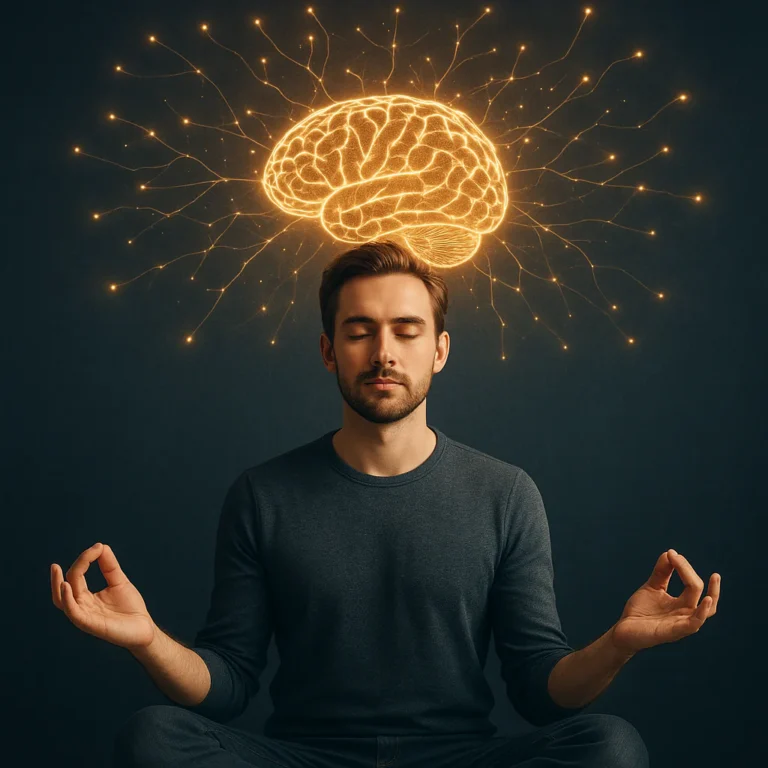
The short answer is yes: practicing mindfulness for mental health can physically rewire your brain to reduce anxiety, prevent depression relapse, and lower stress levels in as little as eight weeks. You don’t need to sit on a mountain for three days; you just need to pause, breathe, and notice what’s happening right now.
Imagine Sarah, a high-powered executive who used to spiral into panic attacks every time her phone buzzed. She didn’t quit her job or move to a monastery. Instead, she started a simple three-minute breathing exercise before checking her email. Within a month, the buzzing sound no longer triggered her fight-or-flight response.
Research from the NCCIH confirms that mindfulness usage has doubled in recent years, with studies showing it can be as effective as standard therapies for many people. It’s not about emptying your mind, but rather changing your relationship with your thoughts.
Key Takeaways
- Proven Impact: Practicing mindfulness for mental health has been shown to shrink the brain’s fear center (amygdala) and strengthen emotional regulation areas.
- Quick Wins: You don’t need hours of silence; 3-minute breathing exercises can reset your nervous system instantly.
- Safety First: While highly effective, mindfulness should be a complement to professional therapy, not a replacement, especially for severe trauma or psychosis.
- Consistency Over Duration: Daily short practices are more effective than occasional long sessions for building lasting neural pathways.
Table of Contents
- ⚡️ Quick Tips and Facts
- 📜 The Ancient Roots of Modern Mindfulness: A Brief History
- 🧠 What Exactly Is Mindfulness and How Does It Rewire Your Brain?
- 🌱 The Science-Backed Benefits of Mindfulness for Mental Health
- 🛠️ 7 Powerful Mindfulness Exercises to Calm Anxiety and Depression
- 🚶 ♀️ Integrating Mindfulness into Your Daily Routine: From Commute to Couch
- 🍃 Mindful Eating, Walking, and Breathing: Techniques for Every Moment
- 🧘 ♂️ Mindfulness vs. Meditation: Understanding the Key Differences
- 🚧 Common Pitfalls: Why Your Mindfulness Practice Might Be Failing
- 🤝 When to Seek Professional Help: Mindfulness as a Complement to Therapy
- 🌍 Nature and Mindfulness: Boosting Mental Wellness Outdoors
- 📱 Top Apps and Digital Tools to Guide Your Mindfulness Journey
- 👥 Is Mindfulness Helpful for Everyone? Navigating Individual Needs
- 💡 Quick Tips and Facts Recap
- 🏁 Conclusion
- 🔗 Recommended Links
- ❓ FAQ
- 📚 Reference Links
⚡️ Quick Tips and Facts
Before we dive into the deep end of the mindfulness pool, let’s get the water temperature right with some rapid-fire truths. You don’t need to sit cross-legged on a mountain for three days to start feeling the benefits. In fact, the biggest myth we bust at Mindful Ideas™ is that mindfulness requires hours of silence.
Here is the lowdown:
- It’s not about emptying your mind: Trying to stop thinking is like trying to stop your heart from beating. The goal is to notice your thoughts without getting swept away by them.
- The 3-Minute Rule: You can reset your nervous system in less time than it takes to brew a cup of coffee.
- Science says it works: A massive review by the NCCIH found that mindfulness can be as effective as standard therapies for anxiety and depression in many cases.
- It’s a skill, not a switch: You wouldn’t expect to run a marathon after one jog. Similarly, your brain needs repetition to rewire.
Did you know? Research suggests that just 8 weeks of consistent practice can physically change the structure of your brain, increasing gray matter density in areas associated with learning and memory while shrinking the amygdala (your brain’s fear center). Learn more about the neuroscience of mindfulness here.
If you are looking for specific activities to get started right now, check out our guide on mindful activities for adults to find the perfect fit for your lifestyle.
📜 The Ancient Roots of Modern Mindfulness: A Brief History

You might think mindfulness is the latest wellness trend invented by a tech billionaire in Silicon Valley, but the roots run much deeper than that. We’re talking thousands of years deep.
From Eastern Traditions to Western Clinics
Mindfulness (or Sati in Pali) originated in Buddhist traditions over 2,50 years ago. It was a core component of the path to enlightenment, designed to help practitioners see reality as it truly is, free from the distortion of craving or aversion.
Fast forward to the 1970s, and a man named Jon Kabat-Zinn decided to strip the religious clothing off the practice. He founded the Stress Reduction Clinic at the University of Massachusetts Medical School, creating Mindfulness-Based Stress Reduction (MBSR). This was a watershed moment. By secularizing the practice, Kabat-Zinn made it accessible to doctors, patients, and skeptics alike.
“Mindfulness means being present in the moment, so it can happen at any time.” — Mental Health Foundation
Today, it’s not just monks on mountaintops practicing. It’s corporate executives, school teachers, and even athletes. The NCCIH notes that meditation usage in the U.S. more than doubled between 2012 and 2017, surpassing yoga and chiropractic care in popularity.
Why the Shift Matters
The transition from spiritual practice to clinical tool wasn’t just about marketing; it was about evidence. As we’ll see later, the data supports the idea that these ancient techniques are potent tools for modern mental health struggles like burnout and anxiety.
🧠 What Exactly Is Mindfulness and How Does It Rewire Your Brain?
So, what is this thing we’re all talking about? Is it just staring at a candle? Not quite.
The Core Definition
At its heart, mindfulness is paying attention, on purpose, to the present moment, without judgment.
Let’s break that down:
- On Purpose: You are choosing to direct your attention. It’s active, not passive.
- Present Moment: You are anchoring yourself in “now,” rather than ruminating on the past or catastrophizing the future.
- Without Judgment: This is the kicker. You observe a thought (“I’m so anxious”) and simply note it (“Ah, there’s anxiety”), rather than labeling it as “bad” or trying to force it away.
The Neuroscience: How It Works
You might be wondering, “How does just noticing things change my brain?” It’s all about neuroplasticity.
When you practice mindfulness, you are essentially exercising your brain’s “attention muscle.”
- The Prefrontal Cortex: This is the CEO of your brain, responsible for decision-making and emotional regulation. Mindfulness strengthens this area.
- The Amygdala: Your brain’s alarm system. Chronic stress keeps this area overactive. Mindfulness helps shrink the amygdala’s volume, making you less reactive to stressors.
- The Default Mode Network (DMN): This is the brain network active when your mind is wandering (often to negative thoughts). Mindfulness quiets the DMN, reducing rumination.
Fun Fact: A study published in Psychiatry Research: Neuroimaging found that participants who completed an 8-week MBSR program showed increased gray matter concentration in the hippocampus (learning and memory) and decreased density in the amygdala.
For a deeper dive into the mechanics, explore our articles on Meditation Practices and Mental Health.
🌱 The Science-Backed Benefits of Mindfulness for Mental Health
We’ve heard the hype, but does it actually hold up under scrutiny? The short answer is yes, but with some nuance.
The Big Wins
According to comprehensive analyses by the NCCIH and other bodies, mindfulness offers tangible benefits for:
- Anxiety and Depression: Mindfulness-Based Cognitive Therapy (MBCT) is now a recommended treatment in the UK’s NHS for preventing relapse in depression.
- Stress Reduction: By lowering cortisol levels, mindfulness helps break the cycle of chronic stress.
- Emotional Regulation: It helps you pause between a trigger and your reaction, giving you the choice to respond rather than explode.
- Sleep Quality: By quieting the “monkey mind,” many find it easier to drift off.
The Nuance: It’s Not a Magic Bullet
While the benefits are real, we must be honest about the limitations. A 2019 analysis of studies on students found that while mindfulness helped, many studies had a high risk of bias. Furthermore, for some individuals, intense mindfulness practice can initially increase anxiety or bring up traumatic memories.
Key Insight: Mindfulness is a complement to professional care, not always a replacement. If you are in crisis, please seek a therapist.
Comparison: Mindfulness vs. No Treatment
| Condition | Effectiveness of Mindfulness | Notes |
|---|---|---|
| Anxiety | High | Often matches CBT in reducing symptom severity. |
| Depression | High (Prevention) | MBCT is highly effective for preventing relapse. |
| PTSD | Moderate to High | Can be as effective as prolonged exposure therapy for some. |
| ADHD | Low/Inconclusive | Mixed results; not a standalone cure. |
| Chronic Pain | Moderate | Improves pain tolerance and coping, less effective at removing pain. |
🛠️ 7 Powerful Mindfulness Exercises to Calm Anxiety and Depression
Ready to put theory into practice? Here are seven techniques we use at Mindful Ideas™, ranging from quick fixes to deeper dives.
1. The 3-Minute Breathing Space
This is the cornerstone of MBCT. It’s designed to be done anywhere, anytime.
- Minute 1 (Awareness): Ask yourself, “What is my experience right now?” Acknowledge thoughts, feelings, and bodily sensations. Just name them.
- Minute 2 (Gathering): Narrow your focus to the physical sensation of your breath. Follow the inhale and exhale.
- Minute 3 (Expanding): Widen your awareness to include your whole body, your posture, and the space around you.
2. The Body Scan
This is the technique featured in the “first video” we mentioned earlier (you can find the full guide here).
- Lie down or sit comfortably.
- Bring your attention to your toes. Notice any sensations: tingling, warmth, tension, or nothing at all.
- Slowly move your attention up through your feet, ankles, calves, knees, and so on, all the way to the crown of your head.
- Crucial Tip: If you feel tension, don’t try to fix it. Just acknowledge it. Imagine breathing into that area.
3. The “Leaves on a Stream” Visualization
Perfect for when your mind is racing with negative thoughts.
- Close your eyes and imagine a stream flowing gently.
- Visualize a leaf floating on the surface.
- When a thought pops up (e.g., “I’m going to fail”), place that thought on a leaf.
- Watch the leaf float away down the stream.
- If the thought sticks, just notice it’s stuck, and gently place it on another leaf.
4. Mindful Eating
Turn your next meal into a meditation.
- Pick a small piece of food (a raisin, a chocolate chip).
- Look at it. Notice the texture, the color, the shadows.
- Smell it.
- Place it on your tongue. Don’t chew yet. Notice the taste.
- Chew slowly. Notice the change in texture and flavor.
- Swallow. Notice the sensation of it going down.
5. The 5-4-3-2-1 Grounding Technique
Great for acute anxiety or panic attacks.
- Acknowledge 5 things you see.
- Acknowledge 4 things you can touch.
- Acknowledge 3 things you hear.
- Acknowledge 2 things you can smell.
- Acknowledge 1 thing you can taste.
6. Mindful Walking
You don’t need a cushion for this.
- Walk slowly.
- Focus on the sensation of your feet lifting, moving, and touching the ground.
- Notice the rhythm of your steps.
- If your mind wanders to your to-do list, gently bring it back to the feeling of your feet.
7. The RAIN Technique
For difficult emotions.
- Recognize the emotion.
- Allow it to be there (don’t fight it).
- Investigate with curiosity (Where do I feel it in my body?).
- Nurture yourself with self-compassion.
🚶 ♀️ Integrating Mindfulness into Your Daily Routine: From Commute to Couch
The biggest mistake people make is thinking they need to carve out an hour of silence to be mindful. Wrong. Mindfulness is about weaving awareness into the fabric of your day.
The “Habit Stacking” Method
Attach a mindfulness practice to an existing habit.
- Brushing Teeth: Feel the bristles, the taste of the paste, the movement of your hand.
- Waiting for the Coffee: Instead of scrolling your phone, just watch the steam rise and smell the aroma.
- The Elevator Ride: Notice your posture, your breath, and the sensation of the floor beneath you.
Mindfulness at Work
- Single-Tasking: Do one thing at a time. If you are writing an email, just write. If you are in a meeting, just listen.
- The Pause: Before answering a difficult question, take one deep breath. That split second can change your entire response.
For the Busy Parent
- Diaper Changes: Turn it into a moment of connection. Look into your baby’s eyes.
- Bedtime Stories: Read with full presence. Feel the book, hear the words.
Pro Tip: If you miss a day, don’t beat yourself up. That’s just another thought to observe. Start again the next moment.
🍃 Mindful Eating, Walking, and Breathing: Techniques for Every Moment
Let’s zoom in on three specific areas where most of us are completely on autopilot.
Mindful Eating: Reclaiming Your Relationship with Food
We often eat while watching TV, driving, or working. This leads to overeating and a lack of satisfaction.
- The Challenge: Try one meal a week without screens.
- The Result: You’ll likely eat less, enjoy it more, and digest better.
- Why it helps mental health: It breaks the cycle of emotional eating by connecting you with your body’s true hunger and fullness cues.
Mindful Walking: Moving Meditation
Walking is a natural rhythm that mirrors the breath.
- Technique: Coordinate your steps with your breath. Inhale for three steps, exhale for three steps.
- Nature Connection: If you are outside, notice the colors of the leaves, the sound of the wind. This combines mindfulness with the healing power of nature.
Mindful Breathing: The Anchor
Your breath is always with you. It’s the ultimate anchor.
- Box Breathing: Inhale for 4 counts, hold for 4, exhale for 4, hold for 4. Used by Navy SEALs to stay calm under pressure.
- Physiological Sigh: Two short inhales through the nose, one long exhale through the mouth. This is the fastest way to offload carbon dioxide and calm the nervous system.
🧘 ♂️ Mindfulness vs. Meditation: Understanding the Key Differences
We hear these terms used interchangeably, but they aren’t exactly the same.
| Feature | Mindfulness | Meditation |
|---|---|---|
| Definition | A quality of awareness present in any moment. | A structured practice to train the mind. |
| Duration | Can be a split second (e.g., noticing a smell). | Usually requires a dedicated block of time (5-30 mins). |
| Goal | To be present and non-judgmental. | To cultivate focus, calm, or insight. |
| Context | Can happen while washing dishes, driving, or talking. | Usually done in a quiet, seated position. |
The Relationship: Think of meditation as the gym workout for your brain, and mindfulness as the fitness you carry into your daily life. You can practice mindfulness during meditation, but you can also practice it while doing the dishes.
Key Takeaway: You don’t need to meditate for an hour to be mindful. You just need to be present.
🚧 Common Pitfalls: Why Your Mindfulness Practice Might Be Failing
So you tried it, and it felt weird. Or maybe you tried it for a week and quit. You’re not alone. Here are the traps we see most often.
1. The “I Can’t Stop Thinking” Trap
The Myth: Mindfulness means having a blank mind.
The Reality: Your brain is designed to think. The practice is noticing that you are thinking and gently returning to the breath. Every time you notice you’ve wandered, that’s a “rep” for your brain.
2. The “I Don’t Have Time” Trap
The Myth: I need 30 minutes.
The Reality: 1 minute is better than 0. Start with 60 seconds.
3. The “It’s Not Working” Trap
The Myth: I should feel zen immediately.
The Reality: Mindfulness is subtle. You might not feel “calm,” but you might notice you are less reactive. That’s progress.
4. The “I’m Bad at It” Trap
The Myth: I’m failing because my mind wanders.
The Reality: Wandering is the point. The “failure” is judging yourself for wandering.
🤝 When to Seek Professional Help: Mindfulness as a Complement to Therapy
This is a critical section. Mindfulness is powerful, but it is not a cure-all.
When to Call a Pro
- Severe Depression: If you are unable to function or have thoughts of self-harm.
- Trauma: For some, focusing on the body can trigger traumatic memories. Trauma-informed mindfulness is essential here.
- Psychosis: Mindfulness can sometimes worsen symptoms in people with psychotic disorders.
The Power of Combination
Research shows that Mindfulness-Based Cognitive Therapy (MBCT) is highly effective for depression relapse prevention. It combines the cognitive tools of CBT with mindfulness practices.
Important: Always consult a healthcare provider before starting a new mental health regimen, especially if you have a pre-existing condition.
🌍 Nature and Mindfulness: Boosting Mental Wellness Outdoors
There is a special synergy between nature and mindfulness.
The Science of “Green Mindfulness”
Studies show that being in nature lowers cortisol and blood pressure faster than being in an urban environment. When you combine this with mindfulness, the effect is amplified.
How to Practice
- Forest Bathing (Shinrin-yoku): A Japanese practice of immersing yourself in the forest atmosphere.
- The 5 Senses Walk: Go outside and consciously engage all five senses.
- Sky Gazing: Lie on the grass and watch the clouds. Notice how they change shape and move without effort.
📱 Top Apps and Digital Tools to Guide Your Mindfulness Journey
If you prefer guided support, technology can be a great ally. Here are our top picks based on user reviews and expert analysis.
Headspace
- Best For: Beginners and structured learning.
- Features: Animated videos, themed packs (anxiety, sleep, focus), and a friendly narrator (Andy Puddicombe).
- Pros: Very user-friendly, great for building a habit.
- Cons: Can be pricey; some find the tone too “cute.”
Calm
- Best For: Sleep and relaxation.
- Features: “Sleep Stories” narrated by celebrities, nature sounds, and breathing exercises.
- Pros: Excellent audio quality, huge library of content.
- Cons: Less focus on the “why” of mindfulness compared to Headspace.
Insight Timer
- Best For: Variety and free content.
- Features: Over 10,0 free guided meditations from thousands of teachers.
- Pros: Massive free library, timer for self-guided practice.
- Cons: Can be overwhelming due to the sheer volume of choices.
Ten Percent Happier
- Best For: Skeptics and practical people.
- Features: Courses based on interviews with experts, no “woo-woo” language.
- Pros: Grounded in science, great for busy professionals.
- Cons: Subscription required for most content.
👉 Shop these tools:
- Headspace: Search on Amazon | Headspace Official
- Calm: Search on Amazon | Calm Official
- Insight Timer: Search on Amazon | Insight Timer Official
👥 Is Mindfulness Helpful for Everyone? Navigating Individual Needs
We’ve established that mindfulness is great, but is it for you?
The 8% Factor
A 2020 review found that about 8% of people experience negative effects from meditation, such as increased anxiety, panic, or emotional numbness. This is similar to the rate of adverse effects in psychotherapy.
Who Should Be Cautious?
- People with PTSD: Standard body scans can be triggering. Look for “trauma-sensitive” mindfulness.
- People with Severe Depression: Sometimes focusing on the body can increase feelings of heaviness.
- People with Psychosis: Can lead to dissociation or worsening of symptoms.
The Verdict
For the vast majority, mindfulness is safe and beneficial. However, listen to your body. If a practice makes you feel worse, stop. It’s not a failure; it’s data. Try a different technique or seek a professional guide.
💡 Quick Tips and Facts Recap
Let’s do a quick rewind before we wrap up.
- ✅ Mindfulness is a skill: It gets better with practice.
- ✅ It’s not about stopping thoughts: It’s about changing your relationship with them.
- ✅ Short bursts work: 1 minute counts.
- ✅ It’s science-backed: Proven to help with anxiety, depression, and stress.
- ❌ It’s not a magic cure: It works best as part of a holistic approach.
- ❌ It’s not for everyone: Be aware of potential negative effects if you have trauma or severe mental health issues.
🏁 Conclusion

So, we started with a question: Can a simple act of paying attention really transform your mental health?
The answer, backed by thousands of years of tradition and decades of modern science, is a resounding yes. But it’s not a magic wand. It’s a tool—a powerful, accessible, and free tool that you can carry in your pocket (or rather, in your mind) everywhere you go.
We’ve explored the history, the science, the exercises, and the pitfalls. We’ve seen that while mindfulness isn’t a cure-all, it is a fundamental shift in how we relate to our inner world. It allows us to step off the “autopilot” of worry and regret and step into the richness of the present moment.
Our Final Recommendation:
Start small. Don’t aim for an hour of silence. Aim for one minute of noticing your breath. Do it while you wait for your coffee. Do it while you wash your hands. If your mind wanders (and it will), gently bring it back. That act of returning is the practice.
If you are struggling with severe anxiety or depression, please pair this practice with professional support. Mindfulness is a powerful ally, but sometimes you need a whole team.
You have the tools. The only thing left to do is to take that first breath.
🔗 Recommended Links
Books to Deepen Your Practice
- “Wherever You Go, There You Are” by Jon Kabat-Zinn: The classic introduction to mindfulness.
- Find on Amazon
- “The Miracle of Mindfulness” by Thich Nhat Hanh: A gentle, poetic guide from a Zen master.
- Find on Amazon
- “Radical Acceptance” by Tara Brach: Combining mindfulness with self-compassion.
- Find on Amazon
Apps & Tools
- Headspace: Official Website | Amazon Search
- Calm: Official Website | Amazon Search
- Insight Timer: Official Website | Amazon Search
Organizations
- Mindful.org: Resources and research.
- NCCIH: National Center for Complementary and Integrative Health.
- Mental Health Foundation: UK-based charity with excellent guides.
❓ FAQ

How does practicing mindfulness improve mental health?
Mindfulness improves mental health by altering the brain’s structure and function. It strengthens the prefrontal cortex (responsible for emotional regulation) and weakens the amygdala (the fear center). By fostering a non-judgmental awareness of thoughts, it breaks the cycle of rumination and negative self-talk that fuels anxiety and depression. It allows individuals to respond to stressors with clarity rather than reacting impulsively.
Read more about “12 Relaxation Techniques for Adults to Master Calm (2026) 🧘 ♀️”
What are the best mindfulness exercises for anxiety?
For acute anxiety, the 5-4-3-2-1 Grounding Technique is highly effective as it forces the brain to focus on the immediate environment. For general anxiety management, the 3-Minute Breathing Space and Body Scan are excellent. The “Leaves on a Stream” visualization is particularly helpful for those who feel overwhelmed by racing thoughts.
Read more about “🧠 30-Day Mindfulness Challenges: Your Ultimate Guide (2026)”
How long does it take to see benefits from mindfulness?
While some people feel a sense of calm immediately, structural changes in the brain and significant reductions in symptoms typically take 8 weeks of consistent practice (about 10-20 minutes a day). However, even short, daily practices can provide immediate relief from stress. Consistency is more important than duration.
Read more about “27+ Self Care Mindfulness Ideas to Recharge Your Soul (2026)”
Can mindfulness help with depression and stress?
Yes. Mindfulness-Based Cognitive Therapy (MBCT) is clinically proven to prevent relapse in people with recurrent depression. For stress, mindfulness lowers cortisol levels and helps individuals recognize stress triggers early, allowing for healthier coping mechanisms. However, it should be used as a complement to professional treatment, not a replacement, especially for severe cases.
Read more about “🧠 Mindfulness & the Science of Attention: Rewire Your Brain (2026)”
Is mindfulness safe for everyone?
Generally, yes. However, for individuals with a history of trauma (PTSD), severe psychosis, or active suicidal ideation, standard mindfulness practices can sometimes be triggering. In these cases, it is crucial to work with a therapist trained in trauma-informed mindfulness or to avoid certain practices like intense body scans until stability is achieved.
Read more about “12 Surprising Benefits of Practicing Mindfulness Daily in 2025 🌟”
📚 Reference Links
- NCCIH: Meditation and Mindfulness: Effectiveness and Safety
- Mental Health Foundation: How to look after your mental health using mindfulness
- PPIMHS: The Power of Mindfulness and Meditation in Mental Health
- Kabat-Zinn, J. (190). Full Catastrophe Living. Delta.
- Davidson, R. J., et al. (203). Alterations in Brain and Immune Function Produced by Mindfulness Meditation. Psychosomatic Medicine.
- Hofmann, S. G., et al. (2010). The Effect of Mindfulness-Based Therapy on Anxiety and Depression: A Meta-Analytic Review. Journal of Consulting and Clinical Psychology.
- Goldberg, S. B., et al. (2020). Meditation-Related Adverse Effects: A Systematic Review. Clinical Psychology Review.