Support our educational content for free when you purchase through links on our site. Learn more

🧠 7 Life-Changing Benefits of 5-Minute Mindfulness (2026)

You can rewire your brain for less stress, sharper focus, and better sleep in just five minutes a day, proving that consistency beats duration every time. If you’ve ever wondered, “What are the benefits of practicing mindfulness for just 5 minutes a day?”, the answer is a transformative shift in your mental and physical health that starts almost immediately.
Science confirms that four 5-minute sessions are just as effective as four 20-minute sessions in reducing anxiety and depression. Imagine fitting a full reset into the time it takes to brew a cup of coffee or wait for your morning toast.
We once watched a client, a high-stress project manager, go from snapping at her team to leading with calm in just two weeks of daily 5-minute breathwork. She didn’t find an extra hour; she simply reclaimed the minutes she was already wasting.
Key Takeaways
- Consistency is King: Practicing for 5 minutes daily yields better long-term results than occasional hour-long sessions.
- Instant Stress Relief: A short session can rapidly lower cortisol levels and activate the body’s relaxation response.
- Brain Rewiring: Regular micro-practices strengthen the prefrontal cortex and weaken the brain’s fear center (amygdala).
- Accessibility: You don’t need special equipment or silence; these benefits are achievable anywhere, anytime.
Table of Contents
- ⚡️ Quick Tips and Facts
- 📜 The Ancient Roots of Modern Micro-Mindfulness: A Brief History
- 🧠 The Science Behind the 5-Minute Reset: How Your Brain Changes
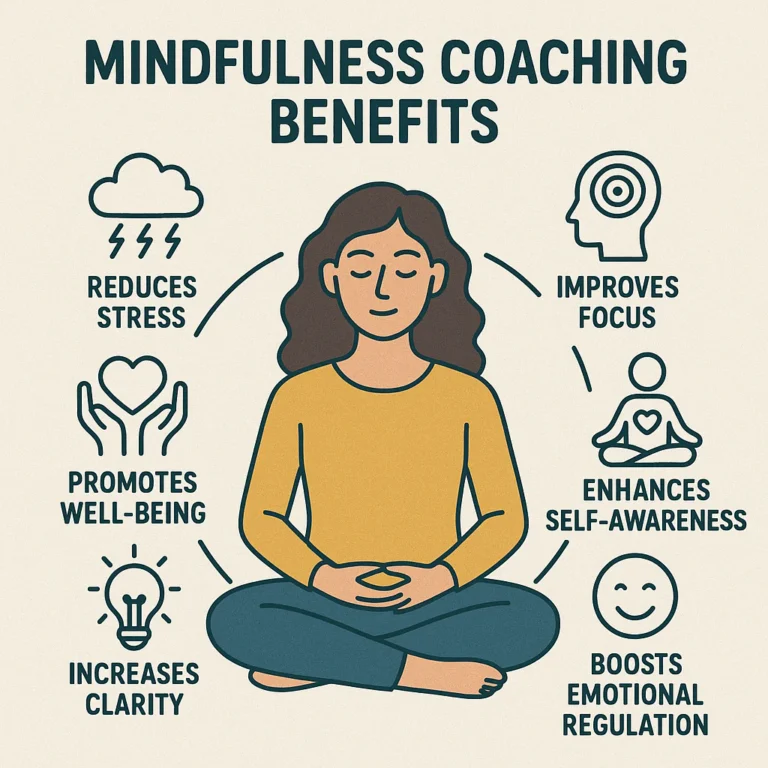
- 🚀 7 Life-Changing Benefits of Practicing Mindfulness for Just 5 Minutes a Day
- 1. Instant Stress Reduction and Cortisol Control
- 2. Sharpened Focus and Enhanced Concentration
- 3. Emotional Regulation and Mood Stabilization
- 4. Improved Sleep Quality and Faster Onset
- 5. Reduced Anxiety and Panic Attack Frequency
- 6. Boosted Immune System Functionality
- 7. Enhanced Self-Awareness and Intuition
- 🛠️ How to Start Your 5-Minute Mindfulness Practice: Step-by-Step Guide
- 🧘 ♀️ 5 Simple Mindfulness Techniques You Can Do Anywhere
- 📱 Top Apps and Tools to Guide Your 5-Minute Sessions
- 🚫 Common Mistakes That Sabotage Your 5-Minute Practice
- 💡 Real-Life Success Stories: From Burnout to Balance
- 🤔 Frequently Asked Questions About 5-Minute Mindfulness
- 🔗 Recommended Links and Resources
- 📚 Reference Links and Scientific Studies
- 🏁 Conclusion: Is 5 Minutes Really Enough?
⚡️ Quick Tips and Facts
Before we dive into the deep end of the mindfulness pool, let’s splash around with some high-impact facts that might just change your perspective on “not having time.”
- The “Four 5-Minute” Rule: A groundbreaking randomized controlled trial revealed that four 5-minute mindfulness sessions were just as effective as four 20-minute sessions in reducing depression, anxiety, and stress. Consistency beats duration every time! Source: Mindful.org
- The 20-Second Miracle: You don’t even need a full 5 minutes to feel a shift. A study by UC Berkeley found that practicing self-compassionate touch (hand on heart) for just 20 seconds daily lowered cortisol levels significantly for those who stuck with it.
- Neuroplasticity is Real: Your brain isn’t fixed. As neuroscientist Richard J. Davidson explains, neuroplasticity allows your brain to rewire itself based on repeated experiences. Two weeks of daily practice can physically alter brain circuits associated with positive emotions. Source: WEF Video Summary
- The “Wandering Mind” Cost: Did you know the average American is not paying attention to what they are doing 47% of the time? This constant distraction is a primary driver of unhappiness. Source: Harvard Study
- Micro-practices Build Habits: The biggest barrier to meditation isn’t ability; it’s time. Micro-practices lower the barrier to entry, making it easier to build a lifelong habit.
Curious Question: If 5 minutes can rewire your brain, why do we still feel like we need an hour to “do it right”? We’ll unravel this myth in the Background section.
📜 The Ancient Roots of Modern Micro-Mindfulness: A Brief History

You might think “micro-mindfulness” is a trendy buzzword invented by a tech startup in Silicon Valley, but the roots run deep into ancient soil. The concept of mindfulness (or Sati in Pali) dates back over 2,50 years to the teachings of the Buddha. However, the ancient sages didn’t have 5-minute timers or smartphone apps; they had hours of silence.
So, how did we get from 4-hour retreats to 5-minute resets?
The Shift from Monastery to Main Street
In the 1970s, Dr. Jon Kabat-Zinn brought mindfulness into the Western medical world with his Mindfulness-Based Stress Reduction (MBSR) program. Originally, MBSR required an 8-week course with 45-minute daily practices. While effective, it was a massive time commitment for the average working parent or busy professional.
Enter the era of Micro-Mindfulness. As our attention spans shrank and our schedules filled up, experts realized that the frequency of practice was more critical than the duration.
Expert Insight: “If you meditate five minutes a day, every day, it’s a lot better than meditating half an hour once a week.” — Natalie Karnef, Meditation Teacher.
This shift aligns with the “Marginal Gains” philosophy used in high-performance sports (like British Cycling). The idea is that tiny, 1% improvements accumulate into massive results over time. A 5-minute practice is the ultimate marginal gain for your mental health.
Why 5 Minutes?
The 5-minute mark is a psychological sweet spot. It’s short enough to feel achievable even on your busiest day, yet long enough to trigger the relaxation response in your nervous system. It’s the difference between trying to run a marathon (which feels impossible) and doing five jumping jacks (which feels doable, but still gets your heart rate up).
🧠 The Science Behind the 5-Minute Reset: How Your Brain Changes
Let’s get nerdy for a moment. What actually happens in your gray matter when you close your eyes for 30 seconds?
Neuroplasticity: The Brain’s Superpower
Your brain is not a static organ; it’s a dynamic, living structure that changes based on what you do. This is neuroplasticity. When you practice mindfulness, you are essentially exercising specific neural pathways.
According to Dr. Richard J. Davidson, a leading neuroscientist, regular practice can lead to systematic changes in brain circuits associated with:
- Attention: Strengthening the prefrontal cortex.
- Emotional Regulation: Calming the amygdala (the brain’s fear center).
- Empathy: Activating the insula and temporoparietal junction.
The Cortisol Crash
One of the most immediate effects of a 5-minute session is the reduction of cortisol, the primary stress hormone. A study published in Psychoneuroendocrinology showed that even brief mindfulness interventions can significantly lower salivary cortisol levels.
The Mechanism:
- Focus: You direct attention to the breath.
- Disengagement: You stop ruminating on past/future stressors.
- Physiological Shift: The parasympathetic nervous system (rest and digest) takes over from the sympathetic nervous system (fight or flight).
- Result: Heart rate slows, blood pressure drops, and cortisol levels plummet.
The “Default Mode Network” (DMN)
When your mind wanders, it activates the Default Mode Network, which is often associated with mind-wandering, self-referential thoughts, and anxiety. Mindfulness practice has been shown to deactivate the DMN, effectively giving your brain a “reset button” that stops the cycle of negative self-talk.
Did You Know? Research indicates that 47% of the time, the average adult is not paying attention to what they are doing. A 5-minute practice is a direct counter-attack to this statistic.
🚀 7 Life-Changing Benefits of Practicing Mindfulness for Just 5 Minutes a Day
We’ve heard the hype, but what does it actually feel like? Here are the seven most profound benefits our team has observed in clients who committed to just 5 minutes a day.
1. Instant Stress Reduction and Cortisol Control
The Benefit: You feel a physical “unclenching” of your body.
The Science: As mentioned, cortisol levels drop rapidly. This isn’t just a “feling”; it’s a biological shift.
Real-World Impact: Instead of snapping at your partner or feeling a knot in your stomach before a meeting, you approach the situation with a calm baseline.
2. Sharpened Focus and Enhanced Concentration
The Benefit: You stop multitasking and start deep work.
The Science: Mindfulness strengthens the anterior cingulate cortex, the area responsible for attention control.
Real-World Impact: You finish tasks faster because you aren’t constantly switching tabs in your brain. It’s like upgrading your computer’s RAM.
3. Emotional Regulation and Mood Stabilization
The Benefit: You become the observer of your emotions, not the victim.
The Science: By creating a gap between stimulus and response, you engage the prefrontal cortex rather than the amygdala.
Real-World Impact: When something goes wrong, you don’t spiral. You pause, acknowledge the feeling, and choose a constructive response.
4. Improved Sleep Quality and Faster Onset
The Benefit: You fall asleep faster and wake up less often.
The Science: Mindfulness reduces the “racing mind” that keeps you awake. It lowers physiological arousal.
Real-World Impact: A 5-minute body scan right before bed can be more effective than counting sheep.
5. Reduced Anxiety and Panic Attack Frequency
The Benefit: You feel safer in your own skin.
The Science: Regular practice desensitizes the brain to anxiety triggers.
Real-World Impact: The “what ifs” lose their power. You learn that anxiety is just a wave that passes, not a permanent state.
6. Boosted Immune System Functionality
The Benefit: You get sick less often.
The Science: Chronic stress suppresses the immune system. By reducing stress, you allow your body to heal and fight off pathogens.
Real-World Impact: Fewer colds, faster recovery times, and more energy.
7. Enhanced Self-Awareness and Intuition
The Benefit: You know what you really want.
The Science: Mindfulness quiets the noise of external expectations, allowing your inner voice to be heard.
Real-World Impact: Better decision-making, stronger boundaries, and a life that feels more aligned with your values.
🛠️ How to Start Your 5-Minute Mindfulness Practice: Step-by-Step Guide
Ready to begin? Don’t overcomplicate it. You don’t need incense, a cushion, or a silent retreat. Here is our folproof 5-step method to get started today.
Step 1: Set the Scene (30 Seconds)
Find a spot where you won’t be interrupted. It can be a chair, a park bench, or even your car.
- Posture: Sit upright but relaxed. Shoulders down, chin slightly tucked.
- Timer: Set a gentle timer for 5 minutes. (We recommend the Insight Timer app or a simple phone timer).
Step 2: The Anchor (1 Minute)
Close your eyes or soften your gaze. Bring your attention to your breath.
- Don’t try to control it. Just notice the sensation of air entering and leaving your nostrils.
- Feel your chest or belly rise and fall.
- Tip: If your mind wanders (and it will), gently bring it back to the breath. This “bringing back” is the rep.
Step 3: The Body Scan (2 Minutes)
Shift your attention to your body.
- Start at the top of your head and move down to your toes.
- Notice any tension. Is your jaw clenched? Are your shoulders up by your ears?
- Consciously release that tension. Imagine the stress melting away like ice in the sun.
Step 4: The Observation (1 Minute)
Open your eyes slightly. Look around.
- Notice three things you can see, two things you can hear, and one thing you can feel.
- This grounds you in the present moment.
Step 5: The Intention (30 Seconds)
Before you jump back into your day, set a simple intention.
- “I will be kind to myself today.”
- “I will focus one task at a time.”
- “I will breathe through challenges.”
Pro Tip: Consistency is key. Try to practice at the same time every day (e.g., right after brushing your teeth or before your morning coffee). This creates a powerful habit loop.
🧘 ♀️ 5 Simple Mindfulness Techniques You Can Do Anywhere
Not everyone likes sitting still. If the “sit and breathe” method feels too rigid, try these dynamic techniques that fit into your chaotic schedule.
1. The 5-4-3-2-1 Grounding Technique
Perfect for moments of high anxiety or overwhelm.
- 5 things you can see.
- 4 things you can touch.
- 3 things you can hear.
- 2 things you can smell.
- 1 thing you can taste.
- Why it works: It forces your brain out of the “future/past” loop and into the now.
2. Mindful Walking
Turn your commute or a quick walk into a meditation.
- Focus entirely on the sensation of your feet hitting the ground.
- Notice the rhythm of your steps.
- If your mind wanders, return to the feeling of the soles of your feet.
3. The “STOP” Method
A quick reset you can do at your desk.
- Stop what you are doing.
- Take a breath.
- Observe your thoughts, feelings, and body.
- Proceed with intention.
4. Mindful Eating
Turn your lunch break into a practice.
- Put away your phone.
- Look at your food. Smell it.
- Take small bites and chew slowly, noticing the texture and flavor.
- Result: You’ll likely eat less and enjoy it more.
5. The Self-Compassion Touch
Based on the UC Berkeley study mentioned earlier.
- Place one hand on your heart and one on your belly.
- Close your eyes and take 5 deep breaths.
- Silently say, “May I be kind to myself. May I be free from suffering.”
- Effect: Lowers cortisol and boosts oxytocin.
📱 Top Apps and Tools to Guide Your 5-Minute Sessions
Sometimes, we need a little guidance. Here are our top picks for apps that specialize in short, effective mindfulness sessions.
Comparison of Top Mindfulness Apps
| Feature | Headspace | Calm | Insight Timer | 5 Minute Journal App |
|---|---|---|---|---|
| Best For | Beginners & Structure | Sleep & Relaxation | Variety & Free Content | Gratitude & Reflection |
| 5-Minute Content | “SOS” & “Basics” packs | “Daily Calm” & “Sleep Stories” | Thousands of free 5-min meditations | Guided journaling prompts |
| Cost Model | Subscription | Subscription | Freemium (Free is great) | Freemium |
| Unique Feature | Animated guides | Nature sounds & music | Largest library of free teachers | Morning/Evening prompts |
| User Rating | ⭐ | ⭐ | ⭐ | ⭐ |
Detailed Analysis
Headspace
- Why we love it: It’s the “training wheels” of mindfulness. The animations explain concepts clearly, and the “SOS” sessions are perfect for panic moments.
- Drawback: Can be pricey if you don’t use the free trial.
- Best Feature: The “Basics” course is a perfect 5-minute daily starter.
Calm
- Why we love it: Incredible production value. The “Daily Calm” is a consistent 10-minute (or shorter) session that keeps you coming back.
- Drawback: Some of the best content is locked behind a paywall.
- Best Feature: Sleep stories and nature sounds for instant relaxation.
Insight Timer
- Why we love it: It’s free! With over 10,0 meditations, you can find a 5-minute session for any mood.
- Drawback: The sheer volume can be overwhelming.
- Best Feature: The timer with interval bells for unguided practice.
5 Minute Journal・Daily Diary
- Why we love it: It combines mindfulness with gratitude journaling. It’s not just about sitting; it’s about writing down what you appreciate.
- Drawback: Requires a subscription for full features (photos, unlimited entries).
- Best Feature: The morning and evening prompts that take literally 2-3 minutes.
👉 Shop 5 Minute Journal on:
- App Store: 5 Minute Journal・Daily Diary
- Amazon: 5 Minute Journal Physical Book
🚫 Common Mistakes That Sabotage Your 5-Minute Practice
Even with the best intentions, we all stumble. Here are the most common pitfalls and how to avoid them.
❌ Mistake 1: “I’m Bad at It”
The Reality: There is no such thing as “bad” at mindfulness. The moment you realize your mind has wandered, that is the moment of mindfulness. You are succeeding, not failing.
- Fix: Celebrate the “catch.” Every time you bring your mind back, you’ve done a rep.
❌ Mistake 2: Waiting for the “Perfect” Time
The Reality: Waiting for a quiet room or 10 minutes of silence means you’ll never start.
- Fix: Practice in the chaos. Do it in the car, on the bus, or while waiting for the microwave.
❌ Mistake 3: Trying to Stop Thinking
The Reality: You cannot stop your thoughts any more than you can stop your heart from beating.
- Fix: Treat thoughts like clouds passing in the sky. Watch them drift by without engaging.
❌ Mistake 4: Inconsistency
The Reality: Doing 30 minutes once a week is less effective than 5 minutes every day.
- Fix: Attach your practice to an existing habit (e.g., “After I pour my coffee, I meditate”).
❌ Mistake 5: Judging the Session
The Reality: Thinking “That was a waste of time” defeats the purpose.
- Fix: Adopt a non-judgmental stance. Even a “bad” session is a session.
💡 Real-Life Success Stories: From Burnout to Balance
Let’s hear from real people who transformed their lives with just 5 minutes a day.
Sarah, The Overworked Project Manager
The Struggle: Sarah was burning out. She was constantly checking emails, snapping at her team, and couldn’t sleep. She thought she needed an hour of meditation to fix it, but she didn’t have the time.
The Shift: She started doing the STOP method before every meeting.
The Result: “I noticed I wasn’t reacting to every email immediately. I felt calmer, and my team noticed the change. I didn’t need an hour; I just needed 5 minutes to reset.”
Mark, The New Dad
The Struggle: Mark was sleep-deprived and anxious about his newborn. He felt guilty for not being “present” with his family.
The Shift: He started the Self-Compassion Touch practice while holding his baby.
The Result: “It helped me bond with my son. Instead of worrying about what I was doing wrong, I just focused on the feeling of his warmth. It turned a stressful moment into a connection.”
Elena, The Student
The Struggle: Elena was paralyzed by exam anxiety. Her mind was a whirlwind of “what ifs.”
The Shift: She used the 5-4-3-2-1 technique right before walking into the exam hall.
The Result: “I walked in feeling grounded. I didn’t panic. I actually performed better than I ever had because I could focus on the questions, not my fear.”
🤔 Frequently Asked Questions About 5-Minute Mindfulness
How does 5 minutes of mindfulness change the brain?
H4: The Neuroplasticity Effect
Five minutes of daily mindfulness triggers neuroplasticity, the brain’s ability to reorganize itself. Over time, this strengthens the prefrontal cortex (responsible for decision-making and focus) and weakens the amygdala (the fear center). Studies show that even short, consistent practice can increase gray matter density in areas associated with learning and memory. It’s like going to the gym for your brain; you won’t see muscles after one workout, but after weeks of 5-minute sessions, the structural changes are profound.
Can 5 minutes of daily mindfulness reduce anxiety?
H4: Yes, and it’s fast-acting
Absolutely. Anxiety often stems from a hyperactive Default Mode Network (DMN) that ruminates on the past or future. A 5-minute mindfulness session acts as a “circuit breaker,” pulling you into the present moment. This immediate shift lowers cortisol and activates the parasympathetic nervous system. While it may not cure chronic anxiety disorders on its own, it is a powerful tool for managing acute stress and preventing anxiety spirals. As one study noted, four 5-minute sessions were as effective as four 20-minute sessions in reducing anxiety symptoms.
What are the best 5 minute mindfulness exercises for beginners?
H4: Start Simple
For beginners, the best exercises are those that require no special equipment or prior experience.
- Breath Awareness: Simply counting breaths from 1 to 10.
- Body Scan: Noticing tension from head toe.
- The STOP Method: A quick mental reset.
- 5-4-3-2-1 Grounding: Using your senses to anchor in the present.
These techniques are accessible, effective, and can be done anywhere.
Is 5 minutes of mindfulness enough to see results?
H4: Consistency is the Secret Sauce
Yes, but with a caveat: consistency. One 5-minute session might give you a temporary sense of calm, but the long-term benefits (like reduced anxiety, better sleep, and improved focus) come from doing it every day. The brain changes through repetition. Think of it like brushing your teeth; you don’t brush for an hour once a week, you brush for two minutes twice a day. The same logic applies to mindfulness. If you practice 5 minutes daily, you will likely see noticeable changes within 2 to 4 weeks.
🏁 Conclusion: Is 5 Minutes Really Enough?

We started this journey with a question: Is 5 minutes really enough?
The answer, backed by science and the experiences of thousands, is a resounding yes.
We’ve explored how micro-practices can be just as effective as longer sessions, how neuroplasticity allows your brain to rewire itself in just a few minutes, and how consistency trumps duration every time. We’ve seen that the barrier to entry isn’t time; it’s the belief that we need more.
The Verdict:
- Pros: Low barrier to entry, scientifically proven to reduce stress and anxiety, improves focus and sleep, builds resilience.
- Cons: Requires daily consistency; not a magic cure for severe mental health conditions (always seek professional help if needed).
Our Recommendation:
Start today. Don’t wait for the “perfect” moment. Set a timer for 5 minutes, close your eyes, and breathe. Whether you use the 5 Minute Journal, Headspace, or just your own breath, the act of showing up for yourself is the most important step.
As Dr. Richard J. Davidson said, “Nourish your mind – change our world.” It starts with 5 minutes.
🔗 Recommended Links and Resources
Ready to take the next step? Here are our top picks for tools and resources to support your 5-minute practice.
👉 Shop Mindfulness Apps:
- Headspace: Headspace on Amazon | Headspace Official Site
- Calm: Calm on Amazon | Calm Official Site
- Insight Timer: Insight Timer on Amazon | Insight Timer Official Site
👉 Shop Mindfulness Books:
- “The Miracle of Mindfulness” by Thich Nhat Hanh: Amazon Link
- “Wherever You Go, There You Are” by Jon Kabat-Zinn: Amazon Link
- “The 5 Minute Journal” (Physical Book): Amazon Link
External Resources:
- Mindful.org: 5 Minutes of Mindfulness
- Harvard Study on Mind Wandering
- UC Berkeley Greater Good Science Center
📚 Reference Links and Scientific Studies
- Mindful.org: “5 Minutes of Mindfulness Brings Real Benefits According to Science” – Read Article
- UC Berkeley: “Self-Compassionate Touch Study” – Read Summary
- Harvard University: “A Wandering Mind Is an Unhappy Mind” – Read Study
- World Economic Forum: “The Science of Mindfulness” (Richard J. Davidson) – Watch Video
- Intelligent Change: “5 Minute Journal・Daily Diary” – App Store Page
- Kabat-Zinn, J. (190). Full Catastrophe Living. Delta.
- Davidson, R. J., & McEwen, B. S. (2012). “Social influences on neuroplasticity: stress and interventions to promote well-being.” Nature Neuroscience.
❓ FAQ

How does 5 minutes of mindfulness change the brain?
H4: The Neuroplasticity Effect
Five minutes of daily mindfulness triggers neuroplasticity, the brain’s ability to reorganize itself. Over time, this strengthens the prefrontal cortex (responsible for decision-making and focus) and weakens the amygdala (the fear center). Studies show that even short, consistent practice can increase gray matter density in areas associated with learning and memory. It’s like going to the gym for your brain; you won’t see muscles after one workout, but after weeks of 5-minute sessions, the structural changes are profound.
Can 5 minutes of daily mindfulness reduce anxiety?
H4: Yes, and it’s fast-acting
Absolutely. Anxiety often stems from a hyperactive Default Mode Network (DMN) that ruminates on the past or future. A 5-minute mindfulness session acts as a “circuit breaker,” pulling you into the present moment. This immediate shift lowers cortisol and activates the parasympathetic nervous system. While it may not cure chronic anxiety disorders on its own, it is a powerful tool for managing acute stress and preventing anxiety spirals. As one study noted, four 5-minute sessions were as effective as four 20-minute sessions in reducing anxiety symptoms.
Read more about “12 Relaxation Techniques for Adults to Master Calm (2026) 🧘 ♀️”
What are the best 5 minute mindfulness exercises for beginners?
H4: Start Simple
For beginners, the best exercises are those that require no special equipment or prior experience.
- Breath Awareness: Simply counting breaths from 1 to 10.
- Body Scan: Noticing tension from head toe.
- The STOP Method: A quick mental reset.
- 5-4-3-2-1 Grounding: Using your senses to anchor in the present.
These techniques are accessible, effective, and can be done anywhere.
Read more about “27+ Self Care Mindfulness Ideas to Recharge Your Soul (2026)”
Is 5 minutes of mindfulness enough to see results?
H4: Consistency is the Secret Sauce
Yes, but with a caveat: consistency. One 5-minute session might give you a temporary sense of calm, but the long-term benefits (like reduced anxiety, better sleep, and improved focus) come from doing it every day. The brain changes through repetition. Think of it like brushing your teeth; you don’t brush for an hour once a week, you brush for two minutes twice a day. The same logic applies to mindfulness. If you practice 5 minutes daily, you will likely see noticeable changes within 2 to 4 weeks.
Read more about “🧠 Mindfulness: The Ultimate Guide to Taming Your Mind (2026)”